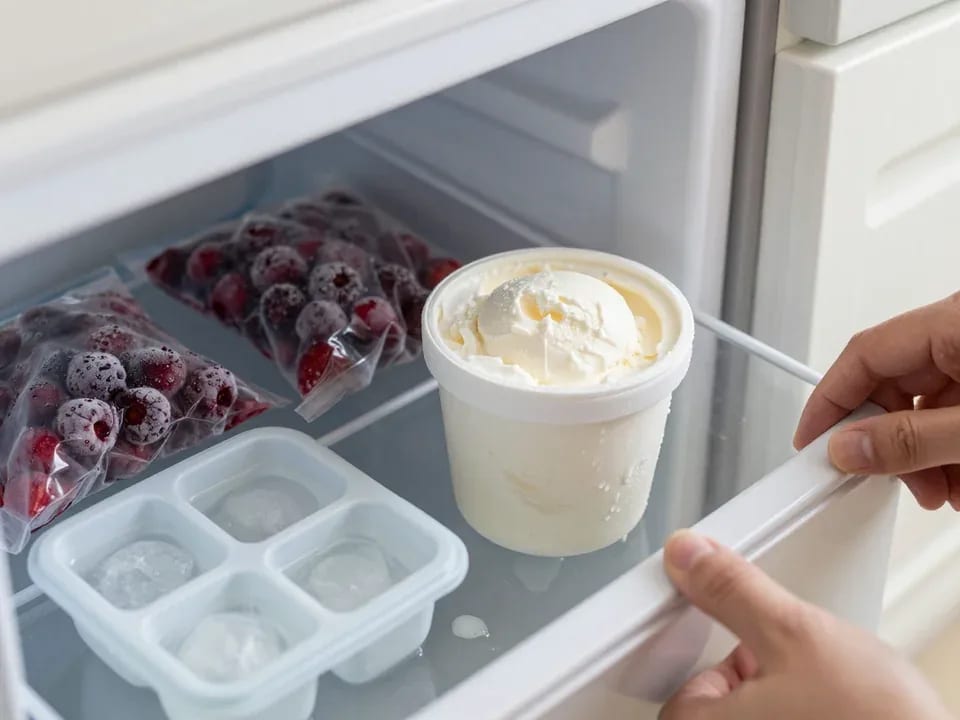
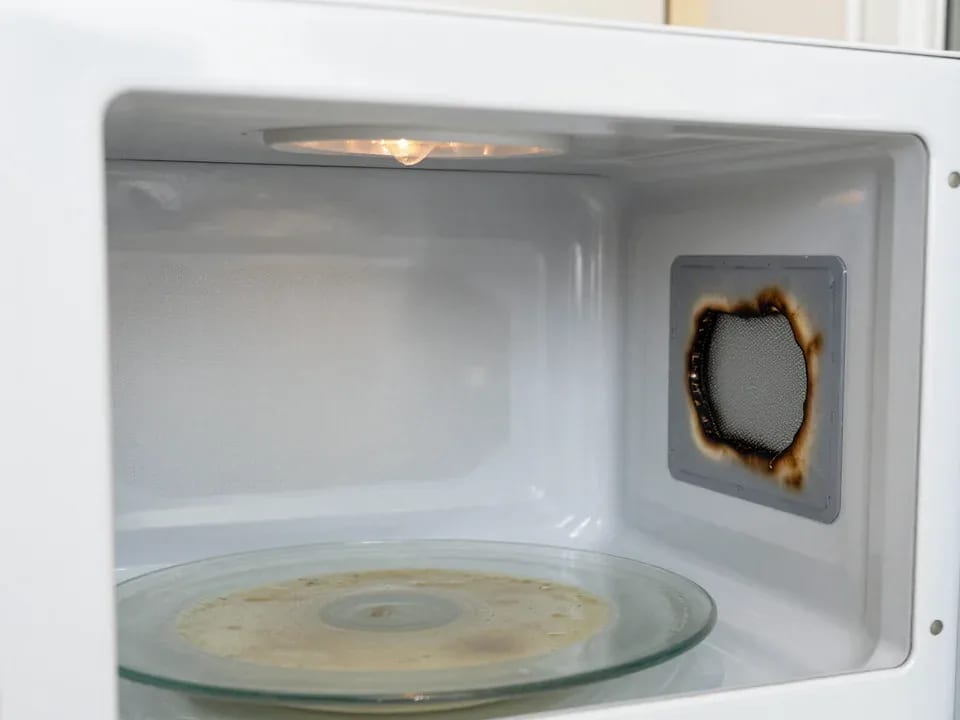
Tech Service repairs Kaiser refrigerators in Astana with its own technicians, no middlemen. A technician comes to your home within 60 minutes anywhere in the city, diagnostics are free, and there's a 1-year warranty on labor and parts. Our technicians have 4 to 20 years of experience, and you can pay via Kaspi QR, Kaspi Red, bank card, cash, or bank transfer for companies.
Why a Kaiser refrigerator stops cooling and what the indicators tell you
A Kaiser refrigerator may stop cooling for various reasons, and the indicators often point you in the right direction. Here's what the panel signals mean and when it's time to call a technician.
Kaiser refrigerator not cooling but the light is on
If the light is on but there's no cold, the unit is receiving power, and the cause is almost always in the cooling circuit or the component that controls it. The compressor may hum but not build the required pressure, the evaporator fan may not move air from the freezer to the upper compartment, and the drain hole may ice up and block circulation. The temperature sensor then misreads the mode and doesn't signal the compressor to cool. The temperature difference between the compartments narrows it down: when the freezer works but the top doesn't, the evaporator fan, a clogged drain, or the sensor is more often to blame than the compressor. So before calling a technician, check whether the lower compartment stays cold—that fact alone speeds up diagnosis.
What a flashing indicator and Kaiser error codes mean
| Panel signal | What we likely check | When to call a technician |
|---|
| Temperature indicator flashes | temperature sensor, control board | if the compartment lost cold |
| Alarm indicator is on | temperature above normal, door seal | if it doesn't go off after closing |
| Flashing after defrost | defrost cycle, defrost sensor | if cold doesn't return within a day |
| Indicator doesn't respond | control board, power supply | immediately, panel is unresponsive |
| Chaotic flashing | electronics, power surge | if it repeats |
It won't shut off and overcools
If a Kaiser appliance runs nonstop and overcools, the cause is usually the thermostat, sensor, or a stuck relay, not a refrigerant leak. The thermostat stops opening the circuit when the set temperature is reached, the compressor runs without pauses, and food in the upper compartment starts to freeze. A temperature sensor with high readings sends a false "still warm" signal to the control board and extends the cycle. A start-protection relay with stuck contacts won't release the motor winding and keeps the unit on. A refrigerant leak shows the opposite sign: cooling decreases rather than increases, so continuous operation almost always points to a temperature control component. Our experience confirms: when a customer complains about overcooling, the technician checks the thermostat and sensor first, not looking for a leak.
Common Kaiser failures and how a technician finds the cause
Kaiser has its own weak points, and by symptom a specialist narrows down the list of parts before disassembly. Below we cover frequent failures and the logic of finding the cause.
Compressor, relay, and why the refrigerator hums or clicks
Humming and clicking in Kaiser units are most often related to the start-protection relay or the compressor itself, and our technician checks them first. An inverter compressor runs smoothly and almost silently, while a linear one gives a short jolt at startup—by the sound character an experienced specialist can tell normal operation from a fault. The start-protection relay sits next to the motor and handles the starting current; when it wears out, the unit tries to start, clicks, and dies. A single click at the moment of a start attempt followed by silence points to the relay, while a steady hum without cooling more often indicates a compressor that isn't building the required pressure. Kaiser refrigerator repair in Astana requires accurate on-site testing of the motor windings and relay contacts to avoid replacing a working component, and comparing readings with the model's specification values—a resistance mismatch immediately shows which part is at fault.
Kaiser refrigerator won't turn on after a power surge
After a power surge, a Kaiser most often fails to start because of the control board or a blown fuse, while the compressor may still be fine. The board controls the motor and temperature sensors, so its failure shows up in different ways: the indicators stay dark, or the module powers on but doesn't send the start command. The fuse in the power circuit blows first and takes the hit. Before replacing electronics, the technician checks the power circuit and the fuse, because a cheap part often protects an expensive board from failing again. In this case, diagnostics start with testing the circuit rather than replacing the module at random — that way the owner avoids unnecessary costs. The varistor in the power supply is also inspected separately: it absorbs the surge and, when it fails, shorts out, leaving a mark on the board.
Seal, hinges, and ice on the back wall
Ice buildup and a loose seal on a Kaiser are fixed by replacing the seal or adjusting the hinges, and the seal is replaced separately from the door. The rubber gasket loses its elasticity over time, dirt gets into the folds, and the door stops sealing along its entire length — then warm, humid air gets inside and ice grows on the back wall. Our technician replaces the Kaiser refrigerator door seal with a new one and aligns the seal. If ice returns after replacement, we check the door geometry and hinge bushings, because misalignment again breaks the seal. The bushings wear out unnoticed, and the door sags even with an intact seal, so adjustment is done together with inspecting the mounts. You can check the seal yourself: clamp a sheet of paper between the door and the body — if it pulls out without resistance along the entire length, the seal isn't holding well.
How Kaiser refrigerator repair at home in Astana works
Kaiser refrigerator service in Astana is built around visiting the customer and free diagnostics. Here's how a technician's visit goes, from request to checking the result.
Technician arrival within 60 minutes and free diagnostics
A Tech Service technician arrives at your home within 60 minutes anywhere in the city, and Kaiser refrigerator diagnostics are free. You can request service by phone or in a message: just give the model and describe how the appliance behaves — humming, clicking, not cooling, indicator flashing. The technician comes with their own tools and common parts for your series, so the initial check is done on site without moving the unit. During diagnostics, they first listen to how the refrigerator behaves in your presence and only then take the unit apart — some causes are visible before panels are removed. In our experience, this order saves time: the sound of the compressor and the behavior of the indicators often rule out half the possibilities before disassembly. Kaiser refrigerator repair in Astana is convenient to start with such a visit: the technician assesses the appliance right at your home. Please provide access to the back wall and don't defrost the appliance before the visit — ice and condensation make it easier to understand where the circuit is broken.
What the technician checks on site and how the price is quoted
On site, the technician checks the compressor, relay, thermostat, sensors, and circuit, and quotes the price after free diagnostics. First, they measure the resistance of the compressor windings and check the start-protection relay — it's the one that most often clicks and prevents the unit from starting. Next are the thermostat and temperature sensor: their readings show whether the appliance maintains the set mode or runs continuously. Refrigerant leaks are traced along the circuit and connections, and the control board is inspected separately if the indicators behave abnormally. The cost depends on which unit is confirmed, so the amount isn't quoted before the check to avoid changing it after disassembly. This order is convenient for the customer too: you agree to the work knowing the exact cause, not a guess.
Repair at home or at the service center
| What we repair | Where we do it | What we check afterward |
|---|
| Relay, thermostat, sensors | on-site | start-up and cooling |
| Seal, hinges, drainage | on-site | door fit and no ice buildup |
| Control board | on-site or at the service center | response to indicators |
| Compressor and refrigerant circuit | on-site or at the service center | pressure and tightness |
Warranty and what to do if the error comes back
The warranty matters as much as the service itself: it determines who is responsible for the result. Here we explain what commitments we take on after fixing the issue and what to do if the problem returns.
What the 1-year warranty on labor and parts covers
Tech Service provides a 1-year warranty on labor and parts, and it covers both the replaced component and the work performed. Technicians record in the order which component was replaced and what actions were taken, so if you come back, it's clear what the coverage applies to. A separate commitment for parts is important because the part itself and its installation can fail for different reasons, and the one-year coverage should cover both. The compressor, start relay, temperature sensor, control module, seal — each replaced element is covered just like the replacement procedure. In my view, separating "part plus labor" saves the owner from arguing about whose defect it is — the factory's or the technician's. So when the work is handed over, ask which components are included in the warranty list and keep a record of the replaced parts — this eliminates half the questions on a repeat visit and helps the technician get up to speed faster.
The error came back after repair
If the same error returns within the warranty period, the technician comes again and checks the component under warranty rather than starting from scratch. We compare the current indicator code with the previous on-site diagnosis and see if the symptom matches what was fixed. A repeat failure sometimes points not to the same part but to an underlying cause that wasn't addressed: for example, the temperature sensor was replaced, but the false signal came from the control module or a weak start relay. That's why the specialist checks the whole chain — from the power line and relay to the board — before naming the next step. In our practice, a repeat warranty visit is more often due to a missed root cause than a defective new part. A simple tip for the owner: before calling, write down the error code, the moment and conditions when it appears — after defrosting, during cooling, or right after switching on. This information speeds up finding the true cause and saves time for both sides.
No Frost defrosting and Kaiser refrigerator care
Proper defrosting and care extend the life of your Kaiser refrigerator and reduce the risk of repeat breakdowns. Here's how to defrost a No Frost unit and what to do if ice keeps coming back.
How to defrost a Kaiser refrigerator with No Frost
No Frost in Kaiser doesn't require manual defrosting, but if ice builds up, unplug the unit, empty the compartments, and let the ice melt without a knife or hairdryer. The No Frost system includes a defrost heater, defrost sensor, and timer: the evaporator periodically warms up, and condensate drains away. When one of these elements malfunctions, frost builds up on the evaporator and blocks airflow — cooling stops, and a layer grows on the back wall. Never chip it with a knife: you can puncture the circuit and lose refrigerant. Keep the doors open during defrosting and place a cloth or tray under the lower compartment — meltwater goes into the drain pan, not on the floor. Full thawing takes at least several hours: while ice remains on the evaporator, there's no point in turning the unit on. After defrosting, run the empty refrigerator for a few hours so the defrost cycle completes fully; otherwise, residual moisture will freeze on the evaporator again and you'll have to repeat the procedure.
Prevention and when to call a technician again
Maintenance comes down to cleaning the drain, checking the door seal, and making sure the unit sits level. Call a technician if ice builds up again or the cooling changes. Clean the drain hole with a soft wire or cotton swab: a clogged drain leads to a puddle under the drawers and a layer of ice on the bottom of the compartment. Wipe the door gasket and check for gaps — if the seal is loose, warm air and moisture get inside, and the compressor runs longer. Level the unit so the door closes on its own and doesn't stay ajar. Frost that keeps coming back in the same spot usually points to a poor seal or a clogged drain, not to a need for defrosting, so don't try to fix it by unplugging the fridge again. A technician clears the drain hole and checks the gasket — that stops the ice from returning without replacing any parts.
When a Kaiser refrigerator repair pays off
Kaiser refrigerator breakdowns usually fall into a few recurring scenarios — from indicator lights to the condition of the door seal. Here's what owners of these appliances should keep in mind.
- Indicator light and no cooling: a flashing signal while the light works narrows the causes down to the cooling circuit and the temperature control unit.
- Humming and clicking: strange noises are most often linked to the relay or compressor, while running nonstop without shutting off points to the thermostat or sensor.
- Ice buildup and the door seal: a loose door fit is fixed by replacing the gasket or adjusting the hinges, and the gasket is replaced as a separate part.
- Defrosting and drainage: properly defrosting the No Frost system and clearing the drain channel reduce the risk of repeat breakdowns.
- Error coming back: if the code reappears after service, check the root cause instead of running another defrost cycle.