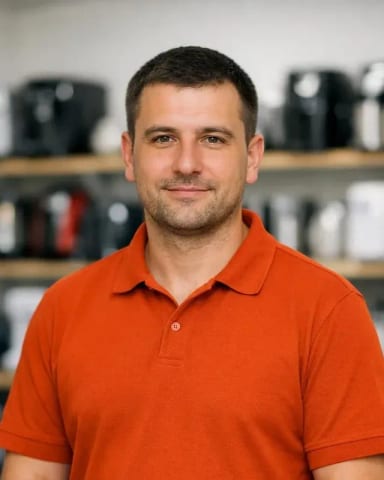
 experience14 years
Kairat A.
Senior small appliance technician

Free diagnostics, a technician at your door within 60 minutes anywhere in the city. 1-year warranty on labor and parts.
Our own technicians4 to 20 years of experience



Repair prices
Symptoms help the technician pick the right part and tools before the visit.
Battery, fuse, power button
from5 000 ₸
Gyroscope, calibration, control board
from2 000 ₸
Charger, connector, BMS
from2 500 ₸
Hub motor bearing, tire wear
from3 500 ₸
Cell wear, cold, deep discharge
from4 500 ₸
Gyroscope, contacts, control board
from5 000 ₸
Bearing, axle play, mount
from4 000 ₸
BMS protection, overheating, battery connector
from2 500 ₸
1 daytime
from 4,000 ₸cost
 BeforeAfter
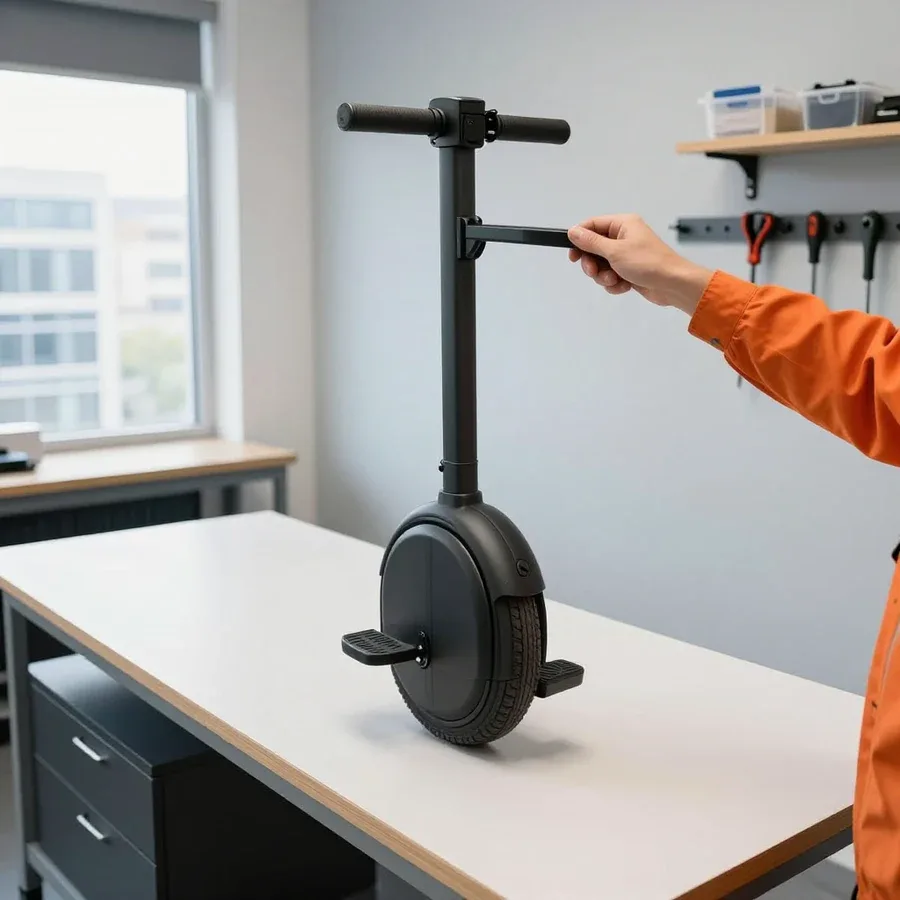
Five steps from request to post-repair check.
Describe the symptom and model — the technician will get ready for the visit.
On site, the technician checks tire pressure, inspects the battery connectors, and listens to the hub motor.
The technician will offer an original or aftermarket part and explain what's included in the quote.
We discuss the part and scope of work, and you decide.
The technician will show what changed and answer your questions about using the device.
The small appliance repair department in Astana has 8 technicians with 5 to 18 years of experience.
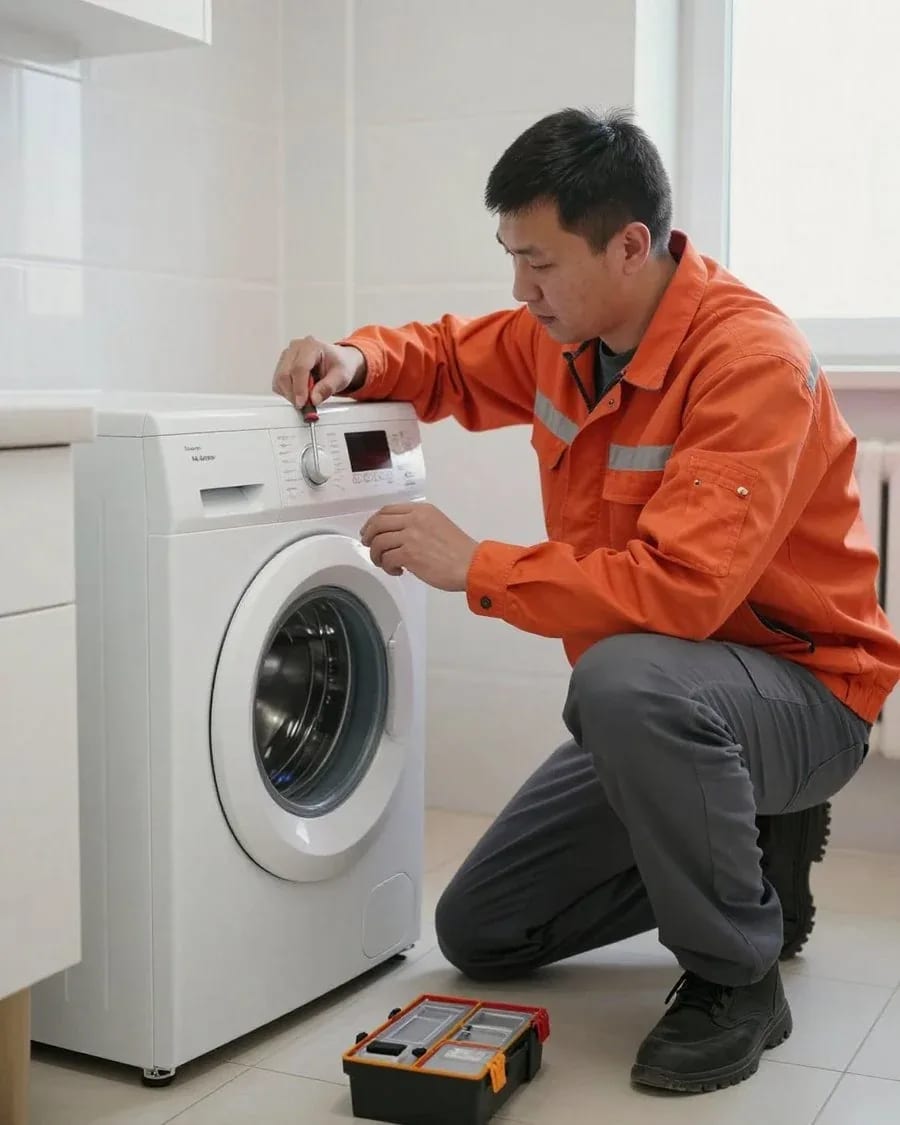
The department has 7 specializations — they are listed on the technicians' cards.
experience14 yearsSenior small appliance technician
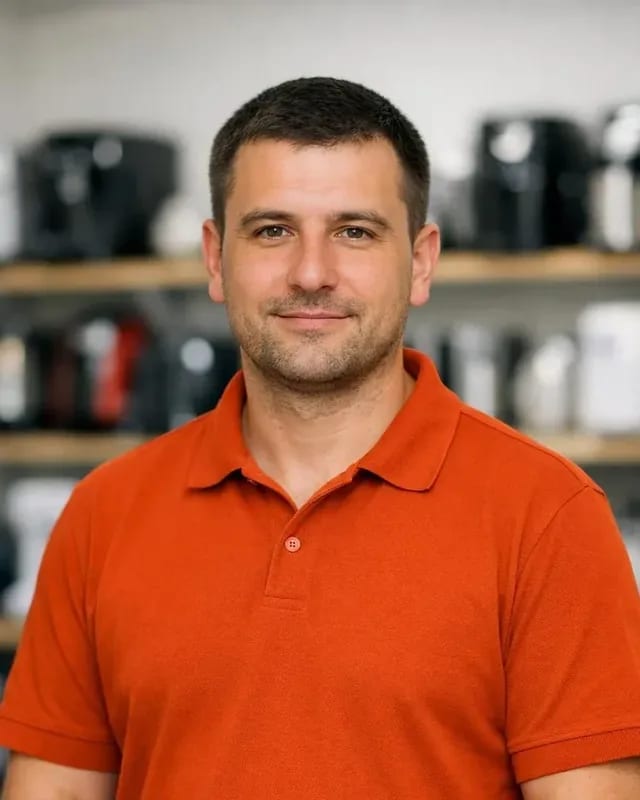 experience15 years
On-site coffee machine diagnostics technician
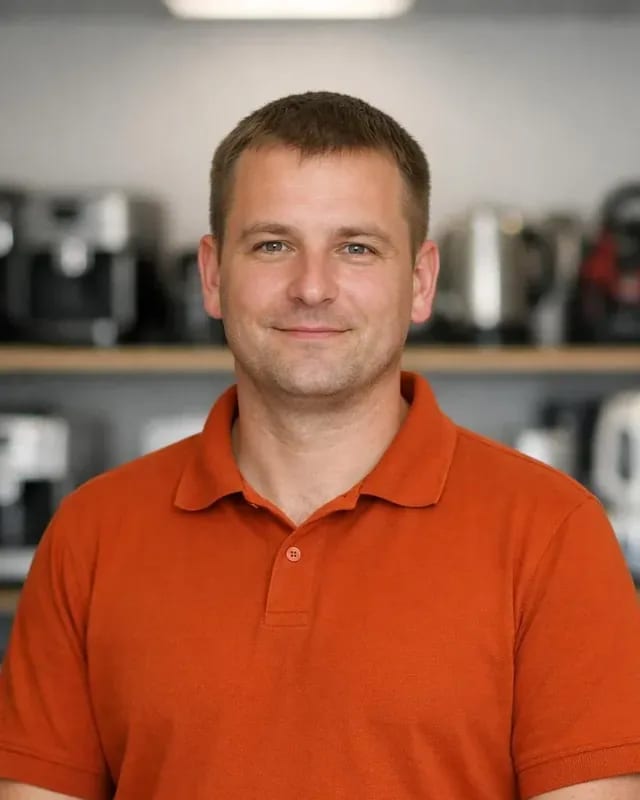 experience5 years
Coffee machine cleaning technician
 experience12 years
Coffee machine diagnostics technician
 experience5 years
Portafilter coffee machine technician
 experience12 years
Vacuum cleaner repair technician
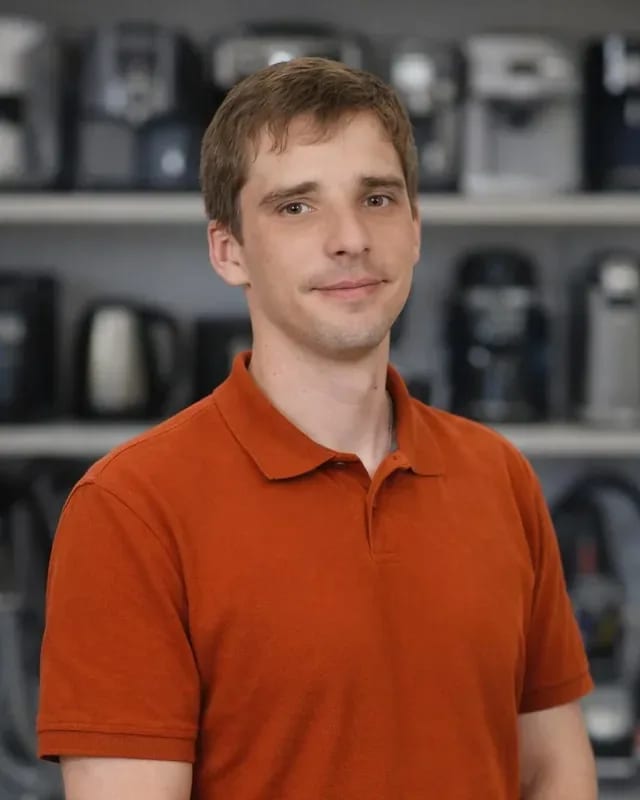 experience15 years
Vacuum cleaner repair technician
 experience18 years
Washing machine repair technician
We reply during working hours
Pick a time and place that work for you — a photo or video of the symptom helps the technician prepare for the visit.

Warranty question? Call us
+7 (778) 096 59 61Tech Service repairs monowheels in Astana as a direct contractor: our technician comes to your home or the work is done at our service center. Diagnostics are free, we arrive within 60 minutes anywhere in the city, and you get a 1-year warranty on labor and parts. The technician gives you the price after diagnostics, and you can pay any way you like.
Owners describe the problem in everyday terms: it won't turn on, won't hold a charge, jerks. Behind every symptom is a specific component, and we work from the symptom to the cause.
We start with the power button, charging port, and battery: most often "won't turn on" means a dead battery or a broken power circuit, not the motor. The technician tests the circuit from the button to the controller, checks whether the display responds and the indicators light up, and verifies voltage at the charging port. The battery is tested under load: a voltage drop under load reveals worn cells that show normal readings at idle. The controller is inspected for signs of overheating and oxidized contacts, and the power button for sticking and a broken ribbon cable. Our diagnostics are free, so finding the cause doesn't turn into a separate paid procedure. If the indicator lights up but the wheel doesn't move, the cause is usually the controller or tilt sensors, and diagnostics separate these in one session.
In our experience, fast draining almost always points to battery wear or a problem with the charging port, and the technician checks both. The battery is tested for capacity: we measure how many cells actually take a charge and how quickly voltage drops under load. The charging port is inspected for play, oxidation, and burnt contacts — a loose connector prevents the power adapter from delivering full current, and the cells stay undercharged. The controller is checked for correct cutoff: if it removes load too early, the wheel dies long before the real discharge point. We also check cell balancing — one weak cell drags down the whole pack and speeds up voltage drop. A drop in range after winter isn't always a death sentence for the battery: sometimes the culprit is a connector that won't let the cells charge fully.
We treat overheating and a burning smell as a signal to stop and not ride, because that's how the controller and hub motor show problems. The technician removes the cover and looks for swollen capacitors, darkened traces, and signs of melting on connectors — these defects cause heat under load and the characteristic smell. The hub motor is checked for bearing play and winding condition: an inter-turn short heats the housing even on a flat road, and a worn bearing adds hum and vibration. The gyroscope and tilt sensors are tested separately because their failure shows up as jerking and spontaneous shutdown while riding. Jerking and spontaneous shutdown while riding often come from tilt sensors, not the battery, so the technician checks the gyroscope separately.
An error code on the screen is a hint, not a diagnosis: it points to where to look but doesn't name the broken part. We explain how to read the monowheel's signal and why diagnostics confirm the interpretation.
An error code on the display points to the component to check first, but only diagnostics confirm the exact cause. A monowheel consists of a battery, controller, hub motor, and tilt sensors, and a failure in any of these blocks produces a similar signal. The controller detects a deviation in current or voltage and displays a number, but it doesn't know which component failed — a discharged cell, a burnt connector, or a seized bearing. The same code can mean different things on different brands, so the interpretation is checked against the specific model, not a generic table from the internet. Note the conditions when the number appears — at startup, under load, after climbing a hill: this detail narrows the search faster than the code itself.
When a beep and a red indicator come on during startup, our technician treats them as a signal to check the power supply and sensors, not as a separate fault. On a service call, we first inspect the power button, display, and indicators: an oxidized contact or a stuck valve can produce the same picture as a dead battery. If the gyroscope and tilt sensors are faulty, they add jerking when you try to get on the platform to the beep. If the sound changes when you start moving, that narrows it down to the hub motor and the same sensors even before disassembly—so we ask the owner to show us exactly how the device behaves under load. A Tech Service technician records the sequence of signals, not just their presence.
| Signal on the display or in behavior | Component we check first |
|---|---|
| Won't turn on, indicator off | Power button, charging port, battery |
| Red indicator on startup | Power supply, controller |
| Beep and error while riding | Tilt sensors, hub motor |
| Fast discharge | Battery, charging port |
| Overheating, burning smell | Controller, hub motor |
| Jerking and shutdown while riding | Gyroscope, tilt sensors |
We break down what a unicycle consists of and which components most often need repair or replacement, so you can tell whether a specific fault can be fixed.
We test and replace the battery and controller because these two components determine both range and control. The battery loses capacity after deep discharges and winter storage, while the control board fails from overheating and voltage spikes. The charging port is the first to suffer from impacts and moisture: contacts oxidize and charging stops. The technician opens the case, tests the power circuit, takes readings from each battery section, and checks the controller's response under load. Connectors and cables are inspected separately—an oxidized contact produces the same symptoms as a dead battery. Replacing the battery without checking the control board often doesn't solve the problem: if the controller is faulty, the new cell drains just as fast.
We handle mechanics separately from electronics: the technician assesses the tire, tube, bearings, rim, and body after falls and punctures. Rubber wears down from skid braking, the tube gets punctured on curbs, and support components start to hum and develop play from riding through road chemicals and puddles. The rim bends from hitting a step, the body cracks at the seams, and pedals loosen on their axles. The technician removes the wheel, checks rim runout while spinning it, listens to the support components, and inspects body cracks under load. A bent rim often affects the support components, so after an impact both are checked at once, not just the visible dent. Bushings and pedal fasteners are replaced with new ones if the threads are stripped—otherwise the play returns after a few rides.
| Component | What we do |
|---|---|
| Battery | Test it and replace if worn out |
| Controller | Diagnose and replace if faulty |
| Charging port | Clean contacts and replace if corroded |
| Hub motor | Check operation and connections |
| Gyroscope and tilt sensors | Check response and fix jerking |
| Tire and inner tube | Replace when worn or punctured |
| Bearings | Replace when there is play or humming |
| Rim, body, pedals | Restore after a fall |
Home visits and workshop repairs handle different tasks: some breakdowns are fixed on site, while components that need disassembly go to the workshop. Below is what can be done on a visit and how it works.
We make home visits and do some work on site, while complex cases with disassembly are handled at the service center. During a visit, the specialist checks the charging port, battery contacts, pedal mounting, tire pressure and controller settings — these operations don't require disassembling the body or lifting equipment. In-depth electrical diagnostics, bearing replacement and rim straightening are done in the workshop, where the part can be disassembled, inspected and reassembled without rushing. A home visit is more convenient when the breakdown is local and doesn't require a stand, and if deep disassembly is needed, the employee will tell you honestly before starting work. Before the visit, let us know the symptom — the description makes it easier to understand whether the tools on site are enough or the device should be taken to the service center right away.
Our technician visit takes up to 60 minutes anywhere in the city, and they arrive with their own tools for on-site diagnostics. We take requests by phone or messenger: we record the model, symptom and address, and the specialist plans the route to avoid traffic jams on the left bank and in new residential areas. On arrival, they perform free diagnostics, name the likely cause and explain which work can be done on site and which requires the workshop. Residents of the capital often call a specialist right to their entrance or courtyard — a flat area is enough to check the port and contacts. The more accurately you describe the symptom when contacting us, the faster they can bring the right parts and avoid a wasted trip. So before calling, recall under what conditions the failure appears — on an incline, after rain or during acceleration.
Tech Service is a direct contractor: our specialist comes to you, not an intermediary who passes the request to a third party. We handle monowheel repair in Astana with our own employees who have 4 to 20 years of experience, so the same person performs diagnostics, approves the work and carries it out — no back-and-forth between dispatcher and subcontractor. There is a 1-year warranty on labor and parts, and you contact the same service center for it instead of looking for a contractor again. When the same service center does both diagnostics and repairs, responsibility for the result and warranty isn't diluted between contractors. In my view, that's the main argument for a direct contractor: you always know who is responsible for the device after service.
We cover three things that concern owners before work begins: how much the check costs, what the warranty covers and where the final amount comes from. Below is how we handle it, with no surprises after service.
Our diagnostics are free: a technician checks the components and identifies the cause before changing anything. First, they inspect the housing and suspension, then test the battery under load, the controller, the charging port, and the sensors, and compare the results with the error code on the display. After replacing parts, the component is tested again to make sure the fault is gone and hasn't moved to a neighboring component. Free diagnostics benefit both the customer and the service center: they rule out cases where repairs aren't worthwhile before disassembly and parts replacement. In my opinion, it's the post-service check that sets a proper service center apart from one that replaces parts at random—it's something to look for when choosing a repair shop. This approach saves both the owner's time and the device's lifespan.
We provide a 1-year warranty on labor and parts, and it covers a replaced battery or controller. The battery and controller are the most expensive components in a unicycle, and owners most often ask about them separately: the 12-month term applies both to the part itself and to how it was installed and configured. The same term for labor and parts eliminates disputes over who is responsible if the component fails again. A parts warranty only makes sense together with a labor warranty: if a part is installed incorrectly, the person who installed it is responsible. So when you drop off your device, ask exactly what the warranty covers—the wording about labor and parts should be complete, not partial.
The technician quotes the cost after free diagnostics, once the cause and scope of work are clear. The amount includes only the components that actually need attention: replacing the tube, tire, or bearings, controller work, battery work—these are listed based on the inspection, not over the phone. You can pay via Kaspi QR, Kaspi Red, bank card, cash, or bank transfer for companies, so you can pay in whatever way is convenient. This approach protects against extra charges during service: the customer approves the work with a clear picture, not blindly. My advice: ask for the cause and the list of work before disassembly—if the conversation starts with a price rather than a diagnosis, that's a reason to ask questions. A transparent estimate before work begins is a sign that the service center is confident in its diagnosis.
We handle cases where the breakdown is non-standard: water damage, falls, second-hand devices, and the question of repair versus replacement. These scenarios require a more careful inspection.
If your unicycle gets wet, we recommend not turning it on or charging it, but taking it to a technician for inspection right away. Moisture gets inside the housing through the pedal seals and charging port and accumulates near the controller and battery—components where even slight contact oxidation changes circuit resistance. Our technician removes the covers, inspects the board for corrosion, checks the connectors and port sealing, and dries and cleans the contacts if needed. Moisture is most dangerous for the controller and charging port: trying to turn on a wet device can turn oxidation into a short circuit. So after rain or a puddle, let the device dry completely and don't start it until a specialist inspects it—that way you keep the chance of getting by with cleaning instead of replacing the board.
After a fall, we check not only dents on the housing but also the rim, bearings, and tilt sensors, because the impact affects them. A misaligned rim causes wobble while riding, bent pedals change foot position, and bearings start humming at speed after an impact. A separate risk area is the gyroscope and tilt sensors: a sharp impact throws off their calibration, and the device pulls to one side or jerks during acceleration. The technician checks the rim geometry, bearing play, pedal mounting, and sensor readings, then fixes what can be straightened and replaces damaged parts. A housing that looks intact after an impact can behave unstable due to misaligned sensors, so a visual assessment isn't enough—the components need to be tested in operation.
We service unicycles bought second-hand and out of warranty, and after diagnostics we tell you which option is more cost-effective — restoration or replacement. Diagnostics are free, so the owner decides with the full picture: which components are damaged, where replacement is needed, and where restoration is enough. For second-hand equipment, history matters: if the device has already been opened, the technician first checks whether the previous repair caused any harm, and only then tackles the issue. We provide a 1-year warranty on labor and parts, and this also applies to devices without documents from the previous owner. Our experience ranges from 4 to 20 years, so based on the condition of the battery, controller, and mechanics, we'll honestly tell you when restoration is justified and when investing in an old unicycle doesn't make sense.
Here are the key points to keep in mind before contacting a service center: what the diagnosis depends on, where a particular breakdown is fixed, and what warranties protect the owner after the work.
Tech Service technicians repair other appliances too — with the same 1-year warranty on labour and parts.
 Refrigerator Repair in Almatyfrom 3 000 ₸
 Washing Machine Repair in Almatyfrom 3 000 ₸
 Dishwasher Repair in Almatyfrom 3 500 ₸
 Oven Repair in Almatyfrom 3 000 ₸
 Cooktop Repair in Almatyfrom 3 500 ₸
 Air Conditioner Repair in Almatyfrom 3 500 ₸
 Boiler and Water Heater Repair in Almatyfrom 2 500 ₸
 Freezer Repair in Almatyfrom 6 000 ₸
 Tumble Dryer Repair in Almatyfrom 5 000 ₸
 Coffee Machine Repair in Almatyfrom 2 500 ₸
 Robot Vacuum Cleaner Repair in Almatyfrom 3 500 ₸
 Vacuum Cleaner Repair in Almatyfrom 1 500 ₸
 Microwave Oven Repair in Almatyfrom 2 000 ₸
 Hair Dryer Repair in Almatyfrom 1 500 ₸
 Iron Repair in Almatyfrom 3 000 ₸
 Electric Kettle Repair in Almatyfrom 2 500 ₸
 Mixer Repair in Almatyfrom 2 500 ₸
 Multicooker Repair in Almatyfrom 500 ₸

If your dishwasher won't drain, the most common culprits are a clogged filter or drain hose; less often, it's the pump, impeller…
24 March 2026 · 12 minutes read
A washing machine can hum for many reasons, and the first thing to figure out is when the sound appears.
20 March 2026 · 12 minutes read
The easiest way to remove scale from a kettle is with citric acid: 1–2 tablespoons per liter of water, boil for 5–10 minutes, then drain and rinse.
17 March 2026 · 13 minutes read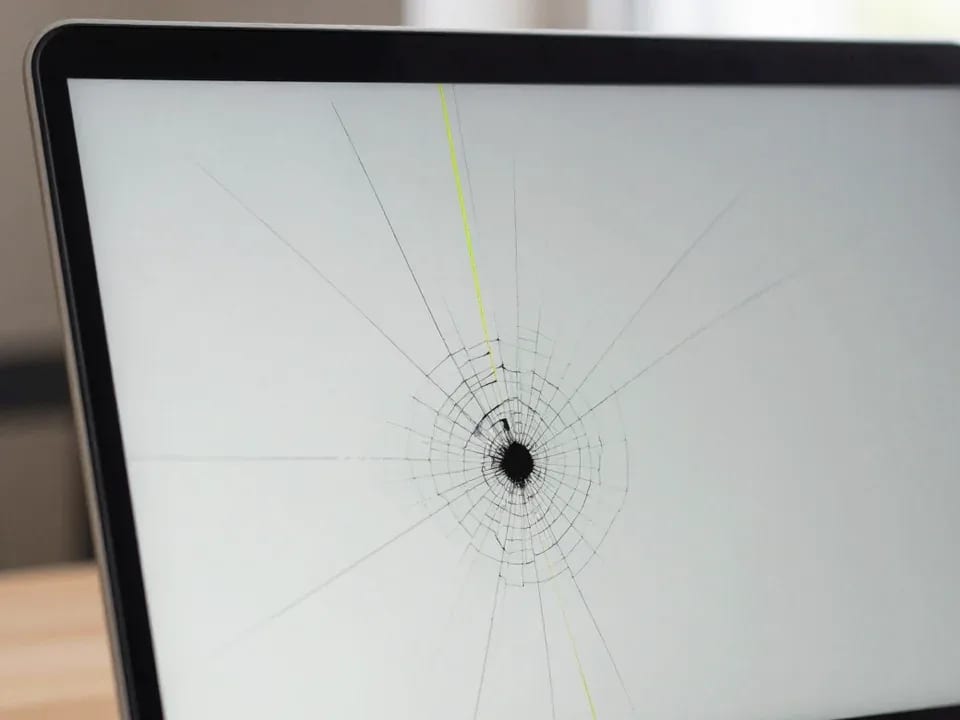
If your laptop screen is broken, turn the device off first, don't press on the display, and check the picture through an external monitor.
12 March 2026 · 11 minutes read
Air conditioner errors are codes on the display or flashing indicators that show which component has failed.
5 March 2026 · 12 minutes read
If your washing machine isn't filling with water, the most common culprits are a closed valve, a clogged inlet filter screen on the hose…
20 February 2026 · 13 minutes read