Денис Л.Order No. AS-1083 · 26 August 2026
oursBanknote Counter Repair in
Роман Мигунов пообещал и сделал, без напоминаний. Третий месяц — никаких проблем.
Repair: banknote counter repair in
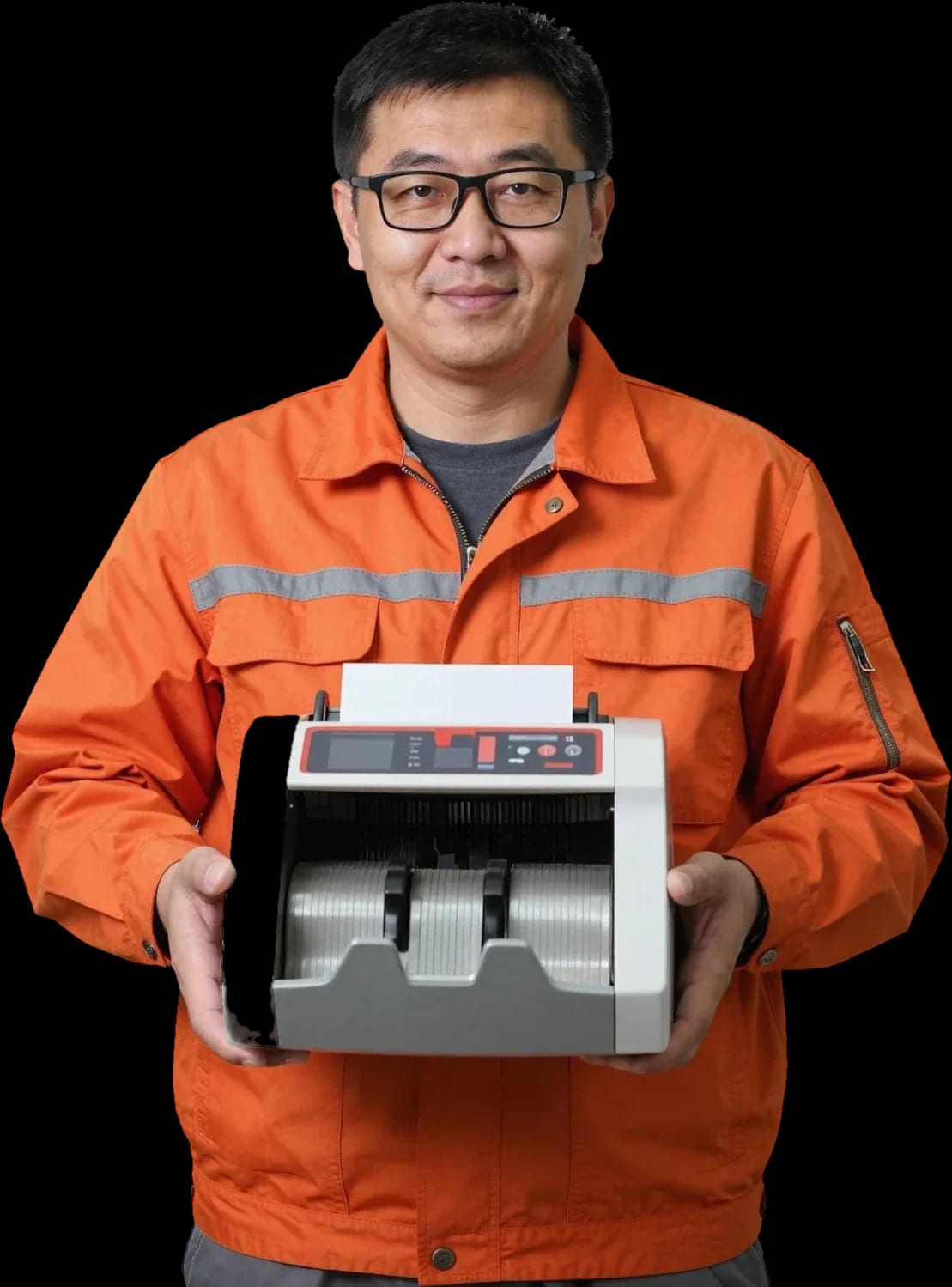
A technician arrives within 60 minutes anywhere in the city. Free diagnostics, technicians with 4 to 20 years of experience.
Our own technicians4 to 20 years of experience




Repair prices
Main symptoms and likely causes — from simple to complex.
Dirty counting sensors
from8 500 ₸
Incorrect transport path adjustment or debris
from7 000 ₸
Sensor, board, or firmware failure
from6 500 ₸
Dirty optical sensors
from7 000 ₸
Worn pressure plate
from22 500 ₸
Dust, moisture, or damaged wiring
from7 000 ₸
Overheating or software failure
from8 500 ₸
Sensor calibration is off
from7 500 ₸
1–2 hourstime
from 8,500 ₸cost
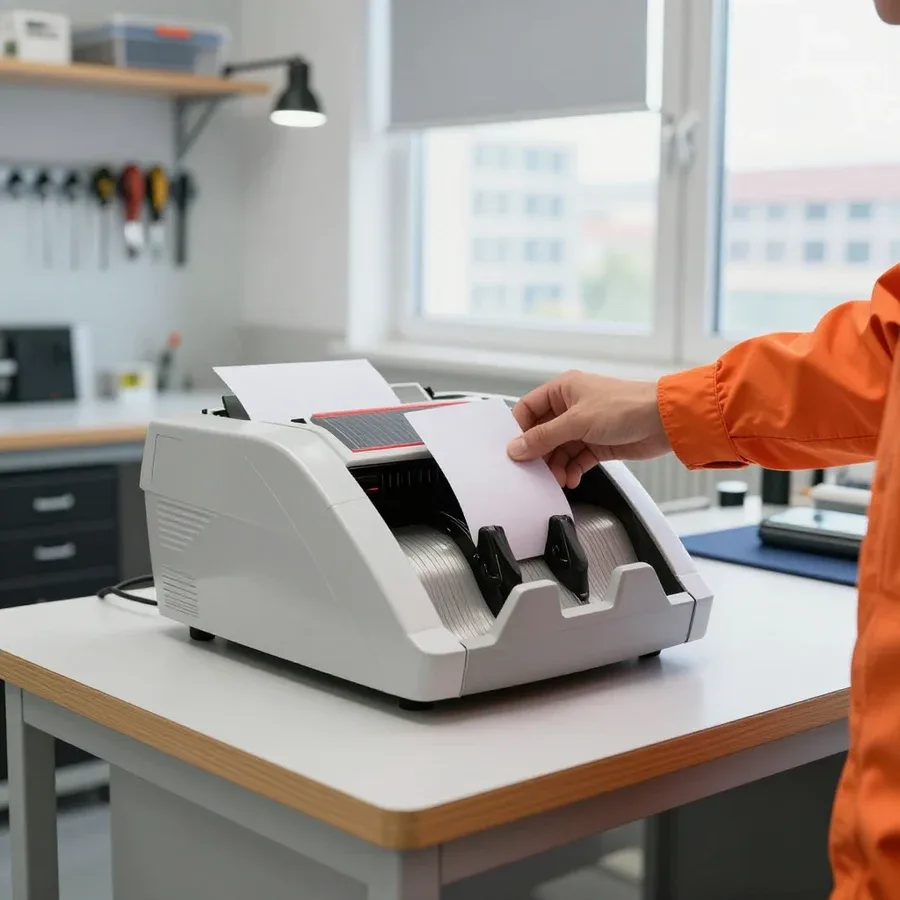 BeforeAfter

Five steps from request to checking the work.
Describe the symptom and model — the technician will prepare for the visit.
The technician will confirm the model, symptom, and operating conditions, and bring tools and common parts.
The technician will explain the choice of part or cleaning and agree on the scope of work before starting the repair.
You approve the scope of work and price, and the technician starts the repair.
The technician leaves a note about the work and agreed parts for future requests.
We reply during working hours
Agree on a convenient visit time and confirm the address — the technician will arrive within the chosen interval. Arrival within 60 minutes across the city, you can pay with Kaspi QR, Kaspi Red, card, cash, or bank transfer.

Warranty question? Call us
+7 (778) 046 88 53 experience7 years
PC and network repair engineer
 experience11 years
Senior mobile computer technician
 experience10 years
Laptop repair technician
 experience9 years
Motherboard repair technician
 experience16 years
Printer repair technician
 experience12 years
Computer repair technician
 experience18 years
All-in-one computer repair technician
Tech Service repairs banknote counters in Astana with our own technicians, no middlemen or subcontractors. A technician arrives within 60 minutes anywhere in the city, diagnostics are free, and you get a 1-year warranty on labor and parts. The technician gives you the price after free diagnostics, and you can pay via Kaspi QR, Kaspi Red, bank card, cash, or bank transfer for companies.
The counter stopped and shows an error — that doesn't mean the machine is done for. Most symptoms come down to a few common causes that a technician identifies during free diagnostics.
If your banknote counter won't turn on, the cause is usually in the power supply, control board, or a loose contact rather than the counting mechanism. The power supply is responsible for starting the machine: it converts mains voltage into the levels needed for the board and motors, and if it sags or fails, the machine won't start at all and sometimes goes into protection. The control board distributes power to the display, control panel, and counting unit — if traces are damaged or the regulator fails, the machine may stay silent or blink indicators without reaching the menu. A loose connector on the ribbon cable between the board and panel gives the same effect: power is there, but commands don't get through. Before calling a technician, check whether the outlet can handle the load and whether the cable is intact — this rules out some false calls and saves diagnostic time.
Jamming at the feed is most often caused by worn feed rollers, dirty transport sensors, or misaligned drives and gears. Feed rollers wear out over time and need replacement: the rubber loses grip, the banknote goes in crooked and gets stuck at the entrance to the transport path. Transport sensors track the banknote's position along the entire path — dust and paper dust on the optics give a false "jam" signal, and the machine stops the transport. Misaligned drives and gears show up as rhythmic humming and jerking during transport: the mechanical part runs crooked and pulls the banknote to the side. If only crumpled or damp banknotes jam, the issue may be their condition rather than the machine — test with flat banknotes before calling a technician.
Banknote chain errors and recognition failures usually point to dirty or misadjusted UV, MG, and IR sensors, and less often to a control board fault. UV, MG, and IR sensors are responsible for authenticating banknotes: each checks its own range — ultraviolet, magnetic marks, and infrared spectrum — and dusty optics throw off the trigger threshold. The banknote chain sensor records the sequence and intervals between banknotes; if misadjusted, the machine loses count or shows a quantity discrepancy. Control board faults are less common: the error persists after cleaning and repeats on reference banknotes. Cleaning sensors yourself without disassembly and calibration often brings the error back within days — detection is more reliably restored with testing on reference banknotes.
Not every counter needs to be taken to the workshop — some breakdowns are fixed on the spot. Let's look at when repair is possible at the client's address and when it's better to hand the machine over to specialists.
We come to clients anywhere in the city within 60 minutes, perform free diagnostics on site, and then fix the issues that don't require workshop conditions. The on-site format covers typical failures: banknote jams at the feed, dirty optical sensors, loose roller drives, and loose power contacts. Most such issues are resolved without transporting the machine. If, upon opening, it's clear the cause is deeper — in the board or counting mechanism — the specialist will tell you honestly and suggest taking the counter to the workshop rather than fixing it blindly. Our technician first reproduces the issue with the client's banknotes to avoid replacing a working unit. Before the visit, prepare the machine and a couple of banknotes that trigger the issue — this helps find the cause faster and more accurately.
If the issue involves the control board, the counting mechanism, or requires disassembly and calibration, we take the machine to our workshop and return it after repair. The control board handles counting logic and recognition, while the counting mechanism handles bill passage and stacking; both require careful disassembly of the casing and subsequent adjustment. Calibrating the recognition sensors and setting the gaps also count as in-shop work. Complex components are more reliably tested with reference bills and in multiple modes—something that's not always possible outside the workshop, so we move such work inside. As a result, the machine comes back to you working, not just "sort of counting." Before returning it, the technician runs bills in different modes again and cross-checks the count to make sure you get a machine with confirmed accuracy.
| Symptom | Likely component | Repair format |
|---|---|---|
| Won't turn on | Power supply, contacts | Usually on-site |
| Jams bills | Feed rollers, drives | Usually on-site |
| Doesn't recognize authenticity | UV/MG/IR sensors | On-site or in-shop |
| Bill chain error | Chain sensor, calibration | On-site or in-shop |
| Control board malfunction | Control board | In-shop |
| Counts incorrectly | Counting mechanism | In-shop |
Repair starts with diagnostics, not with replacing parts. Here's how diagnostics work, what affects the cost of labor, and what the warranty covers for fixing the fault.
Diagnostics are free: the technician checks power, sensors, feed mechanics, and the counting unit, reproduces the error, and identifies the cause. First, we compare the machine's behavior with the code on the display—it shows which path is failing: recognition, transport, or control. Then we test the sensors, inspect the feed rollers and counting mechanism, and check the control board under load. We also test the recognition optics separately: a dusty lens causes false bill rejections even when the mechanics are fine. It's important to reproduce the error with real bills; otherwise the defect goes unnoticed and shows up the next time the machine is used. Accurate diagnostics save money—sometimes a "breakdown" turns out to be a dirty sensor or a misadjusted setting rather than a failed part, and then an expensive replacement isn't needed.
The technician gives you the price after free diagnostics—it depends on which component failed and what work is needed. Replacing a recognition sensor, worn feed rollers, or repairing the control board are tasks of different complexity, so there's no single price for a bill counter. The final cost also depends on whether the counting mechanism needs adjustment after replacing a component or just cleaning and tuning. In our practice, the technician first explains the cause and the list of work, and only then names the price—so the owner decides, not the service center. Don't agree to work "blind" without an explanation of the cause—understanding what exactly is being replaced helps you judge whether it's justified.
We provide a 1-year warranty on labor and parts — if the issue comes back, we fix it under warranty with no repeat charge for diagnostics or repair. The year covers both the work and the installed parts: sensor, feed rollers, control board, if those were the ones replaced. That means if you come back, the technician returns to the same unit rather than starting the search from scratch. Technicians with 4 to 20 years of experience remember which unit they touched when fixing the issue, so a repeat visit doesn't turn into a new search for the cause. Moreover, the warranty covers the entire job, not just an individual part. Practical tip: keep your repair document — it makes it easier to confirm the case is under warranty and get a faster resolution for your request.
Some breakdowns are easier to prevent than to fix. Regular maintenance extends the device's service life and keeps counting accurate, so it's planned in advance rather than waiting for the first jam.
Preventive maintenance is needed so that wear on feed rollers and dirty sensors don't turn into banknote jams and recognition errors. During a shift, paper dust settles on the shafts, and ink and security fibers leave residue on the optics. The feed starts to slip, the device loses the interval between banknotes and stops with a chain error. When dirty, optical sensors have trouble distinguishing denominations, and UV, MG, and IR elements trigger false alarms on genuine notes. Scheduled service removes the residue and checks wear on the pulling parts before the unit fails completely. A device that processes large volumes of cash daily wears out faster — the frequency of care depends on the load, not the calendar.
Maintenance frequency depends on usage intensity: with daily counting of large volumes, the device is checked more often; with rare use, less often. If the machine sits at a cash register with a constant flow of money, rollers and sensors accumulate residue within weeks, while with occasional counting the interval between services stretches out. Focus on the volume of banknotes processed and their condition: worn and crumpled notes leave more paper dust and clog the feed faster. The first occasional jams or rare recognition errors are a signal for unscheduled maintenance; at this stage, a service visit is usually not yet required. Removing residue from rollers and calibrating sensors is easier than replacing a failed unit.
We service banknote counters of various brands and related banking equipment. Here's what devices we take in, which brands customers contact us about most often, and what to clarify in advance so the technician's visit goes smoothly without extra questions.
We service DORS, Cassida, Glory, Delarue and other banknote counters — both simple counters and multi-currency models with authenticity detection. DORS and Cassida machines are most often brought in with worn feed rollers and sensor failures after heavy daily use at cash registers: thousands of banknotes pass through the transport path per shift, and the rubber rollers gradually lose grip while dust settles on the optical sensors. Glory and Delarue models are often brought in with denomination recognition errors — their optical system is more complex, and dirty lenses immediately affect counting accuracy. A multi-currency machine with authenticity detection requires finer calibration than a simple banknote counter, so on such devices the technician starts by checking the optics and magnetic sensors. Each brand has its own typical weak points, so when you call it helps to give the model — the technician will know in advance which unit to check first and which tools to bring on the visit.
Besides banknote counters, we service banknote sorters, currency detectors and cash register equipment — by the same technician and with the same warranty. Sorters break down for similar reasons: jams at the feed, denomination detection sensor failures, feed shaft stoppage. In currency detectors, UV and infrared emitters most often fail, as well as the mode selection buttons — under intensive use they wear out faster than the electronics. Cash register equipment requires a separate approach: both the feed mechanism and power stability matter here, so diagnostics start with checking the power supply. The 1-year warranty on labor and parts covers both counter servicing and related machines — the terms are the same for all banking equipment. If you have several machines, the technician will assess each one during a single visit and tell you what needs attention first and what can still serve you well.
| What to tell us | Why the technician needs it |
|---|---|
| Brand and model | To understand typical weak points |
| Error text on the display | To narrow down the units |
| When the failure appeared | To tell wear from a one-off cause |
| Which banknotes fail | To check sensors and rollers |
There are many intermediaries in the banking equipment repair market: some take your request and pass it to a contractor, others just connect you with a specialist. Let's look at how a direct provider differs from such a scheme and why it affects turnaround time and warranty.
Tech Service is a direct provider: our specialist comes to you, not an intermediary's contractor, so one company is responsible for the work and the warranty. Your request is handled by the same service whose employees later open the banknote counter, check the feed mechanism and recognition optics. You don't retell the symptoms through a dispatcher and don't wait for the request to reach the contractor — the field technician gets the address and the task directly. The 1-year warranty on labor and parts applies, and you claim it at one address instead of looking for who is responsible for the replaced unit. With a direct provider, responsibility isn't split between two parties — one company is responsible for the work and the warranty.
Our technicians have 4 to 20 years of experience, and we arrive on-site anywhere in the city within 60 minutes of your request. This range of experience means that bill counters of different generations and designs end up with people who have already seen similar breakdowns — from worn feed rollers to recognition sensor failures. The on-site format covers the entire city: the technician comes to the location where the machine is installed and works right there. Fast arrival is especially important when the counter is needed to handle a flow of banknotes — machine downtime slows down the entire counting process, and at a cash desk or accounting department it halts revenue collection. In our practice, calls are most often made precisely when there is no time to waste: the equipment stands at a point where money is counted daily. If you need the counter by a specific time, let us know when you place your request.
You can pay via Kaspi QR, Kaspi Red, bank card, cash, or bank transfer for companies, and the technician quotes the price after free diagnostics, once the cause is clear. This procedure removes the main uncertainty: you don't agree to a repair blindly but first see which unit has failed — the feed mechanism, the optics, or the control electronics. Diagnostics are free, so you can have your machine checked even if it looks fine but periodically miscounts. The 1-year warranty covers both labor and parts, so replacing a worn unit doesn't turn into another paid visit a month later. Transparent payment terms and a warranty on parts give you confidence that service won't lead to extra expenses out of your pocket. You can clarify the payment format when you place your request.
A bill counter malfunction almost always comes down to a specific component — a sensor, a roller, or the power supply — rather than the machine being worn out. Below are the key points to keep in mind before calling a technician.
Tech Service technicians repair other appliances too — with the same 1-year warranty on labour and parts.
 Refrigerator Repair in Almatyfrom 3 000 ₸
 Washing Machine Repair in Almatyfrom 3 000 ₸
 Dishwasher Repair in Almatyfrom 3 500 ₸
 Oven Repair in Almatyfrom 3 000 ₸
 Cooktop Repair in Almatyfrom 3 500 ₸
 Air Conditioner Repair in Almatyfrom 3 500 ₸
 Boiler and Water Heater Repair in Almatyfrom 2 500 ₸
 Freezer Repair in Almatyfrom 6 000 ₸
 Tumble Dryer Repair in Almatyfrom 5 000 ₸
 Coffee Machine Repair in Almatyfrom 2 500 ₸
 Robot Vacuum Cleaner Repair in Almatyfrom 3 500 ₸
 Vacuum Cleaner Repair in Almatyfrom 1 500 ₸
 Microwave Oven Repair in Almatyfrom 2 000 ₸
 Hair Dryer Repair in Almatyfrom 1 500 ₸
 Iron Repair in Almatyfrom 3 000 ₸
 Electric Kettle Repair in Almatyfrom 2 500 ₸
 Mixer Repair in Almatyfrom 2 500 ₸
 Multicooker Repair in Almatyfrom 500 ₸
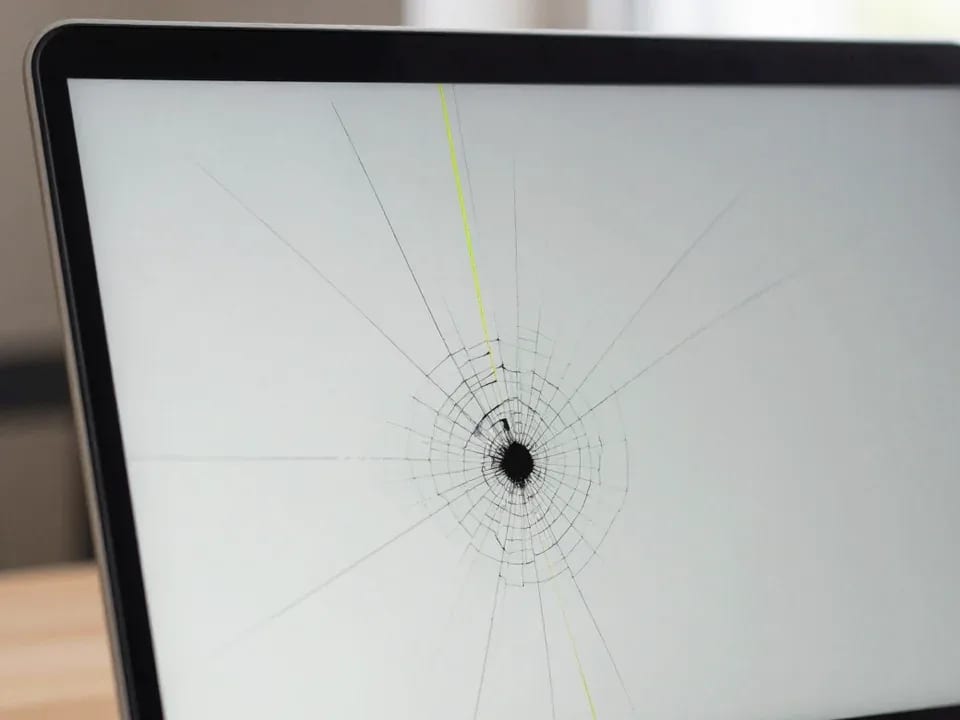
If your laptop screen is broken, turn the device off first, don't press on the display, and check the picture through an external monitor.
12 March 2026 · 11 minutes read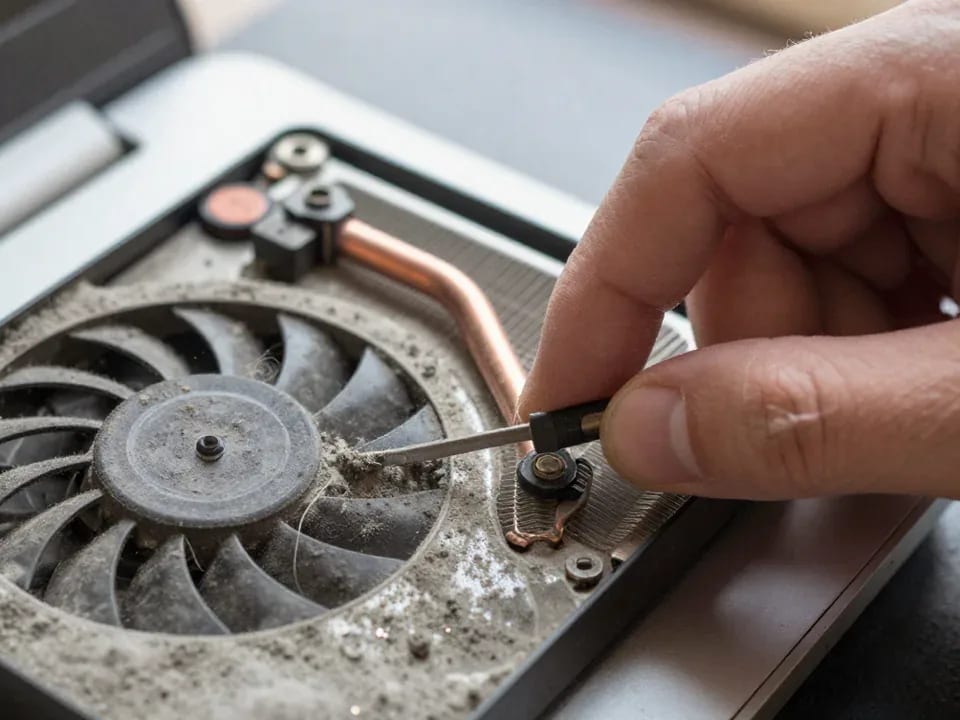
If your laptop freezes, the first thing to do is restart it and check Task Manager to see what's loading the CPU and memory.
25 January 2026 · 12 minutes read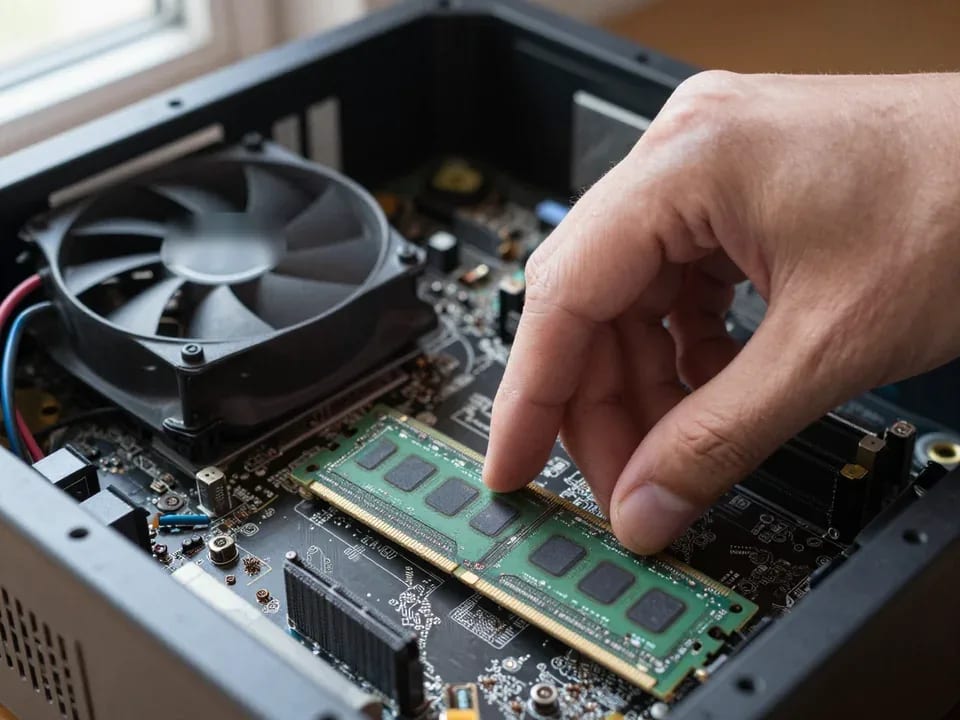
If your computer won't turn on, start simple: check the outlet, power cable, switch on the power supply, and the power button.
19 January 2026 · 13 minutes read
If your laptop won't boot, first determine which of two states you're in: the device doesn't respond to the power button at all…
13 December 2025 · 12 minutes read