Фёдор Б.Order No. AS-7581 · 15 April 2026
oursСервис выбрал по карте — этот был ближе всего. Третий месяц — никаких проблем.

We'll get your instrument sounding right and its keys working again. A technician arrives within 60 minutes anywhere in the city.
Our own technicians4 to 20 years of experience


Repair prices
Below are frequent symptoms and likely causes that a technician will check during diagnostics.
power supply, fuse, cord
from11 500 ₸
amplifier, speaker, settings
from4 500 ₸
mechanics, contacts, dust
from8 500 ₸
connector, transformer, regulator
from11 500 ₸
connector, jack, soldering
from7 500 ₸
sensors, board, software
from11 500 ₸
contacts, interference, worn parts
from7 500 ₸
connector, cable, contacts
from7 500 ₸
1–2 hourstime
from 7,500 ₸cost
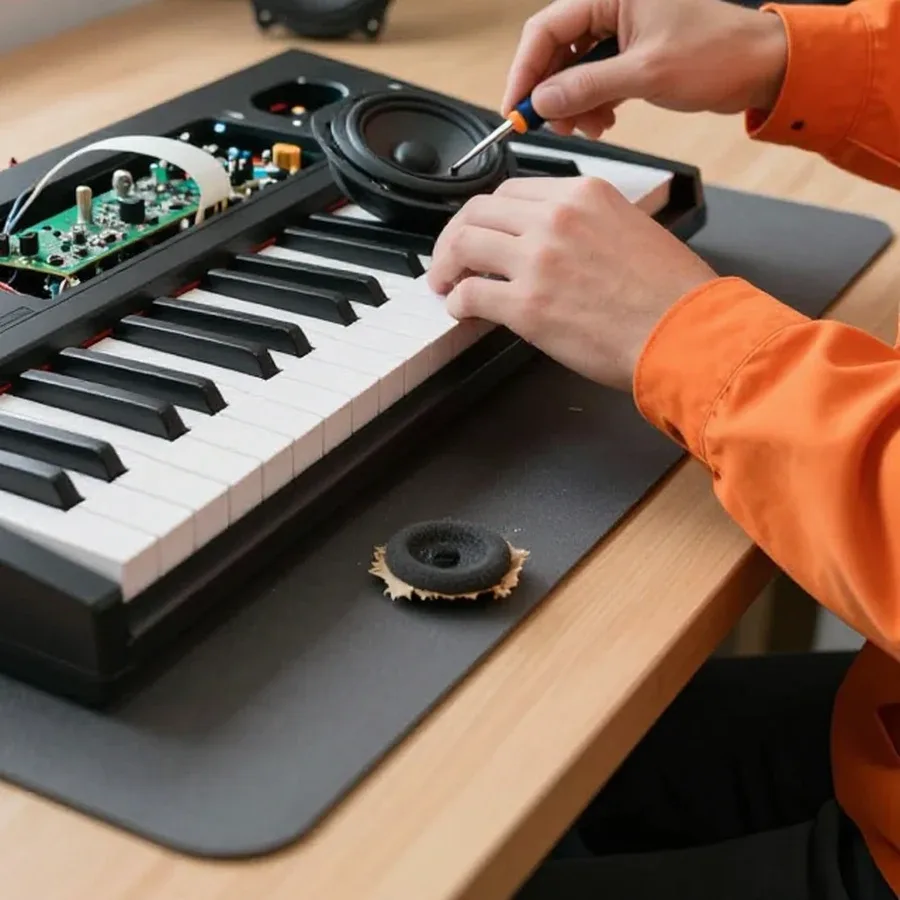 BeforeAfter

From request to inspection — five steps.
Describe the symptom and instrument model so the technician brings the right tools.
The technician comes anywhere in the city to inspect the synthesizer on site.
The owner receives a list of work and parts for approval before repair starts.
The agreed estimate and timeline are confirmed, then the technician starts work.
Ask the technician how best to collect the instrument and what documents about the work they provide.
We reply during working hours
Tell us the synthesizer model and symptoms: this helps the technician bring the right parts and tools. Let us know when it's convenient to receive the specialist.

Warranty question? Call us
+7 (778) 046 88 53 experience14 years
Senior small appliance technician
 experience15 years
On-site coffee machine diagnostics technician
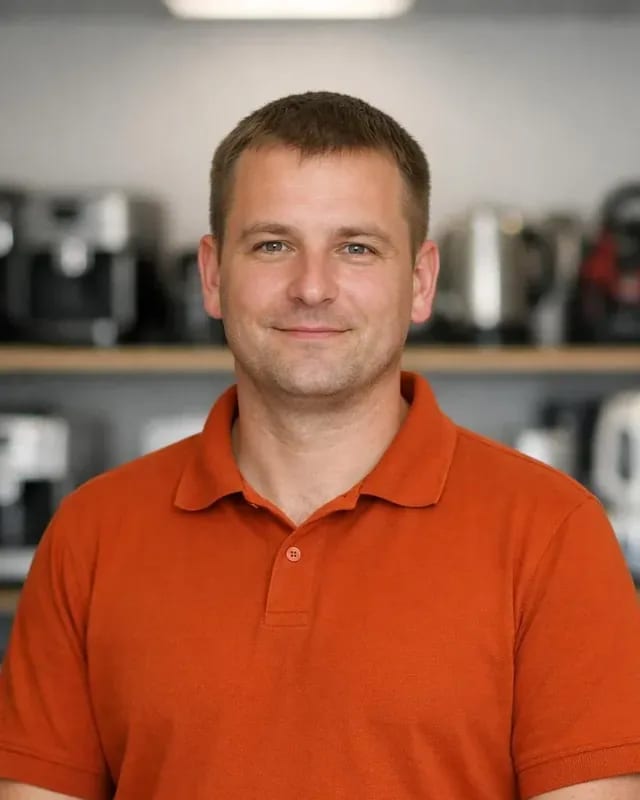 experience5 years
Coffee machine cleaning technician
 experience12 years
Coffee machine diagnostics technician
 experience5 years
Portafilter coffee machine technician
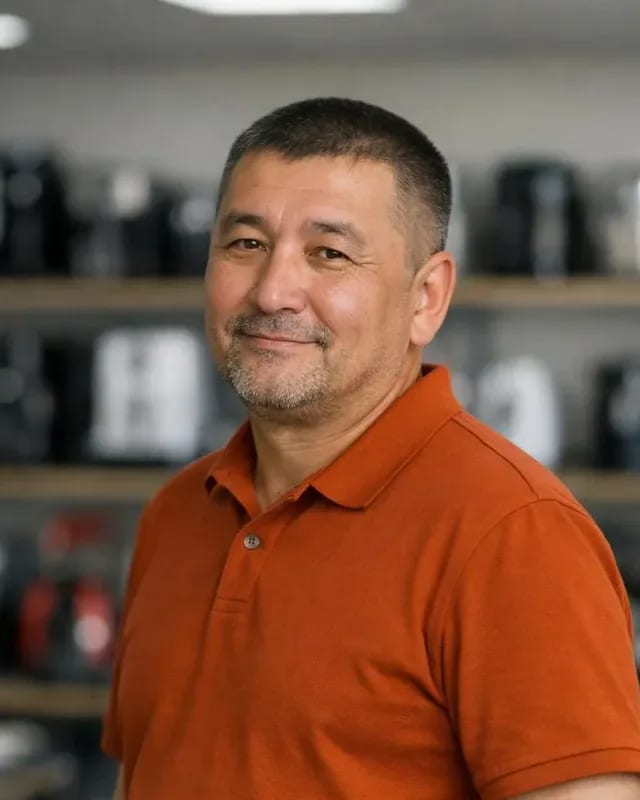 experience12 years
Vacuum cleaner repair technician
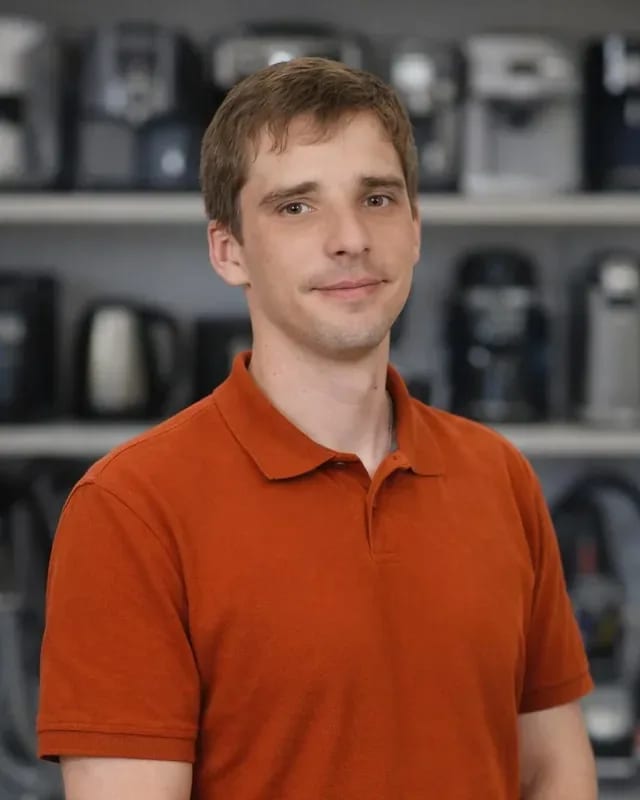 experience15 years
Vacuum cleaner repair technician
 experience18 years
Washing machine repair technician
Tech Service repairs synthesizers, digital pianos, and MIDI keyboards in Astana at your home or in our service center. A technician arrives within 60 minutes anywhere in the city, diagnostics are free, and there's a 1-year warranty on labor and parts. The technician gives you the price after diagnostics.
A synthesizer is electronics plus keyboard mechanics. That's why "won't turn on" and "no sound" are different failures with different causes. Let's look at what fails most often and how we identify it.
Most often the power supply or power board is to blame—they feed voltage to the main board, and if they fail, the instrument won't start at all. We check the external adapter first: on keyboards it's separate and fails more often than internal components. Then we look at the power board—traces and regulators burn out, voltage sags under load, and the instrument turns on and off. The main board receives stable power, so its failure shows differently: the indicator lights up but there's no startup. Another issue is the power connector, which loosens from frequent plugging and causes poor contact. If the synth is still silent after replacing the power supply, the cause is in the main board—that's why we start with free diagnostics, not with random part replacement.
When individual keys are silent or a note doesn't hold, the problem is usually in the keyboard mechanism—dirty contacts, hammers, or ribbon cables—not in the sound module. Key contacts oxidize over time from dust and moisture, and the key press signal doesn't reach the board. Hammers in semi-weighted mechanisms wear out and stop returning, so a key sticks or triggers intermittently. Ribbon cables wear at the bend, and then a whole group of notes disappears—for example, the entire upper register. The sound module is fine; it receives an already distorted or intermittent signal. Some of these cases are solved by cleaning the keyboard contacts without replacing parts, so don't rush to replace the whole mechanism—first we check where exactly the signal is lost.
Crackling and distortion come from the speakers, amplifier, or connectors, and an error code on the display points to a specific unit—audio path, power, or control. A speaker crackles when overloaded or if the cone is damaged; an amplifier does when capacitors dry out. The headphone jack and line output pass the audio signal out, and an oxidized contact causes crackling even with working speakers. A display with a code narrows the search: the manufacturer already indicated the unit, and the technician goes straight to it instead of checking the whole circuit. The same crackling can come from both a speaker and the headphone jack—you need to check the audio path through the entire chain, not just by listening through the built-in speakers.
We work with the electronics and mechanics of keyboard instruments, not just strings, so we accept synthesizers, digital pianos, and controllers from various brands.
We service synthesizers, digital pianos, and MIDI keyboards—all keyboard gear that has electronics, a sound module, and a keyboard mechanism. In a synthesizer, the built-in module generates the sound; in a digital piano, weighted key mechanics with hammers are added; and a controller has no sound of its own—it sends commands to a computer or external tone generator. These three types fail differently: pianos wear out hammers and sensors, synthesizers more often suffer from main board, power supply, and speaker issues, and compact models—from USB port and key contact problems. A controller without its own sound is simpler, but fails in the same units—contacts, ribbon cables, connection port—so diagnostics are similar.
We work on keyboards from popular brands — Yamaha, Casio, Roland, and Korg — as well as other synthesizers and pianos that Almaty residents bring in. Synthesizer repair in Almaty is model-specific: Yamaha and Roland often have issues with keyboard contacts and ribbon cables, Casio with the power supply and connectors, and Korg with the audio path and display. Each brand has its own keyboard mechanism and board layout, so the technician tailors the approach to the specific model rather than using a one-size-fits-all scheme. Even the same symptom on two instruments from different brands points to different components — that's what the first part of the free diagnostics, which we perform before any work, is for.
| Instrument component | What we check | Typical work |
|---|---|---|
| Keyboard mechanism | contacts, hammers, key travel | contact cleaning, replacement of mechanism parts |
| Power supply and board | voltage supply, startup | repair and replacement of power supply |
| Main board and sound module | sound generation, notes | diagnostics, installation of new components |
| Connectors and outputs | headphones, line out, MIDI, USB | checking and mounting connectors |
| Speakers and amplifier | crackling, distortion, volume | audio path check, replacement |
| Display and buttons | errors, freezing, response | diagnostics, replacement of elements |
You can get your instrument fixed at home or at our service center — the format depends on the breakdown and what's convenient for you. Here's how each option works and where it all begins.
A specialist arrives at your home within 60 minutes anywhere in the city — handy when the instrument is hard to transport or the breakdown doesn't require in-shop intervention. The on-site format covers most requests from Almaty residents: we check the power supply on the spot, inspect the connectors and keyboard contacts, and test the ribbon cables. If the issue falls within these components, it's resolved right away without transporting the instrument. Moreover, moving a synthesizer with a large mechanism — hammer-action or weighted — in a car is risky: shaking shifts the weights and adds new problems to the original breakdown. At home, we most often resolve power, connector, and keyboard contact issues, and if a board replacement is needed, our technician will agree on the next steps with you. This approach saves time: you don't have to haul the instrument across town and wait for it to be accepted at the service center.
Diagnostics are free — the specialist identifies the cause of the breakdown and quotes the cost of work only afterward, once it's clear what needs to be replaced and how. At the service center, we can fully disassemble the case and inspect the board under magnification — you can't achieve that depth of inspection at home. First, we determine which component has failed: the keyboard matrix, power supply, audio path, or controller. Then we agree on the scope of work with you and only then start. The exact timeframe depends on which component has failed, so we don't quote it before diagnostics — that way you don't get promises that won't hold up. We provide a 1-year warranty on labor and parts.
Tech Service is the direct contractor: our specialist inspects and restores the instrument, not a third-party platform that passes the request on to others. One team with 4 to 20 years of experience handles both on-site visits and in-shop service, so the instrument's history doesn't get lost between contractors. When the service does the work itself, one contractor is responsible for the result and the warranty — you don't have to figure out who is responsible for a repeat breakdown. We accept payment via Kaspi QR, Kaspi Red (instalments), bank card, cash, or bank transfer for companies, and the technician quotes the price after free diagnostics, before work begins. In my view, a transparent chain of diagnostics — approval — repair saves more nerves than a promise to do everything instantly. You see in advance which component is being checked and what is proposed for replacement, and you make the decision without pressure.
After restoration, it's important to understand what happens next with the instrument: what warranty you get, what it covers, and when you learn the cost of work. Let's go through these terms in order.
We provide a 1-year warranty on labor and parts — it covers both replaced keys and installed boards. This term applies to any synthesizer restoration performed by our technician: both on-site and in the shop. The warranty covers the fact that the fault was fixed and the installed part — if a key sticks again or a new board stops responding, the request goes through the warranty line. Components related to power and keyboard contacts require especially careful checking, so the warranty period is particularly important for them. A warranty on parts means that if a replaced component fails again, you return to the same contractor instead of looking for who installed the part and under what terms. Before handing over the instrument, clarify what exactly is covered by the warranty — this removes disputes on a repeat request.
The technician quotes the cost after free diagnostics — you pay for a clear scope of work, not for guesses over the phone. Diagnostics is included at no charge: the specialist opens the case, checks the power, the keyboard matrix and the control board, finds the cause, and only then states what will be fixed and how. Until that point, it's impossible to name an exact amount: the same symptom — 'won't turn on' — can be caused by a blown power supply, a loose ribbon cable, or a controller failure. You can pay via Kaspi QR, Kaspi Red, card, cash or bank transfer, and you agree on the cost before work begins. This procedure protects you from a situation where another fault surfaces after disassembly and the final amount changes without your consent. If the scope of work doesn't suit you, you have the right to refuse — diagnostics remains free.
If the fault returns within the warranty period after restoration, the technician examines the instrument again — under warranty, not as a new request. You don't need to describe the breakdown history again or prove that the problem is related to the previous visit: just say that the instrument was serviced and name the symptom. A repeat breakdown doesn't always mean the work was poor: sometimes the primary cause affects a neighboring component, and that is checked first. For example, a faulty power supply could have gradually overloaded the board — then the second visit concerns a different component. Diagnostics on a repeat request is also free, and the technician determines the cause again before changing anything. Don't disassemble the synthesizer yourself hoping to find the defect — this complicates the check and prevents the technician from accurately determining the cause.
A synthesizer with liquid damage is one of the most alarming cases, but not always a death sentence. Let's look at what happens inside the instrument and what the restoration result depends on.
Liquid damages circuit boards and key contacts — it causes oxidation and short circuits, and the longer the instrument stays wet, the deeper the damage. Sweet drinks, coffee, and tea leave a sticky conductive layer on the board that over time eats away traces and chip pins. Sugar-free water acts more slowly but triggers corrosion of the metal pads under the keys — they stop making contact, and some notes drop out or sound distorted. Moisture seeps under the keyboard membrane and into ribbon cable connectors, where oxidation happens fastest because the thin metal of the connectors corrodes first. Another risk area is capacitors and power regulators: liquid changes their conductivity, and the synthesizer starts behaving unpredictably or won't turn on at all. Don't turn on a flooded instrument to "check" it — under power the short circuit gets worse, and the chances of recovery drop.
We disassemble the instrument, assess damage to the boards and key pads, and restore what can be restored — but the result depends on the extent of the damage. First we remove the casing and keyboard block, clean the board with a special solution, and remove oxidation from traces and ribbon cable connectors. Then we check conductors for breaks and use continuity testing to find areas where the metal has already been eaten away — such traces we restore with a jumper wire. We clean the key pads and, if necessary, replace the contact groups to bring back response to all notes. Diagnostics are free, so the technician first shows you the real picture and only then proposes a work plan. We don't promise to save any flooded synthesizer: if the board is irreversibly damaged, it's more honest to say so after diagnostics than to take money for a hopeless repair.
The faster the instrument gets to a technician after liquid damage, the higher the chances of getting by with cleaning and restoring pads instead of replacing boards. In the first hours, oxidation is still superficial, and the conductive layer hasn't had time to eat deep into the traces — such cases are more often solved by cleaning and re-soldering individual components. The longer a flooded instrument sits unattended, the more often entire assemblies have to be replaced rather than individual parts. A technician arrives at your home within 60 minutes anywhere in the city, so the instrument doesn't sit unattended. Even if the synthesizer seems to work after liquid damage, oxidation can show up later — so it's better to show it to a technician right away rather than wait until it stops turning on.
If your synthesizer won't turn on or shows an error, it's important to quickly figure out who to contact. Let's look at how a direct service provider differs from intermediaries and how the process works.
Tech Service is a direct service provider, not an aggregator: the company itself accepts and fulfills the request, so you know right away who is responsible for the work and the warranty. Our specialist comes to your home or picks up the instrument for the workshop, and a 1-year warranty on labor and parts is honored by a single provider. With an aggregator, one request may involve several different contractors with different terms, while a direct provider has the same terms and warranty for all work. Our technicians have 4 to 20 years of experience: when the client deals with the same person who fixed the issue, there are fewer disputes — no need to figure out who is responsible for a repeat breakdown. When you call, ask right away who will perform the work and who is responsible for the warranty — that way you cut out intermediaries at the phone call stage.
A technician arrives anywhere in the city within 60 minutes, and you can pay any way you like — we accept Kaspi QR, Kaspi Red, card, cash or bank transfer. You don't have to bring the instrument to the workshop: our technician comes to your apartment or studio where the instrument is and works on site. That means you don't need to look for a drop-off point near your home — the technician will come to you wherever you are in the capital, including new residential areas on the outskirts. For a keyboard instrument this is especially convenient: a synthesizer with 61 or 88 keys is heavy and risky to transport on public transport, and with an on-site visit you don't waste time on packing and logistics. Keep the instrument assembled and plugged in before the technician arrives — that way they can reproduce the fault faster and won't waste time on assembly.
You can request free diagnostics — a technician will come, identify the cause of the fault and give you the price before any work starts. The request is handled by the company itself, not a middleman's call center, so the symptom and instrument model go straight to the technician. Diagnostics are free: you pay nothing for the inspection and you're not obliged to agree to further work if the quoted price doesn't suit you. If you describe the symptom in advance — won't turn on, no sound, crackling — the technician can prepare for the likely cause and the visit will be more productive. The more precisely you say under what conditions the fault appears (after warming up, on low notes, when connected to an amplifier), the faster they'll get to the source of the problem. Request diagnostics in advance, don't wait until the instrument stops turning on altogether.
A keyboard instrument breakdown almost always follows a clear logic: first the faulty unit is identified, then the repair format is chosen. Below is a short summary to help you decide before calling a technician.
Tech Service technicians repair other appliances too — with the same 1-year warranty on labour and parts.
 Refrigerator Repair in Almatyfrom 3 000 ₸
 Washing Machine Repair in Almatyfrom 3 000 ₸
 Dishwasher Repair in Almatyfrom 3 500 ₸
 Oven Repair in Almatyfrom 3 000 ₸
 Cooktop Repair in Almatyfrom 3 500 ₸
 Air Conditioner Repair in Almatyfrom 3 500 ₸
 Boiler and Water Heater Repair in Almatyfrom 2 500 ₸
 Freezer Repair in Almatyfrom 6 000 ₸
 Tumble Dryer Repair in Almatyfrom 5 000 ₸
 Coffee Machine Repair in Almatyfrom 2 500 ₸
 Robot Vacuum Cleaner Repair in Almatyfrom 3 500 ₸
 Vacuum Cleaner Repair in Almatyfrom 1 500 ₸
 Microwave Oven Repair in Almatyfrom 2 000 ₸
 Hair Dryer Repair in Almatyfrom 1 500 ₸
 Iron Repair in Almatyfrom 3 000 ₸
 Electric Kettle Repair in Almatyfrom 2 500 ₸
 Mixer Repair in Almatyfrom 2 500 ₸
 Multicooker Repair in Almatyfrom 500 ₸

If your dishwasher won't drain, the most common culprits are a clogged filter or drain hose; less often, it's the pump, impeller…
24 March 2026 · 12 minutes read
A washing machine can hum for many reasons, and the first thing to figure out is when the sound appears.
20 March 2026 · 12 minutes read
The easiest way to remove scale from a kettle is with citric acid: 1–2 tablespoons per liter of water, boil for 5–10 minutes, then drain and rinse.
17 March 2026 · 13 minutes read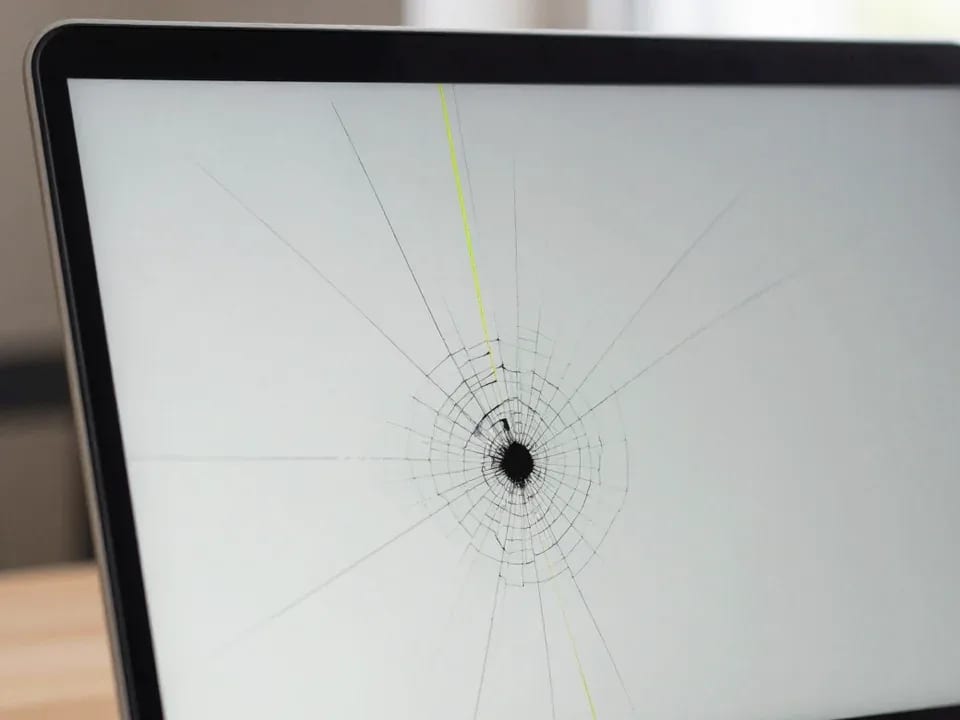
If your laptop screen is broken, turn the device off first, don't press on the display, and check the picture through an external monitor.
12 March 2026 · 11 minutes read
Air conditioner errors are codes on the display or flashing indicators that show which component has failed.
5 March 2026 · 12 minutes read
If your washing machine isn't filling with water, the most common culprits are a closed valve, a clogged inlet filter screen on the hose…
20 February 2026 · 13 minutes read