Tech Service repairs audio amplifiers in Astana: our technician comes to your home within 60 minutes or the work is done at our service center. Diagnostics are free, the price is quoted after diagnostics, and we provide a 1-year warranty on labor and parts. We handle home Hi-Fi, AV receivers, car and tube models.
Which amplifiers we repair
Devices differ in circuitry, power supply, and load. We group equipment and explain for each group which components fail most often and how we fix them.
Home Hi-Fi, integrated amplifiers, and power amplifiers
We repair home Hi-Fi, integrated models, preamplifiers, and power amplifiers, including older units that have long been out of production. In integrated designs, the power supply, preamp, and output stages are housed in a single chassis — when one component fails, the whole chain suffers, so we check the power supply, output transistors, and current protection. We diagnose separate preamplifiers and power amps by the signal at the input and output: it shows where the level is lost. Amplifier repair starts with free diagnostics, and a technician arrives within 60 minutes anywhere in the city. In older units, potentiometers and filter capacitors wear out — a scratchy control or weak bass is a reason for diagnostics, not for replacing the equipment.
AV receivers, car and tube amplifiers
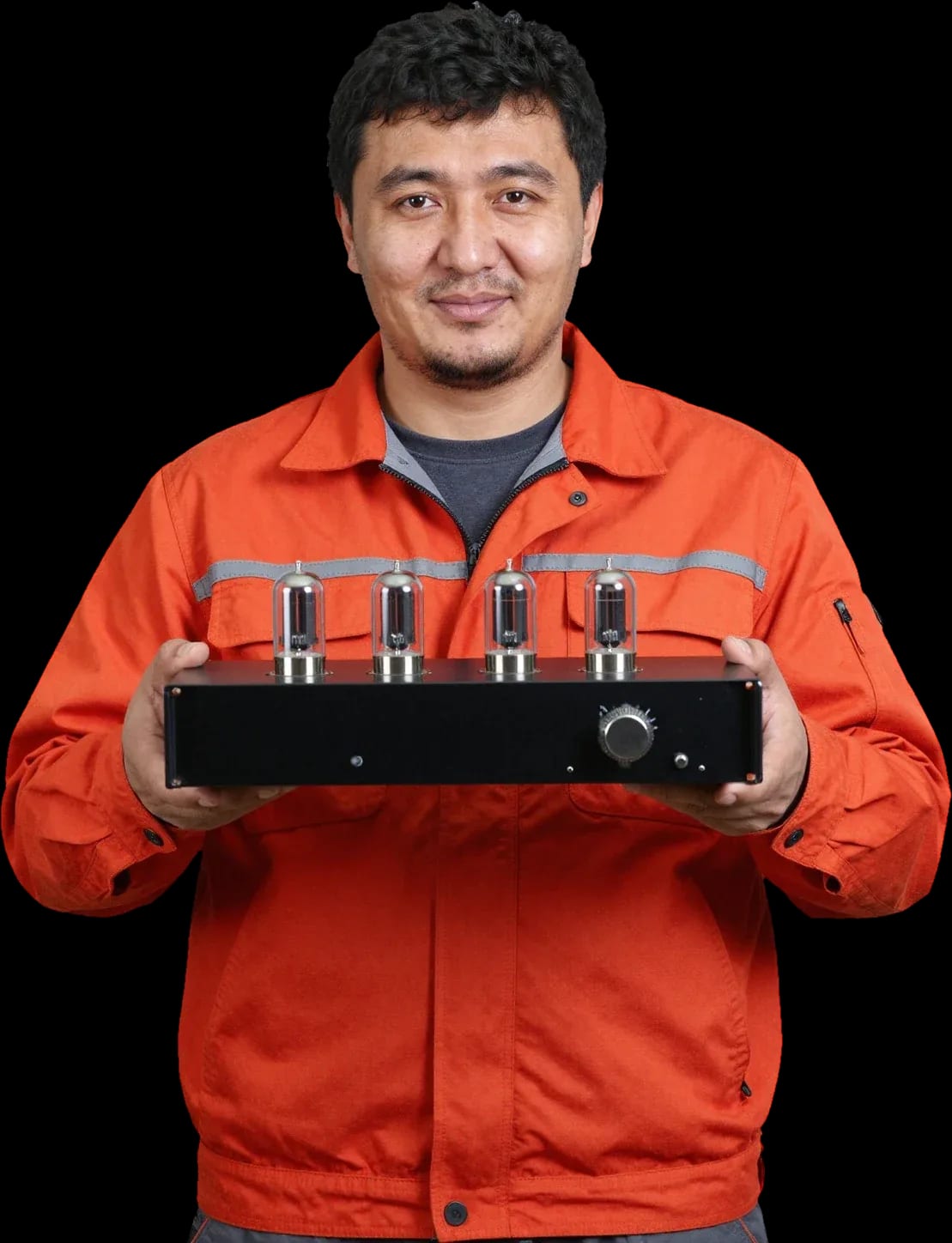
We take AV receivers and home theater systems, car devices with a technician visit, and tube models where we check the tubes and operating modes separately. In receivers, the multichannel circuit combines digital processing and analog output stages, so a fault can be in any link — from the power supply to channel switching. Car amplifiers operate in harsh conditions: temperature changes, vibration, and voltage drops in the electrical system affect the power supply and protection. In tube designs, high-voltage capacitors and transformers are added to the tubes, and setting the modes requires care. In AV receivers, the symptom “no sound” is often related not to the stage but to input settings and relays, so we start diagnostics with the signal path, not with soldering.
Built-in amplifiers in speakers, music centers, and studio equipment
We repair active speakers with built-in amplifiers, music centers, mini systems, as well as studio and live sound models. In active speakers and music centers, the amplifier board sits next to the power supply and speakers, so overheating and vibration accelerate component wear. In studio models, stage accuracy and low noise are important; in live sound models, power headroom and load stability during long sessions matter. We break such a device down by components: we check the power supply separately and the amplification stage separately. In built-in circuits, electronics and acoustics share one enclosure, so the technician first determines whether the board or the speaker is at fault, and only then chooses the repair. If the speaker is fine but there is no sound, we check the power supply of the amplifier board and the integrity of the traces: in a tight enclosure, they suffer from vibration and overheating.
Why an amplifier fails and what each symptom means
An experienced technician can often tell from a single symptom where to look. Below we cover the most common complaints and likely causes so you have a rough idea of the scale of the problem.
The amplifier won't turn on or immediately goes into protection
If the device won't turn on or goes into protection, we check the power supply, fuses, output stage, and protection circuit — most often one of these is at fault. The protection relay opens the circuit and shuts off the device when a fault occurs, so turning it on again does nothing: the same automation trips, sometimes even earlier than before. During diagnostics, the technician tests the fuses, measures voltages at the power supply output under load, and checks the output transistors for breakdown. The protection circuit is inspected separately: a false trip is often caused by a dried-out capacitor or sagging power supply rather than a blown stage, and then replacing transistors won't solve the problem. Protection doesn't trip for no reason, and trying to turn the device on again before diagnostics can finish off the output transistors, so it's best to unplug it right away.
One channel is quieter, crackles, or the sound drops out
Hoarseness and channel imbalance are most often linked to the output stage, potentiometers, or connectors, and during diagnostics we separate a fault in the unit from issues with speakers and cables. Wear on the volume control causes crackling when you turn the knob, oxidized connector contacts cause intermittent or dropping sound in one channel, and uneven volume between sides often comes from a resistor that has gone open in the feedback circuit. The output stage is checked stage by stage: the technician compares the signal at the input and output of each half and finds the failed transistor without replacing working parts. Before changing anything, the technician swaps the speakers between channels — this shows whether the unit or the speaker is at fault, and this simple swap can save a whole repair if the problem turns out to be in the speaker.
Hum, buzz, clicks, and overheating
Hum and buzz without a signal usually point to the power supply, grounding, or filter capacitors, while overheating and shutdown point to clogged ventilation and heatsinks. Dried-out electrolytics in the filter stop smoothing ripples, and low-frequency hum leaks into the sound; poor grounding causes interference and clicks when you touch the case, and oxidized contacts in power circuits cause irregular clicks you can hear. Overheating is more often linked to dust in the ventilation channels: heatsinks stop dissipating heat, thermal protection kicks in, and the unit shuts down after loud listening. If the hum disappears when you disconnect the signal source, the cause is often in the cables and signal path, not the amplifier itself — it's worth checking before calling a technician.
Summary table of symptoms and check areas
| Symptom | What we check first | Common cause |
|---|
| Won't turn on | fuses, power supply | blown fuse |
| Goes into protection | output stage, protection circuit | shorted transistors |
| One channel is quieter | output stage, potentiometers | worn volume control |
| Hoarse, crackling | potentiometers, connectors | oxidized contacts |
| Hum, buzz | power supply, grounding | filter capacitors |
| Overheating | heatsinks, ventilation | dust in channels |
How the repair goes from request to check
Amplifier repair is a sequence of steps from request to post-repair check. We show it in full so you understand what happens at each stage and what the technician is responsible for.
Request and free diagnostics
Diagnostics are free with us, and the technician quotes the cost of work only after them, once the cause and scope are clear. We take requests by phone: we record the symptom — won't turn on, goes into protection, channel crackles — and the model of the unit. Then the technician comes to your home or takes the equipment to the service center, opens the case, inspects the board for swollen capacitors and signs of overheating, tests the output stage and power supply, checks fuses and traces. Based on the results, they explain which part failed, what work is needed, and what the scope consists of. For diagnostics, it's worth describing the symptom and model in advance — then the technician brings the right tools and finds the cause faster. This approach saves time: the fault is localized before disassembly, and the client immediately understands what they're paying for and which parts will be needed.
Soldering, component replacement, and cleaning
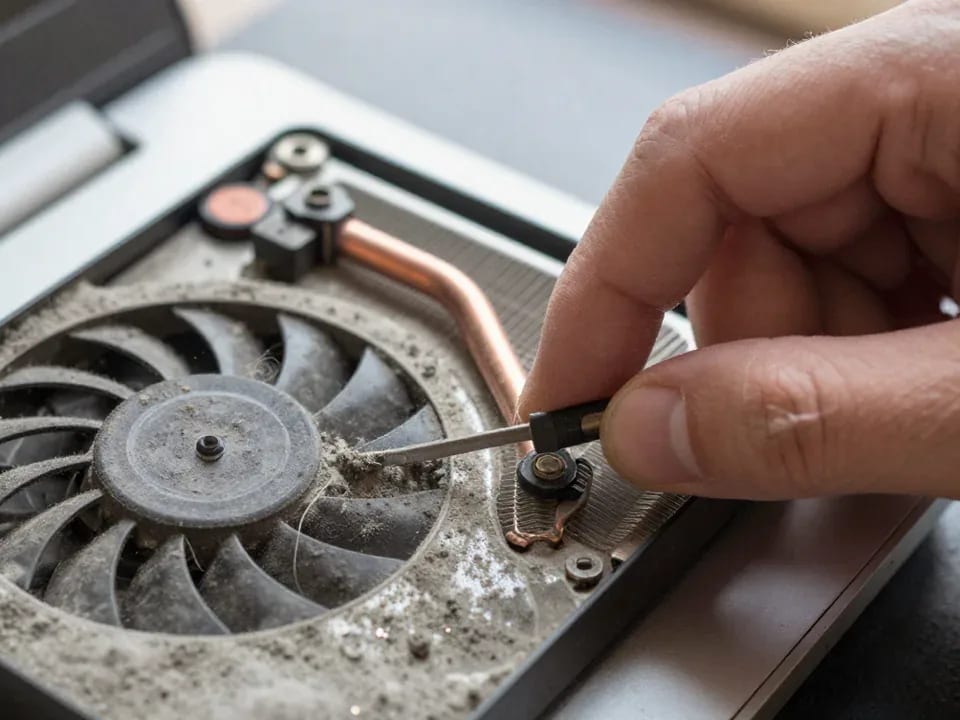
Once we agree on the scope, we solder and replace components, and if there's overheating, we also clean the amplifier of dust and restore ventilation. We solder carefully to avoid overheating the traces and neighboring elements on the dense board. We replace electrolytic capacitors, resistors, transistors, and protection ICs, and if needed, we repair damaged traces and connector contacts. We remove dust from heatsinks and the case with air blowing and a soft brush — clogged cooling fins are a common cause of overheating. We replace old electrolytic capacitors that are past their lifespan as a set per power rail, not one by one: a dried-out neighbor in the circuit quickly fails next. Replacing a single burnt transistor without checking the neighboring ones in the stage often leads to repeated failure, so we replace the whole unit, not just one part.
Testing and adjustment after work
We test and adjust the finished amplifier — we run it through the channels, check the response to load, and make sure the protection doesn't trigger. We set the idle current of the output stage and channel balance so that left and right play at the same volume without skew. We listen to the device on real speakers at different volumes, monitoring for hum, buzz, and clicks that weren't there before the service. We separately check the response to a sharp volume increase and to long operation under load — this reveals defects that aren't visible during a short power-on. Only after that do we return the equipment — there is a 1-year warranty on labor and parts. Testing on real speakers is more important than testing on the bench: some defects only appear under load at a certain volume, and such a run reveals them before handover.
Repair at home or at the service center
Not every breakdown is convenient to fix on site. We explain what can realistically be done at home and what requires a stationary stage at the service center.
What the technician does at home
A visiting technician arrives within 60 minutes anywhere in the city and performs diagnostics on site, checks the signal path, cables, and connectors, and fixes simple issues right away. Our diagnostics are free: the specialist listens to both channels, inspects the input contacts and speaker terminals, checks the power supply and the device's response to a signal. Most often, on-site visits confirm problems with oxidized connectors, a broken cable, a loose contact, or misconfigured settings — these can be fixed without transporting the equipment. Heavy AV receivers and built-in amplifiers in speakers are inconvenient to transport, so the technician assesses the breakdown where the equipment stands: a visit saves effort and reduces the risk of damaging the device in transit. Based on the diagnostic results, the specialist honestly says whether the issue can be fixed on site or the device needs to be taken in.
When a stationary stage is needed
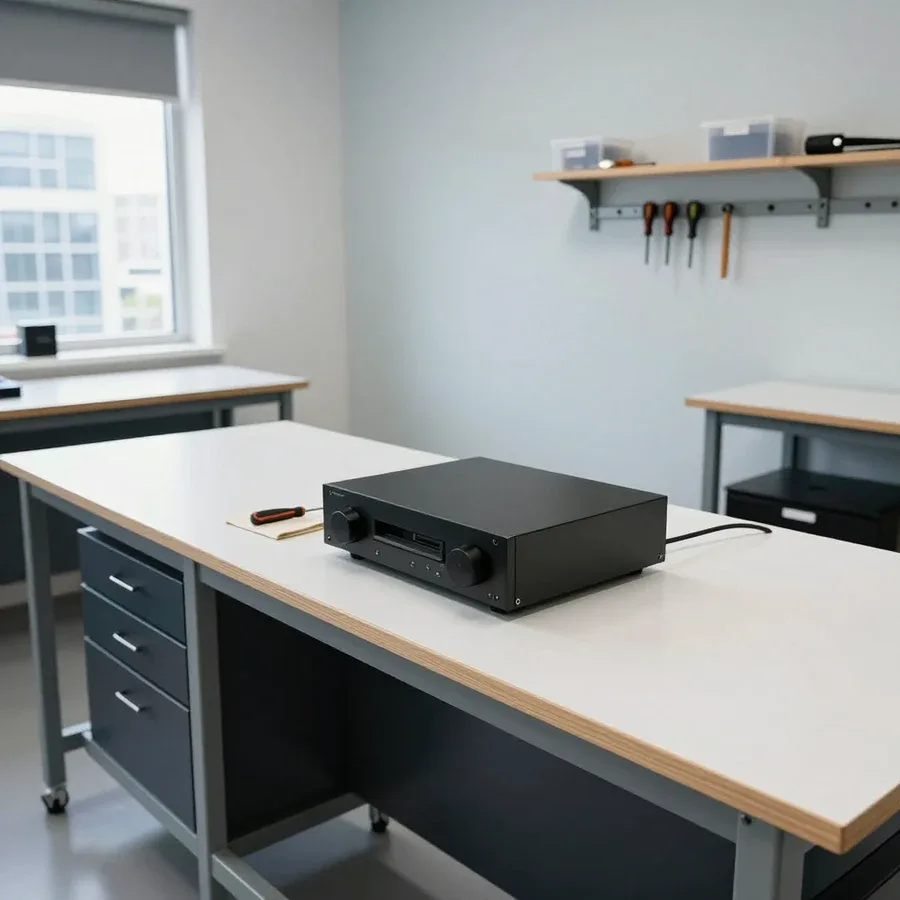
If board soldering, output stage replacement, or work with a tube circuit is required, we perform the work at the service center, where there are conditions for precise work with boards. Such defects require disassembling the case and accessing the traces — doing this on the fly, on a table in an apartment, is risky. Complex faults manifest under load and after warming up, so some work is more correctly done at the service center rather than in the client's kitchen: there the circuit can be run at different signal levels to catch an intermittent defect. Tube amplifiers additionally require care with high voltage on the anodes. The technician determines which format suits the specific symptom and coordinates the transportation of the device with you if a stationary stage is unavoidable.
Comparison of repair formats
| Parameter | At home | At the service center |
|---|
| Diagnostics | on site | at the service center |
| Simple issues | fixed immediately | — |
| Board soldering, stage | — | performed at the service center |
| Tube circuits | — | performed at the service center |
| Heavy equipment | convenient | needs to be transported |
Warranty and what to do if the problem returns
A warranty shows how confident a service is in its own work. Here's exactly what our 1-year warranty covers and what we do if the defect comes back after amplifier repair.
What the 1-year warranty covers
We provide a 1-year warranty on labor and parts, meaning we stand behind both the quality of our work and the components we install for the entire period. This covers soldering, component replacement, and adjustment—everything the technician did by hand. If a transistor, capacitor, or other part we installed fails within a year, we deal with it under warranty rather than treating it as a new breakdown. One more thing: a warranty relies on honest diagnostics. When the cause isn't fixed but merely masked, the defect returns quickly—that's why we look for the root cause, not the symptom. If a technician just replaces a burnt component without checking the power supply, the output stage will fail again, and the warranty case turns into a repeat visit.
If the amplifier goes into protection again after repair
If the amplifier goes into protection again after repair, we re-examine the cause under warranty and don't consider it a new breakdown. Repeated protection triggering often points to a defect that only shows up under load: the unit behaves fine at idle but the relay clicks again at peaks. So the second time we check the entire signal path—from the power supply to the output stage—not just the replaced unit. This approach catches intermittent faults that aren't visible during the first check. Protection is the circuit's response to overload, and it's important to understand what's causing it: a voltage drop, a bias shift in the output stage, or a fault in the protection circuit itself.
Payment and transparent terms
We accept payment via Kaspi QR, Kaspi Red (instalments), bank card, cash, or bank transfer for companies, and the technician quotes the price after free diagnostics, once the scope of work is clear. The process is simple: first the specialist opens the unit, finds the cause, and explains what needs to be replaced and why; then you approve the work, already understanding the defect. The transparent sequence of "diagnostics first, price second" protects you from surprises at the end and from unnecessary replacements. A technician visit within the city takes up to 60 minutes, and the technician comes to your home or takes the equipment to the service center—no middlemen between you and the person doing the work. This format also matters for warranty claims: you know who to return to with a repeat defect and don't have to find a new technician.
Prevention and how to choose a technician in Astana
Some breakdowns can be prevented with proper care, and others by choosing the right technician. We've combined both aspects in one section so you can solve the problem before it gets expensive.
Dust cleaning and overheating prevention
Dust cleaning and restoring ventilation is prevention that directly reduces the risk of overheating and the amplifier shutting down under load. We disassemble the case, blow out the heatsinks and boards, clean the ventilation channels, and check that the intake and exhaust grilles aren't clogged. Dust on heatsinks acts like a blanket: the unit gets hotter even with a fully functional circuit, and thermal protection triggers earlier than it should. This is most noticeable in AV receivers and power amplifiers that sit in closed cabinets and run for hours. Blowing out dust extends the life of electrolytic capacitors and output transistors, whose lifespan is shortened by constant heat. If the case feels hot to the touch after just half an hour of operation, bring the unit in for cleaning and a temperature check.
How to tell a direct technician from a middleman
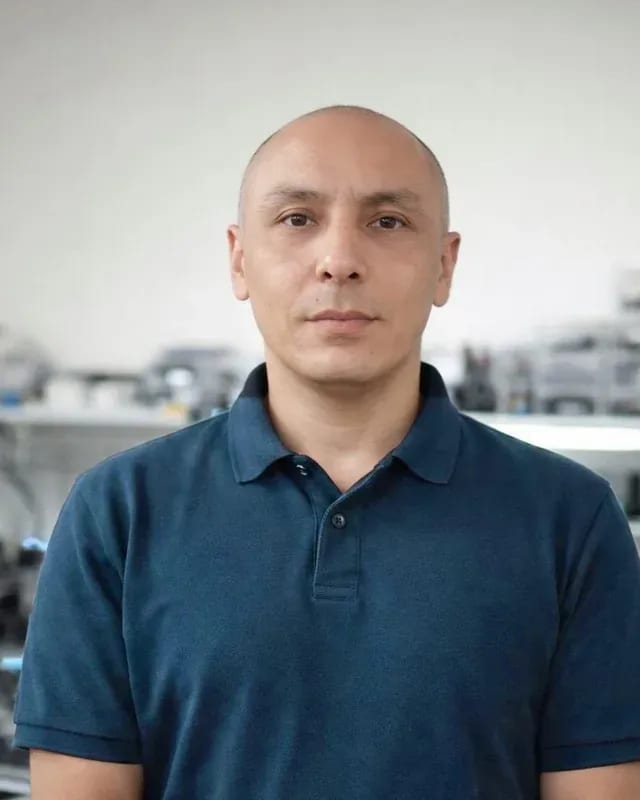
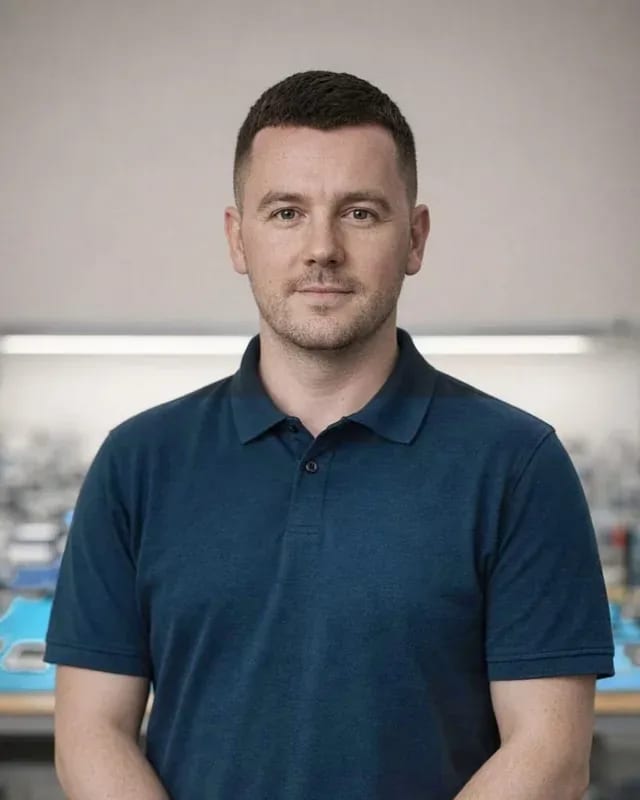
Tech Service is the direct service provider: your amplifier is handled by our own technician, not a middleman who passes it on to a third party. When you book, you know right away who will come and who will work on the board, so the diagnostics and recommendations come from someone who has actually had the unit in their hands. With a middleman, you don't see who is repairing the amplifier, which makes it harder to get clear diagnostics and a warranty on specific work. Ask directly whether the service has its own technician and how the warranty on soldering and replaced components is handled. We give a 1-year warranty on labor and parts — that answers the question of how confident the provider is in the result. A middleman usually can't give you either timelines or scope of work before getting the unit back from the contractor.
What to look for when choosing a service in Astana
- Free diagnostics: the provider first figures out the cause of the problem instead of quoting a price blindly.
- Warranty on labor and parts: shows how confident the service is in its work and ready to stand behind the result.
- Technician visit: important for heavy equipment and built-in amplifiers that are inconvenient to bring to the workshop.
- Technician experience: 4 to 20 years means practice with different circuits and generations of equipment.
- Direct service provider: you understand who exactly is repairing your amplifier and who to make claims to.
- Price after inspection: an honest estimate is only possible after diagnostics, not before — if a price is quoted blindly, that's a reason to be wary.
Audio amplifier repair for better sound
Here's the key things to keep in mind before contacting a technician: what the scope of work depends on and what terms to rely on when choosing a service provider.
- A symptom is not a diagnosis: won't turn on, goes into protection, a channel sounds distorted and there's hum — these are different components and different scopes of work.
- Format depends on the fault: simple defects are fixed on-site, while soldering the board and the amplifier stage is done at the service center.
- Diagnostics and cost: a free check and a price quoted after it remove the fear of overpaying for an unknown repair.
- 1-year warranty: the term on labor and parts is a real guideline when choosing a provider, not an advertising slogan.
- Preventive maintenance: cleaning out dust and proper ventilation extend the life of the unit and reduce the risk of overheating.