Вадим Г.Order No. TSA-44239 · 24 July 2025
oursДолго выбирал, остановился на этом варианте. Хотел вызвать на дом, но в ЖК не пускают без пропуска. Работает, как будто и не ломалось.
We arrive at your door within 60 minutes. 1-year warranty on labor and parts.
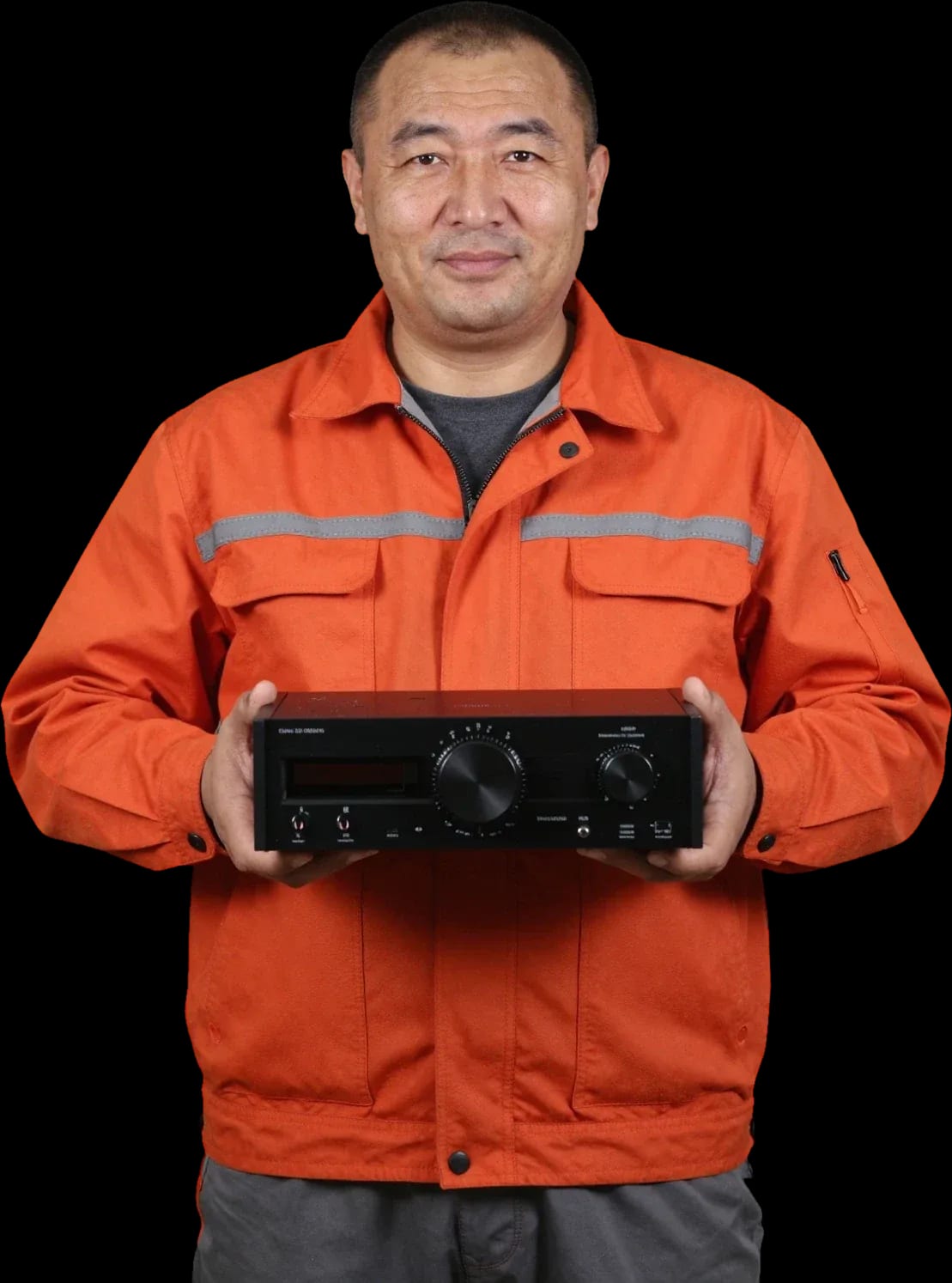
Our own technicians4 to 20 years of experience




Repair prices
Below are typical symptoms and likely causes. The technician will determine the exact cause after diagnostics.
broken circuit, faulty speaker
from4 000 ₸
speaker wear, oxidized contacts
from4 000 ₸
power supply failure, broken cord
from8 500 ₸
faulty control, broken wire
from7 000 ₸
poor ground contact
from7 000 ₸
oxidized tracks, worn potentiometer
from7 000 ₸
module failure, antenna damage
from4 500 ₸
worn belt, motor failure
from11 500 ₸

Five steps from request to checking the work.
Describe the symptom — the technician will ask follow-up questions.
Agree on a convenient time and address so the technician arrives on time.
The technician will find the cause and quote the repair cost.
Once you approve, the technician performs the repair on site.
We check the sound and all functions.
We reply during working hours
Describe the symptom and device model — the technician will prepare tools and parts for the visit. Diagnostics are free.

Warranty question? Call us
+7 (778) 046 88 53 experience7 years
Lead electronics repair technician
 experience10 years
Mobile PC repair technician
 experience10 years
Laptop repair and assessment technician
 experience15 years
Digital device repair technician
 experience15 years
Laptop and all-in-one repair technician
 experience10 years
TV screen replacement technician
 experience9 years
Backlight replacement technician
Tech Service repairs audio equipment in Astana at your home or in our service center: a technician arrives within 60 minutes anywhere in the city, diagnostics are free, and you get a 1-year warranty on labor and parts. We take speakers, subwoofers, amplifiers, receivers, stereo systems, and soundbars. The technician gives you the price after diagnostics.
A symptom is not a verdict but a clue to where to look for the cause. We break down the most common complaints about home audio equipment and what's really behind them.
Crackling at high volume usually comes from a worn surround or an overloaded driver, not from the amplifier. The cone surround loses its elasticity over time, the cone starts moving unevenly, and at peak volume the woofer produces a rattle that isn't there at low levels. Rubber surrounds age from temperature and humidity changes, while cloth surrounds stretch from constant use at the limit. The tweeter adds whistling distortion when its voice coil has already been overheated from overload. The amplifier module can also crackle, but then the distortion is audible even at medium volume, not just at maximum. It's easy to check: turn the volume down. If the crackling disappears, it's a mechanical issue with the driver; if it stays, look for the cause in the amplification. If a self-check doesn't help, audio equipment repair in Astana starts with free diagnostics — the technician will determine what's causing the crackling.
A hum without bass usually means the subwoofer is getting a signal but not reproducing low frequencies — the culprit is the driver, the crossover, or the cutoff settings. The crossover separates frequencies and sends only the low band to the subwoofer; if its cutoff is off, the cabinet hums on one note and there's no deep bass. The driver itself may have come unglued from the basket or developed a break in the voice coil — then it moves but doesn't push air as it should. The cable and connector can produce a similar picture: the signal passes but with loss. Foam surrounds in a sealed enclosure dry out faster than you'd think, and the cone starts to wobble without output. Before bringing in the subwoofer, check the frequency cutoff control and the cable: half of all "breakdowns" turn out to be a misadjusted setting.
The Protect indicator signals that the amplifier's protection has tripped, and Clip indicates signal overload; both point to a problem in the amplification or power supply. Protection trips when the output stage heats up beyond normal, and the cause can be a clogged heatsink, dried thermal paste, a weak power supply, or a short in an output transistor. Clip lights up earlier — it's not a breakdown yet but a signal that the input level is higher than the amplifier can deliver without distortion. A power supply with voltage sag can also drop the amplifier into protection, and externally it looks like overheating. Dust accumulated on the heatsink impairs heat dissipation more than most people think, so cleaning sometimes brings the unit back to life. If Protect lights up after warm-up, don't turn the amplifier on again — you risk finishing off the output stage that could still be restored.
Here's what people actually bring in and what we fix, so you can immediately see if this is your case and whether it's worth calling a technician.
We accept active and passive speakers, subwoofers, amplifiers, and soundbars — from household models to home Hi-Fi audio. Passive speakers are simple: a driver, a crossover, and terminals, so the failure is most often related to the surround, voice coil, or oxidized contacts on the connectors. Soundbars and active speakers contain an amplifier board, a switching power supply, and digital signal processing, and a failure of any of these units shuts down the entire device. Amplifiers come in with heatsink overheating, protection tripping, and one channel dropping out while the other works. We check subwoofers separately: a hum without bass output is often caused not by the driver but by the frequency cutoff in the settings or a damaged cable. Active speakers are more complex than passive ones: they already have an amplifier inside, so diagnostics start with the power supply, not the driver.
We also accept receivers, stereo systems, home Hi-Fi and vintage speakers — the age of the equipment is no obstacle if the components can be restored. In receivers, the output stages and connection jacks are most often affected: one channel goes silent while the other works with distortion at high volume. Stereo systems suffer from tray mechanics and control board issues, so "won't turn on" and "won't read disc" are different stories with different components and different levels of disassembly. Vintage models are valued for their original mechanics, paper cones and acoustic cabinet design, and replacing them with modern equivalents isn't always necessary. Vintage gear is worth showing to a technician before disassembly: old models have valuable original mechanics, and swapping them for modern parts isn't always needed.
| Equipment type | What we check | Common cause |
|---|---|---|
| Speakers | driver, surround, crossover | worn surround, distortion |
| Subwoofers | driver, frequency cutoff, cable | hum without bass |
| Amplifiers | gain, power supply, protection | overheating, Protect mode |
| Receivers | channels, jacks, power supply | quiet channel |
| Stereo systems | mechanics, board, speakers | won't turn on |
Not every speaker or receiver needs to be taken to the workshop: we explain when it's more convenient to call a technician to your home and when you can't do without in-house service.
A mobile technician arrives within 60 minutes anywhere in the city and runs diagnostics on site so you don't have to haul heavy speakers to the workshop. At home, it's convenient to check speakers, soundbars and small stereo systems: in your own room you hear the real acoustics, not the ideal conditions of a workshop. The technician listens to the equipment at the volume and in the room where it usually works and immediately sees how the drivers behave under load. If the problem is superficial — a loose contact, damaged cable, misconfigured channels — it's resolved on the spot, without transportation and extra risk to the cabinet. In my opinion, a home visit saves the most time for owners of heavy floor-standing pairs that are hard to even get to the elevator. Diagnostics are free, so you can check the issue on site before making any decisions about restoration.
If board disassembly, soldering or component replacement is needed, the work is done in the workshop — it's easier to handle small components there. A receiver's control board, a subwoofer's amplifier module, a stereo system's power supply require access to traces and contacts, and that kind of access can't be set up on a kitchen table. At the service center, the technician connects the equipment to measuring instruments, tests circuits under load and replaces failed elements. During diagnostics, the specialist will tell you whether it can be done on site: it's not worth disassembling a complex device at home if you need access to the board and soldering. We perform work both at the client's home and in the workshop — the format is chosen based on the type of fault, not on preference. Acceptance and pickup at the workshop follow the same procedure, and the 1-year warranty on labor and parts applies equally in both cases.
An audio equipment repair technician arrives within 60 minutes anywhere in the city — that's our standard arrival time, not an exception for certain districts. While the specialist is on the way, it helps to prepare the equipment: clear access to the back panel and check that the cables are connected to the same jacks as before. If the symptom is intermittent — distortion only at high volume, or Protect mode after warm-up — it's best not to turn the unit off before the technician arrives: they can catch the problem live instead of trying to reproduce it by warming the unit up again. This noticeably speeds up diagnosis: intermittent faults otherwise have to be artificially reproduced, and some only show up at a certain temperature and signal level. For residents of new neighborhoods, it's convenient to catch the technician in the first half of the day — the drive takes less time than during rush hour.
Two things customers ask about most before booking: what the inspection covers and what the warranty includes. Here's how both work with us.
Diagnostics at Tech Service is free: the technician checks the audio path, finds the cause, and quotes the cost of work. First they inspect the connections — jacks, terminals, the integrity of the speaker cables — then run a signal through the channels and listen for the volume level at which distortion, hum, or protection mode kicks in. Amplifiers and receivers are tested under load, speakers at different frequencies to separate a driver defect from a crossover issue. The technician also checks whether the fault is related to the signal source: the player, receiver, or the cable itself — because sometimes the problem isn't the unit but the chain before it. After the inspection, you get a specific cause and a list of components that need attention. You don't pay for the inspection itself, and based on the results you decide whether to repair the unit or not: the technician quotes the price after the inspection, not before — that's fairer, since the cause hasn't been found at the time of the call.
We provide a 1-year warranty on labor and parts — this applies to speakers, amplifiers, and other audio equipment we service. The term is the same for any scope of work: whether one driver is replaced or the entire amplifier board is re-soldered. A warranty on parts means that replacing a component isn't a one-time service: if the part fails again, it's handled under warranty, not as a separate charge. In practice, this matters more than it seems: with older equipment, a new part sometimes takes a neighboring one with it, and it's reassuring to know the service is responsible for repeat failures. The condition applies to all types of units we take in — from compact bookshelf speakers to heavy Hi-Fi amplifiers.
The technician quotes the cost after free diagnostics — quoting a sum before that wouldn't be fair, since the cause hasn't been found yet. The same symptom can cost differently: distortion can come from a torn driver surround, an oxidized contact, or a dried-out capacitor in the filter — and each requires different work. After the inspection, you see exactly which component needs replacement and what the total is made of. We accept Kaspi QR, Kaspi Red, card, cash or bank transfer — whichever is convenient. The final amount depends on which component needs replacement: if a part is changed, it's included in the calculation along with labor; if cleaning the contacts is enough, there's no replacement charge. The decision is yours — diagnostics comes with no obligation, and afterward you can calmly weigh whether it's worth investing in this unit or easier to get another one.
Here's who exactly will be at your door and what happens from the first report of a breakdown to the final listen of your restored system.
We're the direct provider: a technician from our own service comes to you, not a middleman who passes the request to a third party. There's no dispatcher, reseller, or aggregator between you and the person with the soldering iron—the same team that takes your request is the one that later holds the tools. This changes the conversation: the technician immediately names the component they suspect, explains why the speaker crackles specifically at high volume, and doesn't send your equipment "somewhere to a base." In my experience, half the confusion with repairs starts when the client doesn't know who ultimately got their amplifier. Ask any service who exactly will come: if the answer is vague, you're most likely dealing with an aggregator, not a repair shop.
Our technicians have 4 to 20 years of experience—enough to handle both household and vintage audio equipment. That kind of tenure means hundreds of opened cases: dried-out capacitors in power supplies, cracked solder joints on receiver boards, torn speaker surrounds, oxidized volume control contacts. A specialist with this background hears the problem in the client's description before even removing the back cover: from the nature of the hum, they can tell a failing capacitor from incorrect subwoofer phasing. Qualifications show in the questions—an audio technician asks about operating conditions and the history of the breakdown, not just the model, and that narrows down the causes. If someone limits themselves to "bring it in, we'll take a look," that's a reason to be cautious.
A few simple steps will help you avoid making the breakdown worse and save the technician time—and also give clues about what to check first.
If one channel is quieter than the other, start with the cable and connector—often the sound drops out because of a bad contact, not the speaker. Inspect the interconnect cable at the bends and near the plug: an oxidized or loose connector produces an intermittent signal that sounds like a "lost channel." Pull out the plug, check for dark film on the contacts, and push it back in firmly—sometimes that's enough to bring the sound back. Also check the speaker wire at the terminals: a loose clamp loses contact at loud low frequencies, and the speaker starts to "burp" on bass. Inspect the connectors on the amplifier itself: dust and oxidation in the jacks cause crackling when you turn the knob. Swap the channels: if the "quiet" channel moves with the cable, the problem is in the wiring, not the amplifier.
If the equipment won't turn on or smells like burning, powering it on again can finish off the power supply—better to wait for the technician. Inside the power supply are capacitors and fuses that act as the last barrier when a short occurs: applying voltage again to a shorted circuit burns out neighboring components, and the scope of work grows significantly. Unplug the device completely—don't leave it in standby with the indicator light on, because the standby circuit keeps powering the board. Don't open the case yourself: charged capacitors remain inside, and accidentally touching the board adds new problems to the breakdown. Put the symptom into words: "a click and silence," "hums but no sound," "turns on and immediately shuts off"—an accurate description speeds up diagnostics and helps the technician bring the right parts on the first visit.
The more precisely you describe the conditions under which the problem appears, the faster the technician will find the cause. Record on your phone what happens: distortion only at high volume, one channel cutting out, a hum instead of bass, the Protect indicator coming on after warm-up. Intermittent symptoms are best shown live — don't turn off the equipment before the visit; leave it in the state it failed in. The Protect indicator signals that overload or overheat protection has tripped — by itself it doesn't tell you which component is at fault, but it points you in the right direction for checking. Also note what preceded the breakdown: a loud party, a move, a power surge. Note at what volume and how many minutes after switching on the fault appears — this narrows down the suspect components.
We've put together what helps an Almaty resident decide on restoring audio equipment without unnecessary trips and calls: from reading the symptoms to choosing the format of work and checking the warranty.
Tech Service technicians repair other appliances too — with the same 1-year warranty on labour and parts.
 Refrigerator Repair in Almatyfrom 3 000 ₸
 Washing Machine Repair in Almatyfrom 3 000 ₸
 Dishwasher Repair in Almatyfrom 3 500 ₸
 Oven Repair in Almatyfrom 3 000 ₸
 Cooktop Repair in Almatyfrom 3 500 ₸
 Air Conditioner Repair in Almatyfrom 3 500 ₸
 Boiler and Water Heater Repair in Almatyfrom 2 500 ₸
 Freezer Repair in Almatyfrom 6 000 ₸
 Tumble Dryer Repair in Almatyfrom 5 000 ₸
 Coffee Machine Repair in Almatyfrom 2 500 ₸
 Robot Vacuum Cleaner Repair in Almatyfrom 3 500 ₸
 Vacuum Cleaner Repair in Almatyfrom 1 500 ₸
 Microwave Oven Repair in Almatyfrom 2 000 ₸
 Hair Dryer Repair in Almatyfrom 1 500 ₸
 Iron Repair in Almatyfrom 3 000 ₸
 Electric Kettle Repair in Almatyfrom 2 500 ₸
 Mixer Repair in Almatyfrom 2 500 ₸
 Multicooker Repair in Almatyfrom 500 ₸
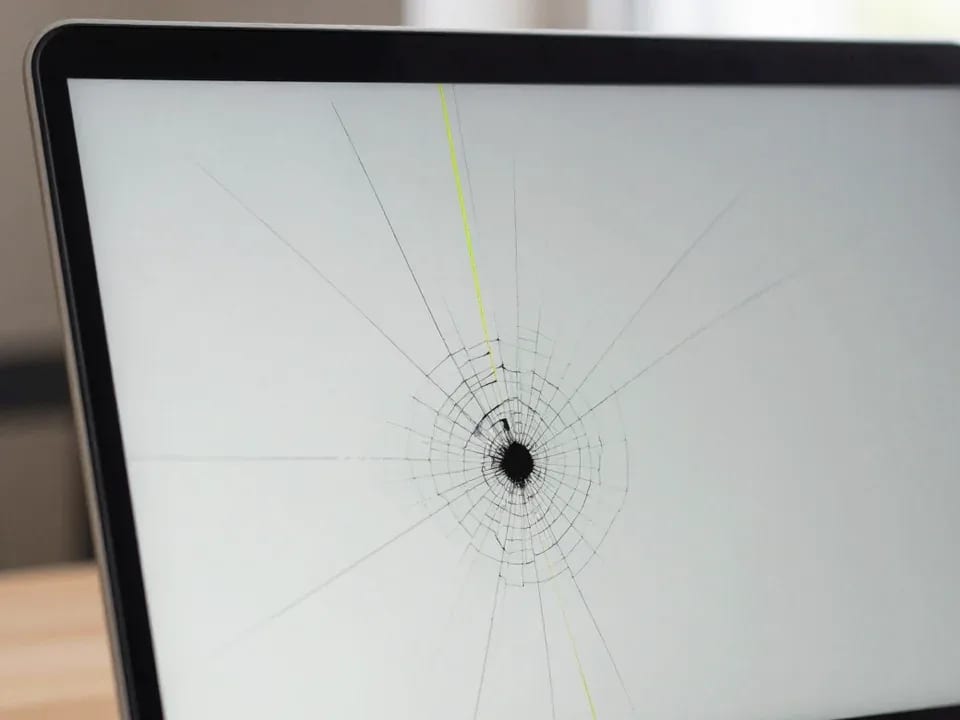
If your laptop screen is broken, turn the device off first, don't press on the display, and check the picture through an external monitor.
12 March 2026 · 11 minutes read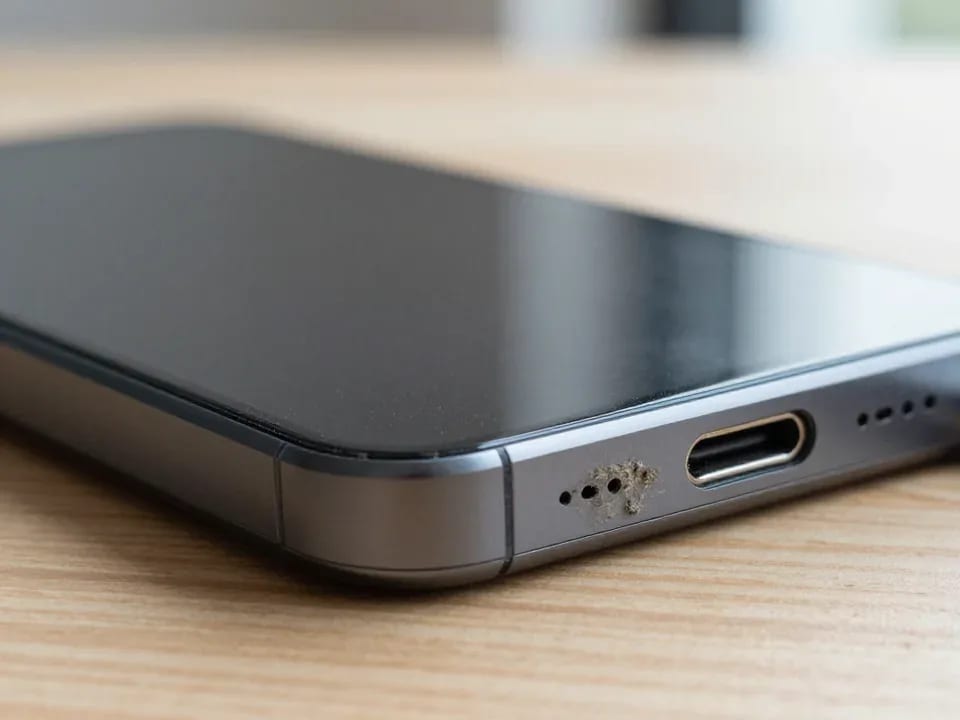
If your phone won't charge, start by checking the adapter, cable, and port, then the charging settings.
16 February 2026 · 12 minutes read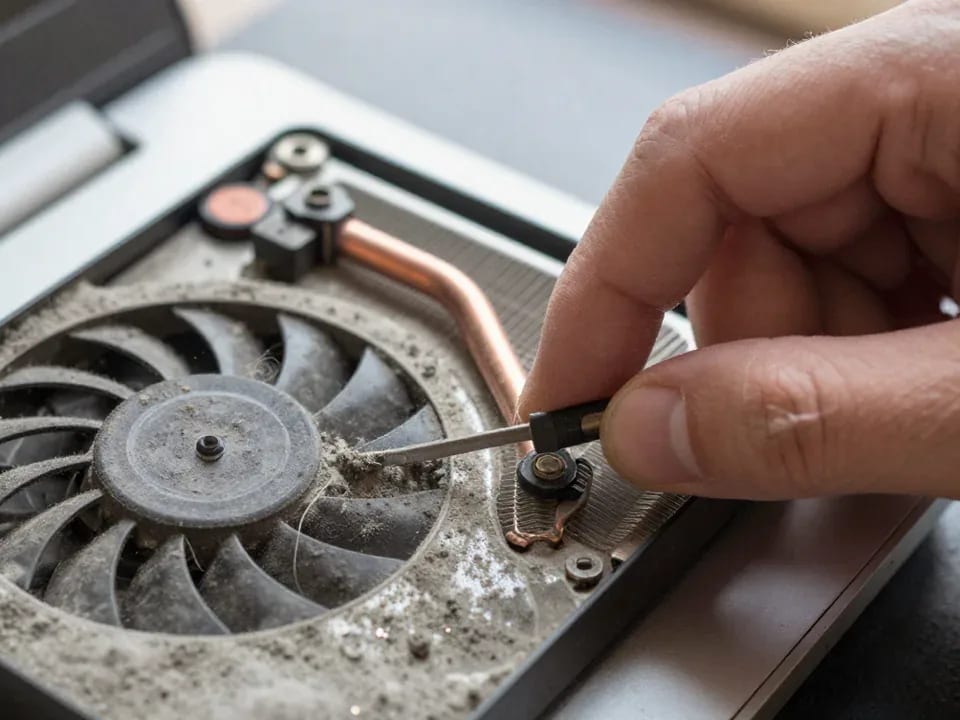
If your laptop freezes, the first thing to do is restart it and check Task Manager to see what's loading the CPU and memory.
25 January 2026 · 12 minutes read
If your phone falls in water, take it out right away, turn it off, and don't charge it.
19 January 2026 · 12 minutes read
If your phone camera isn't working, first check app permissions, clear the cache, and restart your phone — this fixes some software glitches.
24 December 2025 · 13 minutes read
If your laptop won't boot, first determine which of two states you're in: the device doesn't respond to the power button at all…
13 December 2025 · 12 minutes read