Tech Service repairs dryers in Astana with its own technician: he arrives at your home within 60 minutes anywhere in the city, or the work is done at our service center. Diagnostics are free, and you get a 1-year warranty on labor and parts. Our technicians have 4 to 20 years of experience. The technician gives you the price after diagnostics.
Why your dryer won't dry or heat
The dryer tumbles but clothes come out damp, or the machine won't start at all. Each symptom points to a specific component, and that's how the technician pinpoints the cause.
Symptom, likely cause, and component
| Symptom | Likely cause | Component |
|---|
| Clothes still damp after a full cycle | moisture sensor failure, clogged air duct | moisture sensor, lint filter |
| Air inside the drum is cold | heating element burned out, thermostat failed | heating element, temperature sensor |
| Water on the floor under the machine | clogged or failed condensate pump | drain pump, condenser |
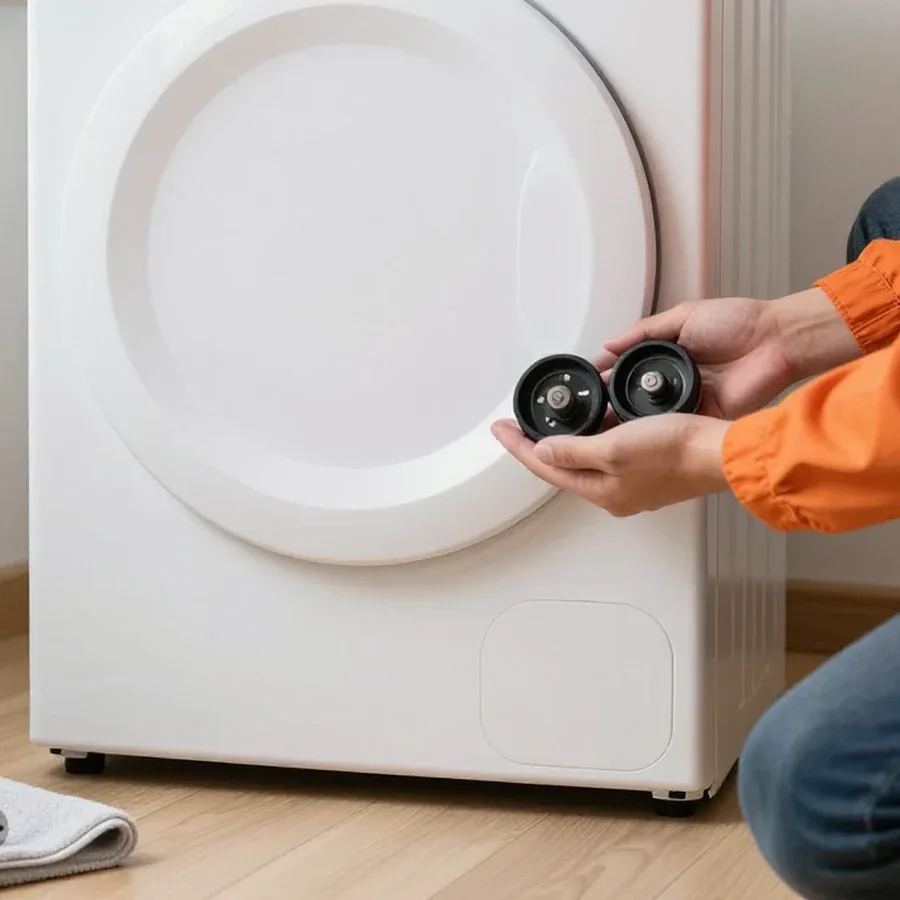
| Drum doesn't spin | stretched belt, worn rollers | drive belt, rollers |
| Loud noise and vibration | worn drum bearings | bearings, rollers |
| Won't turn on, buttons don't respond | faulty control board, door lock | control board, door sensor |
Why clothes stay damp after a full cycle
Most often, the residual moisture sensor is to blame—it ends the cycle too early—or the air duct is clogged with lint. This sensor determines when the program stops: if its readings are off, the drum stops while the fabric is still wet. The second most common issue is the air duct and condenser: lint blocks airflow, and moisture can't leave the chamber. The lint filter takes a minute to check; the air duct is harder—it needs to be blown out and cleaned during disassembly. We start dryer repair in Astana with these two points because they cause the most false "heating failures." If clothes are still damp after cleaning the filter, the problem is in a component and needs diagnostics, not a longer dry cycle.
Why the machine doesn't heat the air or start
- Cold air throughout the cycle: we check the heater and thermostat—they work together to heat the airflow.
- Cycle runs but is too short: suspect the temperature sensor that cuts off heating.
- Buttons don't respond: we check the control board and door lock.
- Display shows a code: we compare it with your model—the code narrows down the components.
- Drum spins but there's no heat: the heater is tested under voltage with a multimeter, not by eye.
- No heat after replacement: the temperature sensor is checked before installing a new part, otherwise the failure returns.
How a condenser dryer differs from a heat pump dryer
The drying type determines which component heats the air and what exactly fails—so the technician first clarifies the machine's design, then names the likely cause.
How the two drying types work
In a condenser dryer, a heating element warms the air, and moisture condenses in the heat exchanger, while in a heat pump dryer, heating goes through a refrigeration circuit. In the first case, the drum is blown with air from the coil, steam condenses on the cold walls of the condenser and drips into the sump, from where a pump sends water to the tank or drain. In the second, the unit works like a refrigerator: a compressor motor circulates refrigerant, one part of the circuit gives heat to incoming air, the other cools it before condensation, and the same amount of energy is transferred within the cycle. This leads to different repairability—condenser dryers more often need a new coil and a cleaned heat exchanger, while heat pump dryers are harder to diagnose and hinge on the refrigeration unit.
What breaks in each type
| Parameter | Condenser | Heat pump |
|---|
| What heats the air | heating element | refrigerant circuit |
| Common cause of "not heating" | burnt-out heating element | motor or sensor failure |
| Where moisture goes | heat exchanger and pump | heat exchanger and pump |
| What we check first | heating element and thermostat | motor and sensors |
Does the type affect at-home service
We service both types at home, but heat pump machines and built-in models sometimes require work in the shop due to access to components. A freestanding unit can be taken off the wall or moved aside without problems: the technician can reach the heating element, thermostat, pump, and heat exchanger on site. A built-in dryer is squeezed between cabinets and the countertop, and the refrigeration unit on heat pump models sits at the bottom — to check it, you need free access from below and behind. Our technician comes for diagnostics, opens the panel, inspects the circuit, and only then says whether the unit can be fixed at home or is better taken to the shop. In my opinion, it's more honest to state both options right away than to promise on-site work where it can't be done.
Error codes and how diagnostics work
A code on the display is a hint, not a verdict. The technician reads it together with the symptom so as not to replace a working part or guess at the cause.
What an error code on the display means
An error code points to a specific group of parts, but the same combination can mean different things across brands, so the interpretation is checked against the model. The combination on the screen narrows the search to the control module, humidity sensor, or temperature sensor — depending on which circuit the board monitors. On heat pump machines, this adds the compressor and circulation fan group. The code itself doesn't say a part is broken: it records a deviation the board detected from a sensor signal. The opposite also happens — the board is fine, but the signal is distorted by a corroded contact or a frayed wire. Don't rely on online interpretations without tying them to the model — they often refer to a different line and lead you away from the real cause.
How to tell a humidity sensor failure from a heating element
For us the difference is simple — if the drum heats but the cycle ends early, the humidity sensor is at fault; if the air stays cold throughout the cycle, we check the heating element. In the first case, the sensor misreads the residual moisture in the laundry and signals the program to finish early, even though the items are still damp. In the second, the heating element doesn't reach operating temperature, and the machine tumbles the drum without heat, leaving the laundry wet. Both components work together with the temperature sensor, so the technician checks them as a pair, not one by one: the sensor readings are compared with the actual heating, and only then is a verdict made on the part. This approach rules out replacing a working heating element when the real cause was the sensor.
What free diagnostics includes
- Checking by symptom: the technician goes from the symptom to the part instead of randomly testing everything.
- Matching the code to the model: the interpretation is tied to the specific brand and line of the machine.
- Checking parts in pairs: the heating element and temperature sensor, the humidity sensor and air duct are checked together.
- Agreeing on the work: the cause and scope of work are stated before work begins, before replacing a part.
- No unnecessary replacements: only the confirmed part is replaced; everything else stays as is.
How repair works at home and in the shop
Dryer repair in Astana is usually done at home, and the machine is taken to the shop when access to hidden components or a complex part replacement is needed.
At-home repair step by step
- Diagnostics: the technician checks the components based on the symptom and the error code you mentioned when you called.
- Approval: they explain the cause and scope of work, and you decide before any work begins.
- Repair: they replace or restore the component, then test it under load.
- Check: they run a full cycle and make sure drying works properly, without errors.
- 60-minute arrival: a technician comes to your home anywhere in the city within that time after you call.
When equipment is taken to the service center
We take built-in machines to the service center, as well as cases that require access to the compressor or a complex component replacement. A freestanding dryer is almost always serviced at home: the case is open, the component is accessible, and the work is done in your presence. A built-in model sometimes has to be removed from the furniture — the technician assesses that need on site, not over the phone. The heat pump compressor and sealed circuit require deeper disassembly than a kitchen allows. The decision to transport is made after free diagnostics, once the cause is identified. Built-in appliances are removed carefully to avoid damaging the facade and countertop. If the component can be removed without risk, you'll be offered in-home service — faster and without transportation. A freestanding unit is easier to fix on site, while a built-in one sometimes has to be extracted from the furniture — this is ultimately clear on site.
We repair machines of various brands
We service dryers from Bosch, LG, Gorenje, Samsung, Electrolux, Miele, and Gaggenau, including rare models. Each brand has its own error logic and component layout: Bosch places the humidity sensor in one spot, Miele in another, and Gaggenau hides the circuit behind panels. Our technician verifies the model and series before the visit to bring the right tools and the appropriate component. For rare brands, this verification is especially important — from a photo of the panel, it's not always clear which revision is inside. Our technicians have 4 to 20 years of experience, and over that time they've worked with most models found in local homes. Repairs of rare models come with the same warranty: we provide 1-year warranty on labor and parts. Rare brands have different error codes and component layouts, so the technician verifies the model before the visit.
Warranty, payment, and parts
Once the equipment is repaired, it's most important to understand what the warranty covers and how replacement parts are approved — this determines whether the breakdown returns and what a repeat visit will cost.
What the 1-year warranty covers
Our 1-year warranty covers both labor and parts, so if the same component fails again, the work is repeated under warranty. This also applies if, after replacing a part, the machine stops heating again or takes on moisture in the tank — the technician returns to the same component rather than starting from scratch. The warranty period is the same for in-home visits and for the workshop, and confirmation is issued separately for the labor and for the installed part. In my view, the second point is more important than the first: a poor-quality part doesn't show up immediately but after several drying cycles, when everything appears to work. So before installing a new part, check that its serial number is written on the warranty confirmation — otherwise, if it fails a month later, proving the part's origin will be difficult.
How parts are approved
We approve the part after diagnostics, and the technician names the replacement option before work begins. First, they identify which component has failed — the heating element, humidity sensor, condensate drain pump, or drum bearing — then offer a replacement part and explain how one option differs from another. Approval happens before the case is disassembled, so you have time to compare the cost of labor with the cost of replacing the entire component and decide what's more cost-effective in your case. In our practice, a common mistake is agreeing to the first named part without asking about its service life: our technician shows whether it's original or compatible and what lifespan it's designed for. The decision is always yours, and work doesn't start until you respond.
How to pay for the repair
- Free diagnostics: the cause and scope of work are determined before payment, so you only pay for the repair itself.
- Cost after diagnostics: the technician gives you the price once they've seen the unit and the scope of work — it's a calculation, not a guess over the phone.
- Payment methods: you choose how to pay; we have no restrictions on payment form.
- 1-year warranty: on labor and parts, with confirmation issued after the repair.
- One contractor: the person who comes on the call also handles the repair — no middlemen in the chain.
What to do before the technician arrives
A few simple checks without disassembly help clarify the likely cause and save time before the technician arrives. Do them calmly and in order.
Check the lint filter and air duct
A lint-clogged filter and air duct reduce drying performance and often mimic a heating failure. The lint filter catches lint and dust from the airflow, and behind it fine fluff accumulates along the duct, settling on the walls and gradually blocking the air passage. The machine still heats, but moisture doesn't escape: the cycle gets longer, laundry stays damp, and an error may appear on the display. Remove the filter, rinse it with warm water and dry it, then check the duct against the light — remove lint with a soft brush or a vacuum with a narrow nozzle, without pushing clumps deeper. Cleaning the filter after every drying cycle extends the life of the components, but if drying doesn't recover after cleaning, the cause is deeper.
Record the error code and symptom
Write down the combination from the display and when the fault symptom appeared — this speeds up diagnostics. The error code on the display points to a specific component, so not only the sequence of characters matters but also the circumstances: at what stage of the cycle it occurred, whether the drum was heating, whether the load was full or the laundry was drying in a small amount. Note whether the fault repeats on every start or only during spinning and heating, whether the indicator blinks, and whether there's any unusual noise or smell. Such a timeline narrows down the components for the technician — from the moisture sensor to the heating element and thermostat. Don't clear the error from memory before the technician arrives — the saved code narrows down the components and saves time on troubleshooting.
What not to do yourself
- Don't disassemble the casing: before diagnostics, this hides the initial symptom and changes the fault picture.
- Don't remove components: you can damage working parts and complicate subsequent service.
- Don't clear the error code: the saved combination narrows down the components for the technician.
- Don't keep drying wet laundry longer: this doesn't fix the component but wears out neighboring parts.
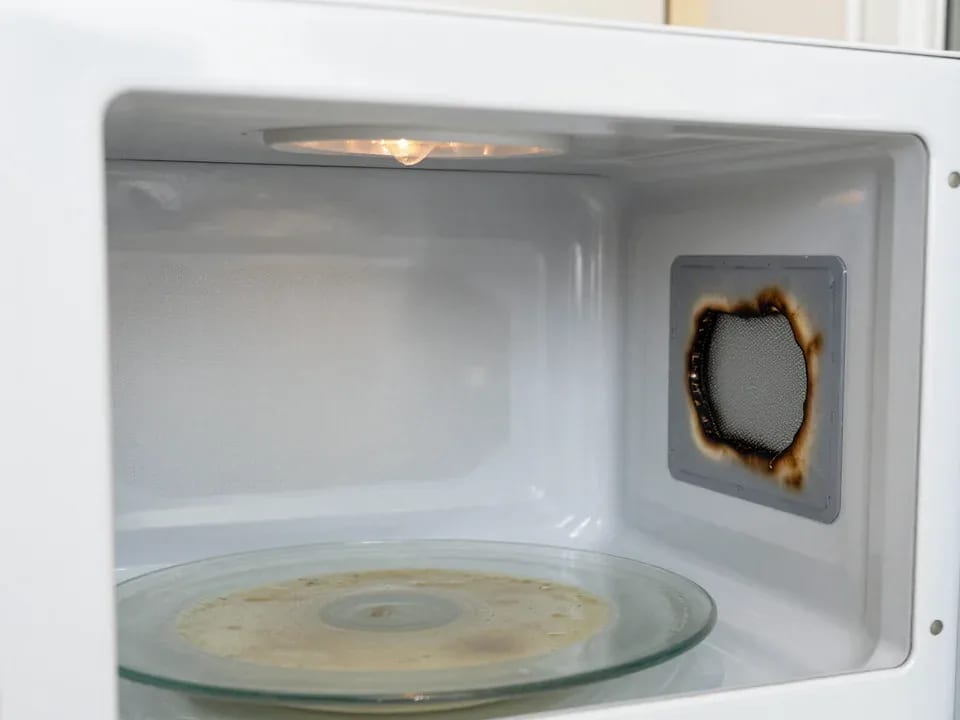
- Don't restart the machine if you smell burning: this is a risk to the wiring and heating element.
Who to trust with repair in Astana
When choosing a contractor, what matters more than response speed alone is which specialist will come to the machine and which company will be responsible for the result after the work.
Direct contractor or middleman
Our work is done by our own Tech Service technician, not a middleman who passes the request to a third party. A direct contractor means the same company that takes your request also has the specialist who opens the dryer casing, removes the component, and replaces the part. A middleman works differently: they collect requests and distribute them among subcontractors, so a different person may arrive at your address who hasn't seen the history of your case and wasn't responsible for previous work. With a direct contractor, the same company that sent the technician is responsible for the work and the warranty. So when choosing, ask who will physically arrive and who will issue the warranty obligations — if the answers don't match, you're dealing with a chain of middlemen.
Technician experience and response speed
Our technicians have 4 to 20 years of experience, and we can be at your door anywhere in the city within 60 minutes. That range in experience means straightforward cases are handled by a specialist with four years of practice, while complex electronics with a control board go to someone with twenty years on the job. The 60-minute response covers the entire city, including new residential areas beyond the old center and the right bank. Experience matters most during diagnostics — by symptom and error code, a technician pinpoints the specific component faster and doesn't replace parts at random. The heating element, moisture sensor, and drum drive can all produce similar symptoms, and accurate identification saves you money. The sooner a technician sees the machine, the fewer parts you'll have to replace in the end.
Why you should call a technician now
Our free diagnostics let you find out the cause before paying for any work, and a 1-year warranty protects you from repeat breakdowns. The process is simple: the technician arrives, opens the case, checks the component, and tells you the cause — and only then do you decide whether to proceed. The warranty covers both labor and the parts installed, so if the same part fails again, it's handled under those terms. Delaying repairs often leads to neighboring parts breaking, so early diagnostics saves money. The only time it makes sense to put off calling a technician is if the machine is unplugged and you don't plan to use it. In all other cases, waiting makes the job harder and the repair more expensive.
Key aspects of tumble dryer repair
Put together, the signs form a clear picture: by symptom and error code, a technician identifies the component before even opening the case, and the dryer type tells you where to look for the weak spot.
- The symptom points to the component: damp laundry after a cycle leads to the heating element or heat pump heater, while water under the machine points to the condensate pump.
- The dryer type sets the scenario: in condenser models, the heating element fails more often; in heat pump machines, it's the compressor and sensors.
- The error code narrows the search: it gives direction for diagnostics, but the interpretation must be checked against the specific model, or you might replace a working part.
- Repairs are usually done on-site: built-in units and cases requiring complete disassembly are taken to the workshop.
- The warranty covers repeats: a year on labor and parts means if the same issue comes back, it's fixed at no extra charge.