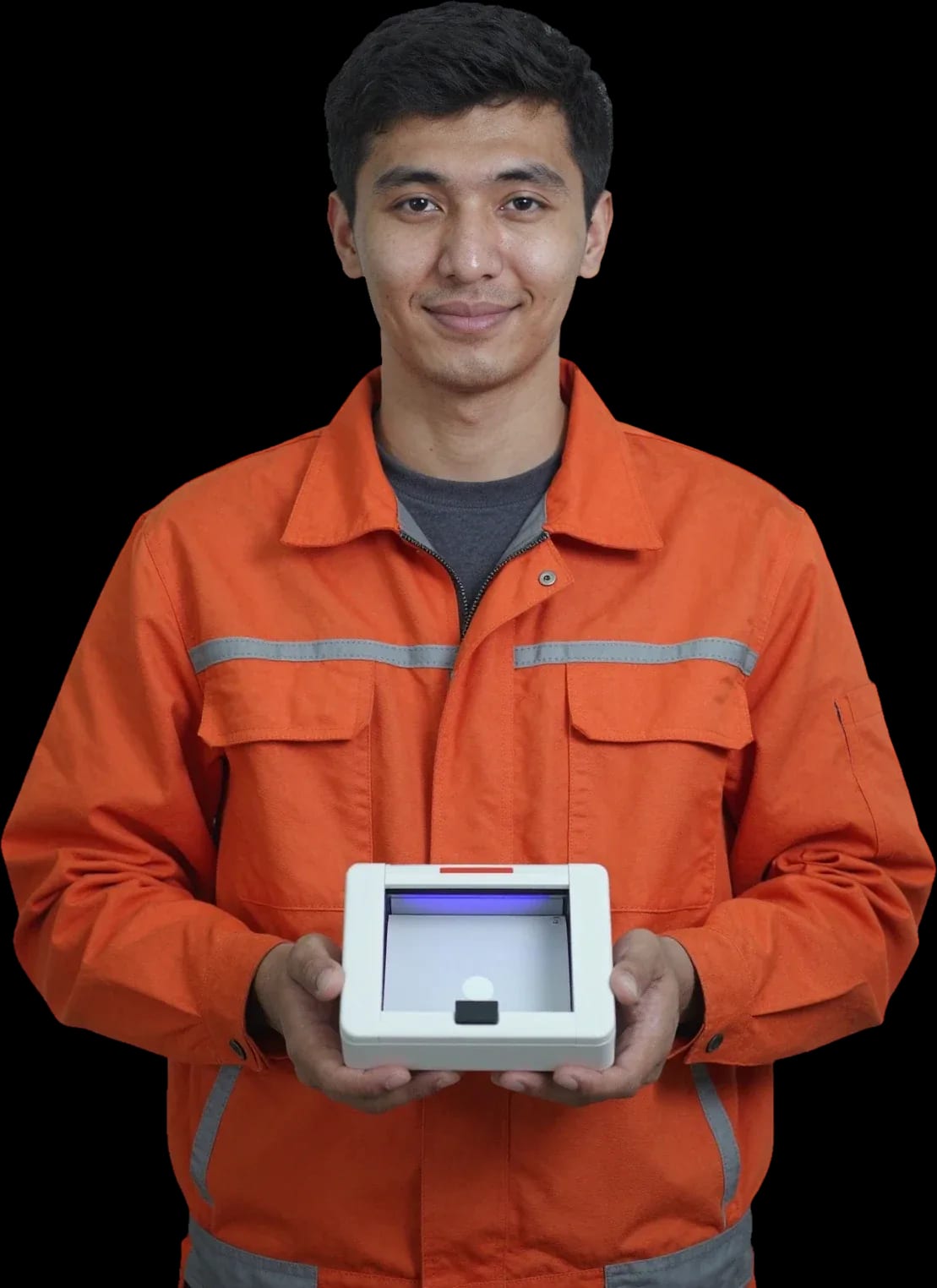
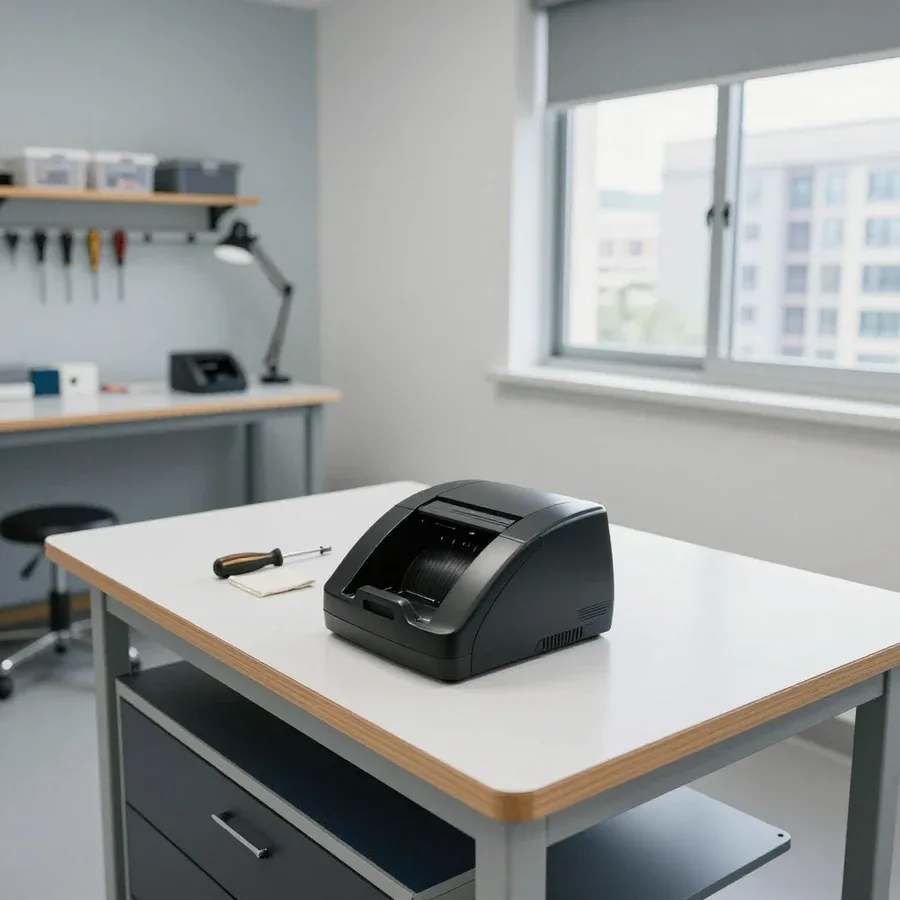
Tech Service repairs banknote detectors in Astana: a technician arrives at your home or exchange office within 60 minutes anywhere in the city, or picks up the device for service. Diagnostics are free, we provide a 1-year warranty on labor and parts, and the technician gives you the price after inspection.
Why banknote detector repair starts with a bill recognition error on the screen
A detector rarely breaks down suddenly—usually each symptom points to a specific component. Let's break down what each sign means and when cleaning, adjustment, or part replacement is needed.
The detector doesn't recognize bills or confuses denominations
Most often, dirty optical and magnetic sensors are to blame: paper dust settles on the UV and IR lenses, and the device stops 'seeing' authenticity marks. Dust from banknotes also clogs the MG magnetic head—then the device either passes a counterfeit or rejects a genuine bill. Optical UV and IR sensors read security fibers and infrared marks, while magnetic sensors read ferromagnetic elements in the ink, and contamination in any channel immediately causes false errors. When our technician arrives, the first thing they check is the condition of the lenses and head, because this cause is more common than others. If the device still confuses denominations after cleaning, the issue may be misaligned denomination sensor calibration—that's recognition adjustment, not component replacement.
Error on the screen and the device won't turn on
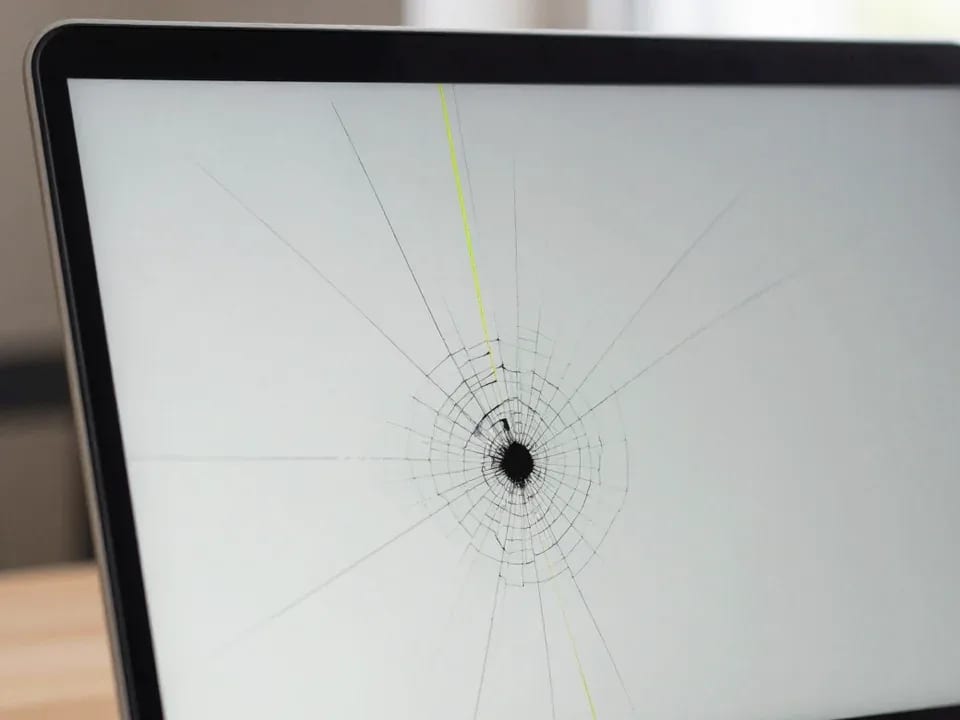
An error code on the display points to a specific component, while a complete lack of response to the power button is most often related to the power supply or board contacts. The technician uses the indicator to determine which channel failed: sensor, feed mechanism, power module—and doesn't waste time disassembling the entire case. The power source supplies voltage to the board and display, so if it drops, the device either stays silent or shows an error every time it's turned on. Our free diagnostics start with checking the power module and cables—that way the cause is found without unnecessary disassembly. You shouldn't open the case yourself to 'check the contact': without diagnostics, it's easy to damage the display cable and turn a simple fix into a component replacement.
It jams and crumples bills during feeding
Jamming is almost always mechanical: worn feed rollers, dirty gears, or a skewed feed path prevent the bill from passing through evenly. The feed roller pulls the banknote through the path, and when its surface wears down or gets covered in dust, the bill goes in skewed and gets stuck at the exit. The gears of the feed mechanism eventually get clogged with paper dust, movement becomes jerky—hence the crumpled edges and repeated jams. On-site, the technician disassembles the path, checks the roller fit and gear condition, and based on the degree of wear decides whether cleaning is enough. If the rollers have hardened over time, cleaning will only give a temporary effect—replacing them is more reliable, otherwise jams will return after a few days of operation. The worn feed unit is replaced entirely, not sanded down on site.
Banknote detector repair for a detector, counter, or sorter
Clients often search for banknote detector repair, but in fact there's a bill counter on the table. Let's clarify the difference between categories so you know exactly which device you have and what gets fixed in it.
How a banknote detector differs from a counter and a sorter
A banknote detector checks the authenticity of a single bill, a counter counts the quantity, and a sorter simultaneously counts and sorts bills by denomination. Currency detectors work with a single banknote: the operator inserts a bill, the device checks it against optical and magnetic marks, and shows the result on the display. Bill counters run a stack of notes through the feed path and output the number of pieces without authenticity assessment. Banknote sorters add a pocket distribution mechanism to the count and rely on denomination recognition. The set of components also depends on the category: for a detector, the key ones are authenticity sensors; for a counter and sorter, a feed path and sorting mechanism are added. If the device crumples bills during feeding, look for the cause in the rollers, not in the authenticity sensors—these are different components and different maintenance.
What we repair in currency detectors
| Component | What we check | Type of work |
|---|
| UV and IR optical sensors | lens contamination, response to marks | cleaning or replacement |
| MG magnetic sensors | sensitivity to magnetic marks | cleaning or replacement |
| Denomination sensors | accuracy of denomination detection | recognition adjustment |
| Rollers and feed mechanism | wear, misalignment, jams | roller replacement |
| Power supply and display | voltage output, error code | diagnostics and replacement |
Do we work with counters and sorters
Yes, in addition to banknote detectors, we service banknote counters and sorters, so you won't have to look for a separate service for each device. Counters and sorters have the same feed rollers, counting elements, and power supply that fail, plus the pocket stacking mechanism in sorters. A mobile technician arrives within 60 minutes anywhere in the city and works on site—at an exchange office, office, or store checkout. If you're not sure which category your equipment falls into, the technician will determine it during free diagnostics and immediately tell you which components can be restored. We provide a 1-year warranty on labor and parts, so a repeat visit for the same component doesn't turn into a new paid call. Before calling, take a photo of the nameplate with the model—the technician will know in advance which device they're dealing with.
How banknote detector repair works at home and in the service center
Banknote detector repair in Astana is done right on site at an exchange office or at home, and if a component needs replacement, the device is taken to the service center. Let's go over both scenarios.
Technician visit to your home or exchange office
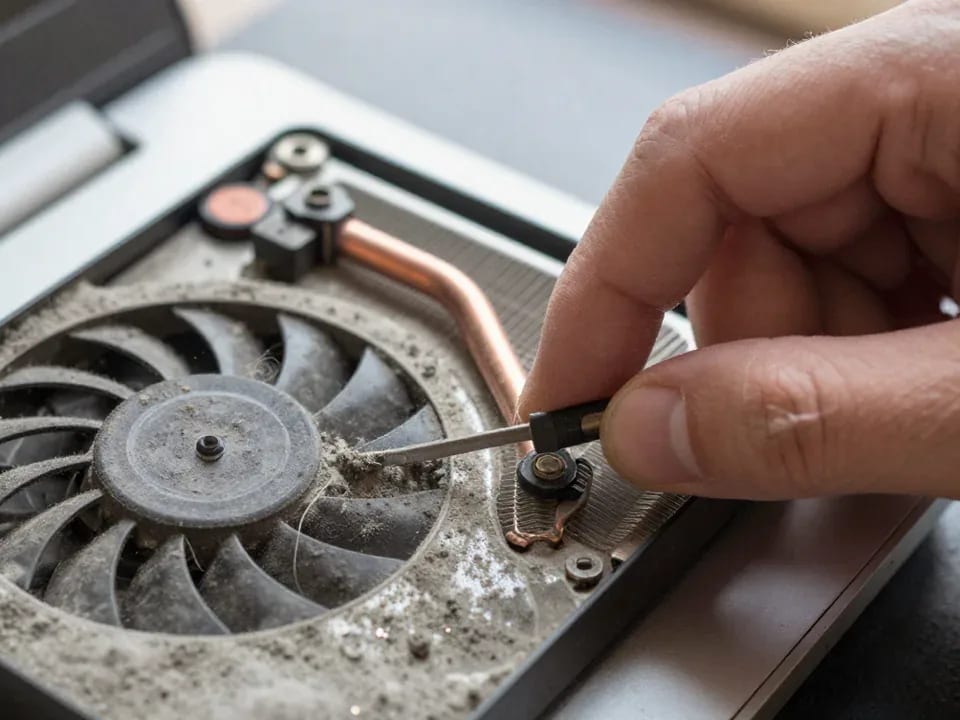
A Tech Service specialist arrives at your home or exchange office within 60 minutes anywhere in the city and performs free diagnostics on site. The mobile technician brings tools for checking sensors, the feed path, and power, so typical failures are fixed without taking the equipment away. This format is popular with exchange offices, retail, and checkouts where equipment downtime stops cash acceptance. During the visit, they open the case, blow dust out of the optics, inspect the rollers and sensor calibration, and replace a consumable component from the kit they brought if needed. The technician also checks banknote edges for creases and the gaps between rollers, which are the most common causes of note jams. The on-site visit is convenient for exchange offices and checkouts that can't stop working: most sensor and feed path issues are resolved without removing the device. This banknote detector repair in Astana fixes typical failures on site, without transporting the equipment.
When the device is taken to the service center
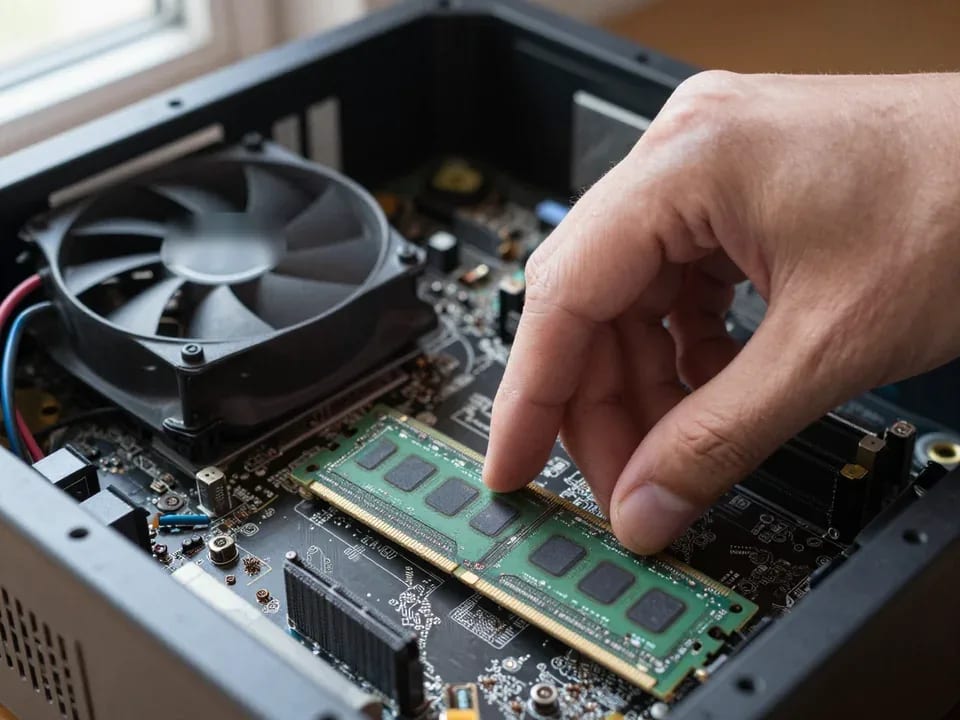
If a component replacement or complex adjustment is required on site, the specialist takes the detector to the service center and returns it after repair. In the workshop, we can disassemble down to the board, test denomination recognition on different banknote series, and run load tests that can't be done in a cramped exchange office. Such cases include floating sensor errors, recognition firmware failures, and wear of the feed mechanism with banknote misalignment. The device is labeled and its condition is recorded upon acceptance so it is returned with the same set and accessories. Denomination recognition is adjusted for the banknote series the client works with, so a new sample doesn't throw off the calibration. In the service center, it's easier to test the detector under load with different banknote series, so complex recognition cases are more reliably resolved there.
What the repair consists of, step by step
- Diagnostics: the technician checks the sensors, feed path, and power, and identifies the cause of the failure.
- Work approval: explains what needs to be done and gives the price after the inspection.
- Repair: preventive cleaning of sensors, calibration of recognition, or replacement of a worn component.
- Testing: the device is tested with various banknotes and series to confirm the result.
- Handover: you receive a working detector and a 1-year warranty on labor and parts.
Warranty, diagnostics, and service terms
Before calling a technician, it's important to understand what you're paying for and what result you'll get. Here's how diagnostics work, what the warranty covers, and how payment for the work is handled.
Free diagnostics and how the price is formed
Diagnostics are free, and the technician gives you the price after the inspection—it depends on whether cleaning, calibration, or replacement of a component is needed. During the inspection, the optical authenticity sensors, feed path, and denomination recognition calibration are checked. If the cause is dirty sensors, calibration is enough; if a roller or sensor has failed, replacement of the part is discussed. Banknote detector service in Astana starts with this check—without it, any estimate would be a guess. This approach protects you from surprises in the bill: you know in advance what you're paying for and can decide whether to repair the device or decline. The technician explains each step before the work begins, not after—and that removes the main fear of equipment owners.
Warranty on labor and parts
We provide a 1-year warranty on labor and parts—this covers both sensor replacement and feed path restoration. A currency detector is a sensitive device: optical sensors and feed rollers wear out from dust and constant banknote feeding, so the quality of the installed part matters more than the replacement procedure itself. The warranty covers both the work performed and the installed components—it's a single condition, not separate insurance for one part of the device. A warranty on parts is especially important for such devices: a low-quality authenticity sensor may fail within a couple of weeks, and then it's replaced again at no extra cost. Understanding this helps you make a calm decision about service rather than putting it off due to doubts about part reliability.
Technician experience and payment methods
Banknote detectors are serviced by technicians with 4 to 20 years of experience, and you can pay for the work in any convenient way. A mobile technician comes to your home or exchange office anywhere in the city within 60 minutes, and it's the same specialist who later handles the device at the service center. You can pay via Kaspi QR, Kaspi Red, bank card, cash, or bank transfer for companies, so you don't need to adapt to a single payment format. An experienced technician can often determine the cause from the symptom and error code even before disassembly, so diagnostics take less time and less often end in part replacement. City residents appreciate this predictability: you know in advance who will come and how the work will proceed. This approach saves time for both the exchange office owner and the regular user of the equipment.
Prevention and sensor cleaning
Some of our requests are not about breakdowns but about dirty sensors. Here's what preventive maintenance includes, how to distinguish it from component restoration, and how often to do it.
What preventive cleaning includes
- Optical sensors: we remove dust from the UV and IR lenses and check the response to authenticity marks.
- Magnetic sensors: we clean the MG head and check sensitivity to the magnetic mark on banknotes.
- Feed path: we remove paper dust and check rollers and gears for wear and clogging.
- Display and buttons: we check the interface response and ensure there are no false error codes on the screen.
- Control test: we run banknotes of different denominations and confirm correct recognition of each.
- Result: regular cleaning extends the life of authenticity sensors and reduces the risk of false triggers at the worst possible moment.
How to tell if you need cleaning rather than component restoration
If the detector occasionally makes mistakes but sometimes works fine, the issue is most likely dirty sensors rather than a broken unit. Paper dust settles on the UV and IR lenses and on the MG head in a thin layer—the machine stops reliably seeing the mark, while the feed mechanism remains intact. A typical sign: the error appears more often on banknotes of one denomination than on others, or gets worse toward the end of the shift when more dust has built up in the paper path. The second scenario is when the detector recognizes a banknote on the second or third pass but fails again on the fourth. A persistent error on the same denomination or a complete failure to turn on is already a reason for diagnostics, not just cleaning. Our diagnostics are free: a technician will check the sensors and tell you whether preventive maintenance will do or if a repair is needed.
How often to do preventive maintenance
The frequency of preventive maintenance depends on the workload: at exchange offices and cash registers with a heavy flow of banknotes, cleaning is needed more often than with occasional use. Paper dust from banknotes packs into the feed path and settles on the optics—the more banknotes pass through the machine per shift, the faster the authenticity sensors get dirty. In retail and banks where a cashier runs hundreds of banknotes a day, preventive maintenance should be scheduled regularly rather than after a failure. If the machine is near a window or a source of dust, the sensors get dirty faster—check them more often than the volume of banknotes alone would suggest. We service exchange offices, retail, and banks across the city and come out for preventive maintenance just as we do for unit repairs. In my opinion, it's easier to call a technician for scheduled cleaning than to deal with a false error when a customer is waiting for an exchange.
Equipment brands and direct service in Astana
Users want to know if we handle their machine brand and who exactly will come. Here we cover equipment brands, how we work, and the difference between a direct service and an intermediary.
Which detector brands we work with
We service banknote detectors from various brands, including DORS, Cassida, Billcon, and Magnit, and we don't limit ourselves to one manufacturer. Currency machines from these lines are found in exchange offices and cash registers across the city, and for each brand our technicians have built up their own set of typical faults: feed mechanisms are more prone to issues in friction models, while sensors and calibration are more common in optical ones. The brand influences which components we check first and which spare parts we keep in mind. That said, the basic operating principle is similar across most manufacturers, so an unfamiliar line isn't an obstacle to diagnostics. Based on the symptom and the machine's behavior, a technician often knows whether the fault is typical for a specific line before even arriving—this speeds up diagnostics.
Direct service, not an intermediary
Tech Service is a direct service: our technician comes to you, not an aggregator employee or an intermediary who forwards the request. The same specialist who takes your request later works on the machine, not a dispatcher from another company. Our technicians have been working with currency detectors for 4 to 20 years, so they identify the fault on site rather than describing it to a third party over the phone. Technician arrival within 60 minutes across the city, free diagnostics, 1-year warranty on labor and parts. A direct service is fully responsible for the result, so the warranty and follow-up visits don't depend on a third party, and all issues are resolved with the same technician who was at your place.
Who we help in Astana
We cover the whole city and serve currency exchange offices, retail checkouts, and banks where bill detectors run every day. For these locations, downtime stops the flow of customers, so on-site service matters most: a technician arrives within 60 minutes and tries to fix the issue without interrupting service. We also help private owners and small checkouts — the principle is the same: come out, run free diagnostics, and quote the price after that, not blindly over the phone. You can pay via Kaspi QR, Kaspi Red (instalments), bank card, cash, or bank transfer for companies, and the 1-year warranty covers both on-site work and replaced parts. For locations with a continuous flow of customers, the on-site format is key: a technician arrives within 60 minutes and tries to eliminate the fault without stopping service.
Reliable banknote detector repair explained
Bill detector repair comes down to three things: correctly identify the faulty unit, start with diagnostics, and choose the right service format. Below is a quick summary to help you decide before calling a technician.
- The symptom points to the unit: an error on the screen, a jam, or "blindness" to banknotes is most often related to sensors, the feed path, or the power supply.
- Clean first, replace later: dirty sensors show the same signs as a breakdown, so it's worth starting with an inspection and blowout.
- Choose the service format based on the situation: simple faults are fixed on-site, complex ones — at the service center with testing under load on different banknotes.
- Warranty and diagnostics matter upfront: free inspection and a warranty on labor and parts remove the risk of repeat costs.
- Prevention is cheaper than restoration: regular sensor cleaning reduces false triggers and extends the device's service life.