Вера Э.Order No. AS-7059 · 26 July 2026
oursПервый раз обратился, до этого чинился у знакомого. Общение спокойное, без навязывания. Для Астаны — хороший вариант.
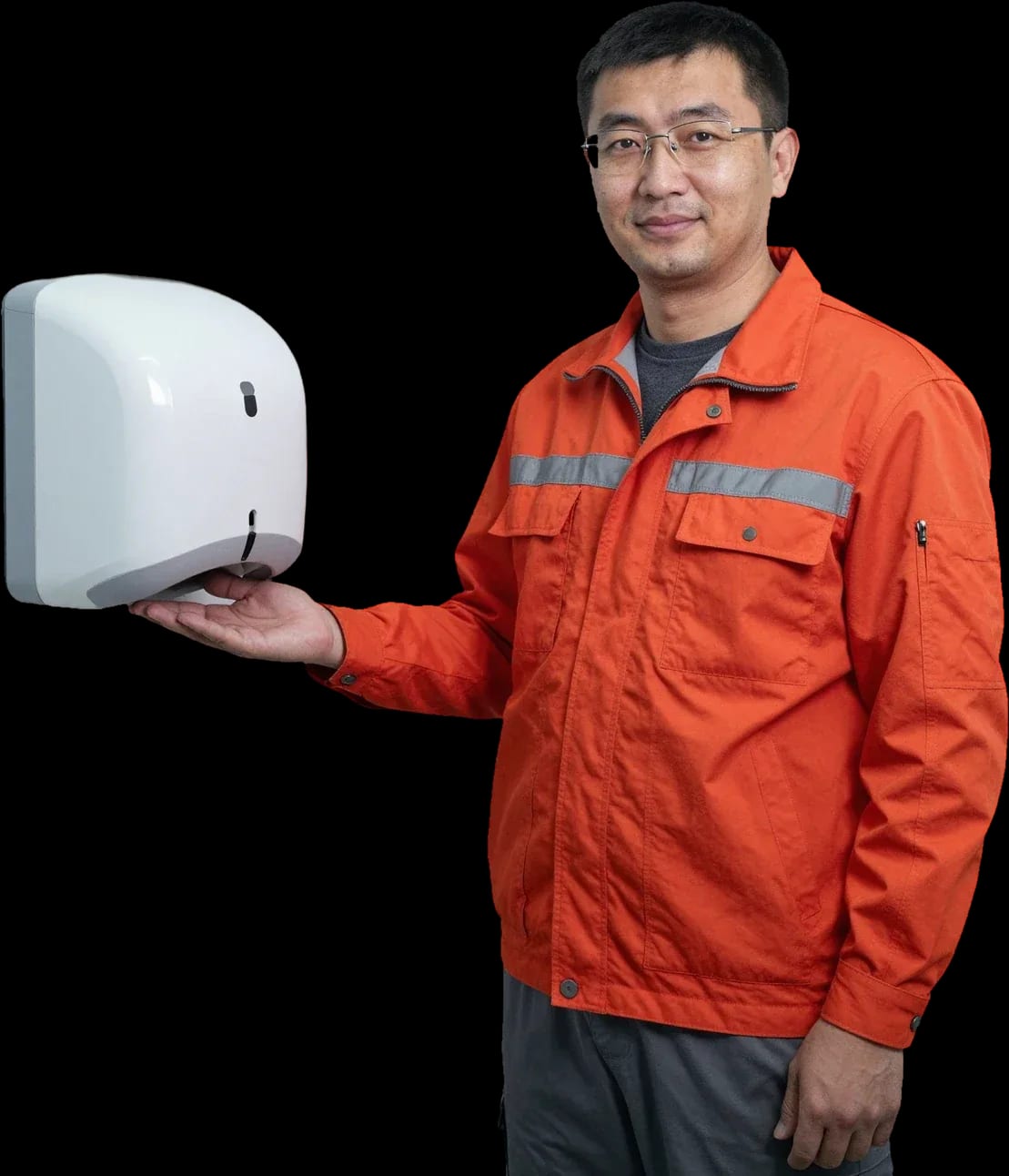
A technician arrives within 60 minutes anywhere in the city. Free diagnostics, 1-year warranty on labor and parts.
Our own technicians4 to 20 years of experience




Repair prices
Below are typical symptoms and likely causes, from simple to those requiring disassembly. The technician will pinpoint the exact cause after diagnostics.
no power, tripped breaker
from6 000 ₸
clogged grille, jammed fan
from4 500 ₸
burnt-out heater, sensor failure
from4 500 ₸
dirty fan, bearing play
from6 500 ₸
overheating, hand sensor failure
from4 500 ₸
melted wiring, shorted heater
from3 500 ₸
sensor dirty or misaligned
from4 500 ₸
clogged filter, duct blockage
from2 500 ₸
1–2 hourstime
from 2,500 ₸cost
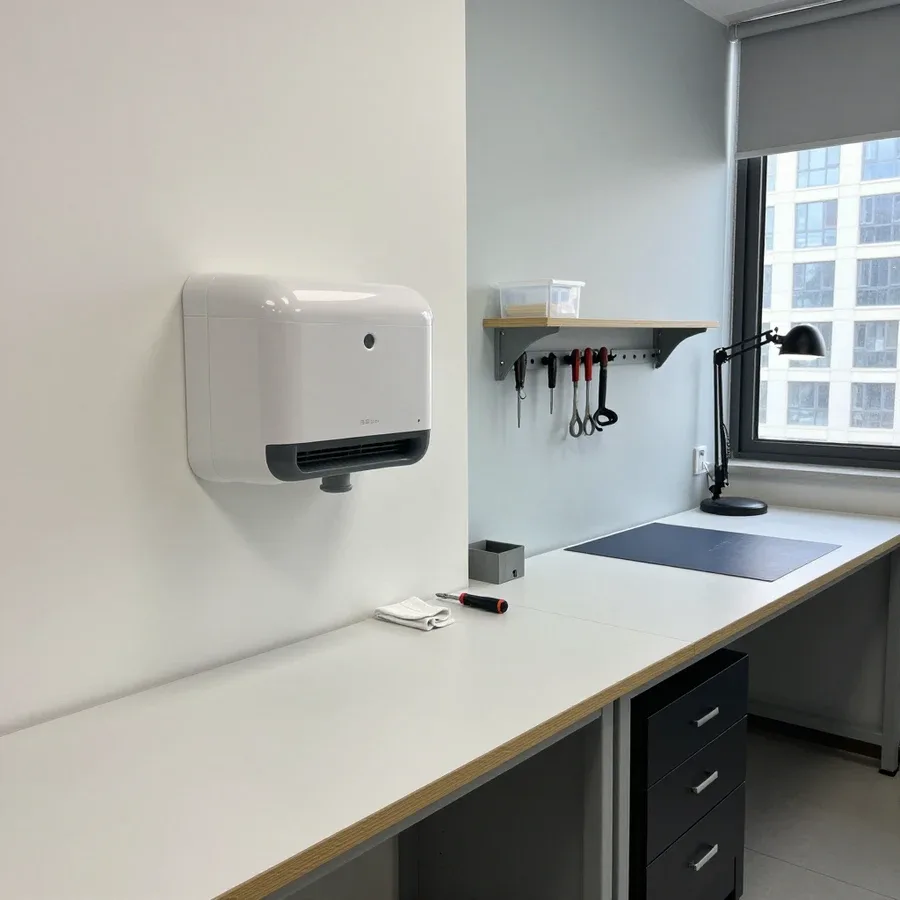 BeforeAfter

Five steps from request to post-repair check.
Describe the symptom and your hand dryer model — the technician will prepare the right tools and parts.
The technician confirms the model and symptom by phone and brings tools for your specific hand dryer.
Diagnostics are free: the technician identifies the cause before any work begins.
The technician explains the cause and repair cost, and starts work only after you approve.
After reassembly, the hand dryer runs a test cycle: the technician checks for vibration and unusual noises.
We reply during working hours
Describe the hand dryer issue and a convenient time — the technician will arrive with tools and common parts. Ask about payment and part availability.

Warranty question? Call us
+7 (778) 096 59 61 experience14 years
Senior small appliance technician
 experience15 years
On-site coffee machine diagnostics technician
 experience5 years
Coffee machine cleaning technician
 experience12 years
Coffee machine diagnostics technician
 experience5 years
Portafilter coffee machine technician
 experience12 years
Vacuum cleaner repair technician
 experience15 years
Vacuum cleaner repair technician
 experience18 years
Washing machine repair technician
Tech Service repairs hand dryers in Astana: our technician arrives at your home or business within 60 minutes anywhere in the city or takes the unit to our service center. Diagnostics are free, the technician gives you the price after diagnostics, and we provide a 1-year warranty on labor and parts.
Hand dryers typically fail in a few common ways: they won't turn on, blow cold air, run nonstop, or make noise. The symptom immediately points to which component to check first and helps the technician narrow down the search before even opening the casing.
Most often the culprit is the photocell or infrared sensor, less often the control board and the 220 V power terminals. The photocell triggers the dryer when you bring your hands near: if the lens is dirty or the sensor has failed, the start command simply doesn't come through. The control board processes the sensor signal and supplies power to the motor and heating element, so a board failure produces the same symptom — the unit stays silent. We check the power cord and terminals for oxidation and loose contacts: at commercial locations, an extension cord is often used, and the connection heats up over time. We begin hand dryer repair in Astana by testing the power circuit and checking the sensor with instruments. Hand dryer repair in Astana requires checking the entire power and control chain, not just one sensor. If the unit is silent but the outlet works, don't take the casing apart yourself — the sensor and board need to be tested with a meter, not by eye.
The heating element is responsible for heat, so if the airflow is cold, we check it and the thermal sensor. The heating element is a coil or ceramic block that the fan blows air through; if the coil breaks, the motor runs but the airflow stays cold. The thermal sensor and thermostat monitor temperature and cut off the heat when overheating: a stuck contact causes constant cold, while premature tripping results in weak warm airflow. The electric motor and fan are responsible for airflow, and a fan blade clogged with dust reduces it so much that the hot stream doesn't reach your hands. Weak heating doesn't always mean replacing the heating element — sometimes it's the thermostat opening the circuit too early, so diagnostics cover the whole chain, not just one part.
If the dryer turns on by itself or won't shut off, the cause is usually a stuck sensor and the control board, while humming and crackling point to the motor and fan. A photocell with a dirty lens takes a reflection from the wall as an activation signal and keeps the unit on. A control board with a damaged relay doesn't open the power circuit, and the motor keeps running until the dryer is unplugged. Unusual noise comes from worn motor bearings or a fan blade hitting the casing. Continuous operation wears out the motor faster and heats up the unit's casing, so it's best not to delay fixing this fault, even if it still dries hands properly. During diagnostics we check both the sensor and the board relay — replacing one part without checking the other often brings the problem back within a week.
Before replacing anything, the specialist identifies the faulty component — by symptom, error code, and electrical circuit tests. Let's look at how to read the code, what the free inspection covers, and what work is behind typical failures.
An error code on the device display points to a specific component — the heater, sensor, or board — and the technician decodes it by model rather than guessing. On units with a display, the control board shows a number that indicates where to look: the heating element circuit, the temperature sensor signal, or a photocell fault. We check the code against the manufacturer's table for that specific model before we take on the unit. The same number can mean different things across manufacturers, so the code first points to what to check, and the exact cause is confirmed with test instruments. In my view, the code saves time: without it, you have to open the casing and go through every circuit one by one. If the display is faulty or missing, troubleshooting follows the symptom — heater, sensor, and board are tested one after another with a multimeter.
Diagnostics are free: the technician checks the connection, sensors, heater, and board, and after the inspection gives you the cause and the cost of the work. First, they remove the cover and inspect the terminals and contacts for burning, then test the power circuits, check the heating element resistance and the temperature sensor signal, and test the photocell and the board's response when hands are placed under it. Testing the electrical circuits shows where there's an open or a short — that's symptom-based diagnostics, where the faulty component is found from how the device behaves. The technician gives you the cost after the inspection, before any work starts. For diagnostics, bring the device in the condition it fails in — that way the symptom reproduces faster and the cause is found more accurately. If the unit has already been taken off its mount, let us know in advance: we'll take that into account during the inspection.
| Symptom | What we check | What we do |
|---|---|---|
| Won't turn on | Terminals, board, sensor | Circuit testing, board repair |
| Blows cold air | Heating element, thermostat | Replace the heating element |
| Won't turn off | Sensor, board | Replace the sensor, repair the board |
| Hums or rattles | Motor, fan | Replace the motor or fan |
| Doesn't respond to hands | Photocell | Replace the sensor |
A hand dryer doesn't always need to be taken off the wall. The technician fixes some faults on the spot, and the unit is brought to the service center when that's more cost-effective and better for the device itself.
We fix many faults — sensor, terminals, board — right on the spot without taking the dryer off the wall. Home and on-site visits cover most calls: the photocell stops seeing hands, contacts on the terminals corrode, or the control board glitches after a power surge. The technician arrives with their own tools, tests the circuits, cleans and resolders contacts, replaces the failed sensor, and runs the unit through its operating modes while you watch. On-site work is easier when there's clear access to the casing and a working power supply, so before the technician arrives, clear the approach and remove items from under the unit. Diagnostics are free, and based on the results the technician immediately tells you what can be done without removing the unit.
The unit is brought to the workshop when board repair is needed or a component that's awkward to replace in place must be swapped — then the device is removed and returned to its place after the work. A control board with burned traces, a fan motor, or a heating element on some models is replaced in the workshop, where there's a workbench, lighting, and the ability to run the device under load. Removal and installation are part of the job, not a separate problem for the client, so the technician handles taking it down and putting it back up: unscrews the fasteners, carefully removes the casing, then returns it to its original place and checks that the unit responds to hands again. The 1-year warranty covers both labor and parts — including cases where the unit was brought to the workshop.
A hand dryer runs on a 220 V power supply, and fixing it is a job for an appliance technician, not an electrician, if the problem is inside the unit itself. The technician checks the power cord, terminals, and internal circuits: they test the wiring up to the board, inspect the contacts, and look for breaks or poor connections. You need an electrician when the wiring or the outlet before the dryer is faulty — that's the boundary of responsibility, and it's worth making clear before work begins. If the check shows that voltage isn't reaching the terminals, the electrician takes over, and we return to the appliance once power is restored. This division saves time: you don't have to call different specialists to the same address twice.
These devices are more often found not at home but in places with a lot of foot traffic, and the type of facility determines how to best organize the service.
We service units in cafes, offices, and other commercial restrooms with on-site visits so the establishment doesn't have to stop working for long. Our technician comes to you with their own tools and troubleshoots right on the spot: they check the power supply, sensor, and heating element in the restroom. A city visit takes 60 minutes, and diagnostics are free — based on the results, the specialist names the cause and the cost of the work. For a place with a lot of foot traffic, speed matters: on-site repair means less downtime than removing the unit and taking it to a service center. If the equipment does need to be taken away, you know in advance how long the device will be out of service and can inform the shift manager. In a facility with a constant flow of visitors, downtime hurts the establishment's reputation, so a 60-minute visit and on-site repair beat transporting the unit to a service center.
We accept sensor models with a photocell, button-operated versions, and units with a HEPA filter. Sensor models trigger on hand movement, and their sensor or its board is more likely to fail; button models rely on a mechanical contact that eventually burns and sticks. In HEPA-filter versions, the air path is added to the electrical side: a clogged filter reduces airflow, and the unit starts heating weaker or running longer. The activation type tells the technician where to look first — sensor models suffer from the sensor, button models from the button itself and the control board. That's why we ask for the model and activation method before the visit: this way the specialist brings the right parts and checks the component the design points to.
Tech Service is a direct contractor: our technician comes to you, not an intermediary who passes the request to a third party. The same person who takes the request also does the work, so they see the cause of the malfunction firsthand instead of relaying it down a chain. We provide a 1-year warranty on labor and parts, and under it you contact the contractor directly, who knows the history of your specific order. When the person who accepted the repair also performs it, it's easier to ask a question about the specific work and get an answer about what was replaced and why. With an intermediary, the conversation goes through a dispatcher, and service details get lost in the handoff. Ask before the visit who will come and who provides the warranty — that immediately shows whether you're dealing with a contractor or a middleman.
After service, it's important to understand what you get: the warranty, the payment procedure, and what makes up the cost of dryer repair.
We provide a 1-year warranty on labor and parts, and it covers replaced components and the service performed. If a component fails again during this period, we will be the ones to investigate the cause, not a third party, and we won't blame it on "natural wear and tear." This approach is possible because we are the direct contractor: the same technician who inspects and services the dryer is the one who stands behind the result, with no work passed to third parties. In our practice, warranty claims most often involve sensors and heating elements—components that are sensitive to installation quality. A warranty makes sense when it's given by the one who did the work—then if a problem recurs, you don't have to find a contractor again and prove that the failure isn't related to the previous repair.
The technician gives you the price after a free diagnostics, once the cause is known, and you can pay for the service in any convenient way—via Kaspi QR, Kaspi Red, bank card, cash, or bank transfer for companies. No one quotes a sum before the inspection, because the same external symptoms—the dryer not heating or not turning on—can point to different components: the heating element, the presence sensor, the control board, or the wiring. Diagnostics is free, so the inspection and identifying the cause don't add a separate line to the bill. Once the cause is found, they explain which component has failed and what work is needed, and only then give you the price—so you make your decision with a clear understanding of the scope. The price depends on which component has failed and what work is required, so quoting it before the inspection would be inaccurate.
Technician visits within 60 minutes anywhere in the city, so you won't have to wait days for a faulty dryer to be fixed. The mobile technician comes to your home or site in any district of Astana, inspects the dryer on site, and based on the free diagnostics tells you whether it can be fixed right away or if work in the service center is needed. This timeframe matters when the dryer is in a café or office restroom and its absence inconveniences visitors and staff: equipment downtime for several days hurts the business more than the breakdown itself. If the fault requires replacing a component, the next steps are agreed on site, and the dryer isn't taken away without explanation. A quick visit is especially important for commercial sites where the restroom dryer is needed constantly, not "whenever possible."
When a dryer stops working, the owner decides: repair or replace. The answer depends on which component has failed, how complex the model is, and what condition the housing is in.
Restoration is usually justified when a single component has failed—a sensor, heating element, or control board—and the housing and mounting are intact. Replacing the heating element fixes "blows cold air," a failed photocell explains why the dryer doesn't respond to hands, and a re-soldered board restores the unit's power-on logic. In all three cases, one component is restored, while the other components remain functional and continue to serve. Replacement makes sense when there are several faults at once or the housing is damaged—then investing in repair doesn't pay off. In my view, the line is drawn by the number of defects: one component is repaired, three or more means replacing with a new unit. Before deciding, count how many components have failed simultaneously: if the board, heating element, and sensor have failed together, check the housing and mounting for cracks—if the mounting points are damaged, restoration loses its point.
Even a discontinued dryer can often be brought back to life — the question is which component failed and whether there's a replacement for it. In older models that are no longer sold, the control board is the most common culprit, and the fix is to repair the board itself rather than hunt for a rare part. Symptom-based diagnostics — not heating, not turning on, humming — pin down the likely cause before disassembly, which saves time on finding a solution. We take on such units: some defects are resolved by repairing the electronics rather than replacing the whole component. For older models, diagnostics gives the final answer. In our experience, discontinued dryers are often more repairable than new ones: their design is simpler and they have fewer electronically linked components.
We service both branded and universal dryers — they work on the same principle, but the components and their layout differ. Branded models have more complex control boards and sensors, while universal ones have a simpler design, so diagnostics starts from the specific model, not the brand. Photocells, push-button activation, heating elements, and fans are found in both categories, but branded units have more tightly packed components and require careful disassembly. Tech Service services hand dryers with push-button activation and automatic sensor start. We start with the model: a manual or nameplate on the housing speeds up finding the cause. If there's no nameplate, the technician identifies the type by sensor location and wiring diagram — the first step toward an accurate repair.
Here's the key things to keep in mind before calling a technician: what determines the cause of the breakdown, where the repair takes place, and what to look for when choosing a service provider.
Tech Service technicians repair other appliances too — with the same 1-year warranty on labour and parts.
 Refrigerator Repair in Almatyfrom 3 000 ₸
 Washing Machine Repair in Almatyfrom 3 000 ₸
 Dishwasher Repair in Almatyfrom 3 500 ₸
 Oven Repair in Almatyfrom 3 000 ₸
 Cooktop Repair in Almatyfrom 3 500 ₸
 Air Conditioner Repair in Almatyfrom 3 500 ₸
 Boiler and Water Heater Repair in Almatyfrom 2 500 ₸
 Freezer Repair in Almatyfrom 6 000 ₸
 Tumble Dryer Repair in Almatyfrom 5 000 ₸
 Coffee Machine Repair in Almatyfrom 2 500 ₸
 Robot Vacuum Cleaner Repair in Almatyfrom 3 500 ₸
 Vacuum Cleaner Repair in Almatyfrom 1 500 ₸
 Microwave Oven Repair in Almatyfrom 2 000 ₸
 Hair Dryer Repair in Almatyfrom 1 500 ₸
 Iron Repair in Almatyfrom 3 000 ₸
 Electric Kettle Repair in Almatyfrom 2 500 ₸
 Mixer Repair in Almatyfrom 2 500 ₸
 Multicooker Repair in Almatyfrom 500 ₸

If your dishwasher won't drain, the most common culprits are a clogged filter or drain hose; less often, it's the pump, impeller…
24 March 2026 · 12 minutes read
A washing machine can hum for many reasons, and the first thing to figure out is when the sound appears.
20 March 2026 · 12 minutes read
The easiest way to remove scale from a kettle is with citric acid: 1–2 tablespoons per liter of water, boil for 5–10 minutes, then drain and rinse.
17 March 2026 · 13 minutes read
If your laptop screen is broken, turn the device off first, don't press on the display, and check the picture through an external monitor.
12 March 2026 · 11 minutes read
Air conditioner errors are codes on the display or flashing indicators that show which component has failed.
5 March 2026 · 12 minutes read
If your washing machine isn't filling with water, the most common culprits are a closed valve, a clogged inlet filter screen on the hose…
20 February 2026 · 13 minutes read