Tech Service repairs digital, DSLR, and mirrorless cameras in Astana: our technician comes to your home within 60 minutes or we fix the camera at our service center. Diagnostics are free, and we quote the price after diagnostics. You get a 1-year warranty on labor and parts. Our technicians have 4 to 20 years of experience.
Why Camera Repair Failed and What to Check Before Calling a Technician
A camera breakdown almost always shows a specific symptom, and you can narrow down the causes even before diagnostics. Let's go over common signs and what you can safely check yourself.
The Camera Won't Turn On
Most often the battery and power contacts are to blame, less often the control board or ribbon cables after a fall. The battery powers the camera, and if it's completely drained or has lost capacity, the device shows no signs of life at all. Oxidized contacts in the compartment also break the circuit: the camera looks off even though it has charge. The control board is responsible for starting all components, and damage after an impact shows the same way—silence when you press the button. Ribbon cables and connectors link the board to the display and buttons, and a worn ribbon cable gives the same symptom. Before visiting a technician, charge the battery separately and wipe the contacts with a dry cloth—if the camera comes back to life, no intervention is needed; if not, this will narrow down the diagnostics.
The Camera Doesn't Recognize the Memory Card
The cause is usually the memory card slot, card contacts, or firmware, not the sensor itself. The memory card slot reads and writes data to the card, and its spring mechanism gets clogged with dust or loses tension over time—the card doesn't sit tight, and the camera doesn't recognize it. Contacts on the card itself wear out from frequent swapping, and dirt on them interferes with data exchange. Less often firmware is to blame: after a crash, the camera stops mounting the card even though the slot is physically intact. The sensor has nothing to do with this symptom—it forms the image, not handles the card. Check the card in another device and try another card in the camera—this will tell you whether the slot needs repair or the issue is with the card.
The Lens Sticks or Won't Extend
The extension and zoom mechanism suffers from sand, impact, or gear wear, and most often it's fixable without replacing the lens. The lens contains the extension and zoom mechanism, as well as the drive motor and position sensors—if any of these components gets dirty, the whole drive jams. Sand and fine dust get into the guides, gears start slipping, and the lens gets stuck halfway. After an impact, the barrel geometry gets misaligned, and the mechanism hits a skew. Worn plastic gears cause jerking and cracking during zoom. In such cases, we start by disassembling and cleaning the mechanism. Don't try to force the lens out—that breaks the gears, and then instead of cleaning the mechanism you'll need a more complex procedure.
The Camera Was Dropped or Got Wet
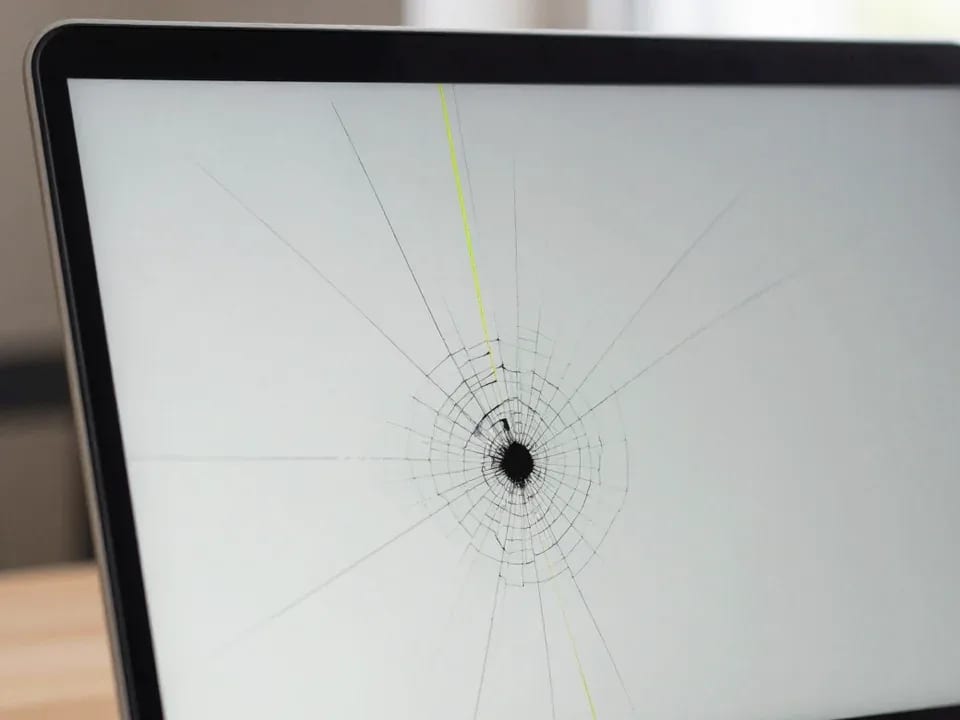
- Display and hinge: the display shows the image and camera settings, and after an impact cracks, lines, or dead zones appear on it first.
- Focusing: the optical block shifts after a fall, and autofocus starts missing across the entire frame.
- Control board: components get torn off on impact, and if water gets in, corrosion eats away the traces within hours.
- Battery and card: if the camera got wet, remove them immediately and don't turn the device on until a technician inspects it.
- Drying: don't use a hair dryer—hot air pushes moisture deeper toward the control board, and oxidation speeds up.
Camera Repair at Home or at the Service Center
We offer two formats: an on-site specialist comes to the client, or the camera is serviced at our center. Let's go over when each option is more convenient and what to consider before contacting us.
When the Technician Comes to Your Home
We send a technician to you within 60 minutes anywhere in the city if the problem can be assessed and fixed on site. A visit covers typical issues: the camera won't turn on, doesn't recognize the memory card, or the lens gets stuck when extending. The technician brings tools to check power, battery contacts, and the card slot, tests the power circuit, and inspects the lens mechanism without opening the body. On-site diagnostics are free: they identify the cause and tell you whether they can fix it on the spot or if it needs to be done at the service center. It's more convenient at home when the camera won't turn on, doesn't see the card, or the lens sticks — these symptoms are checked right away without transporting the device. Call us and describe the symptom: the specialist will tell you whether an on-site visit is enough or if you should prepare the camera for transport.
When it's better to bring the camera to the service center
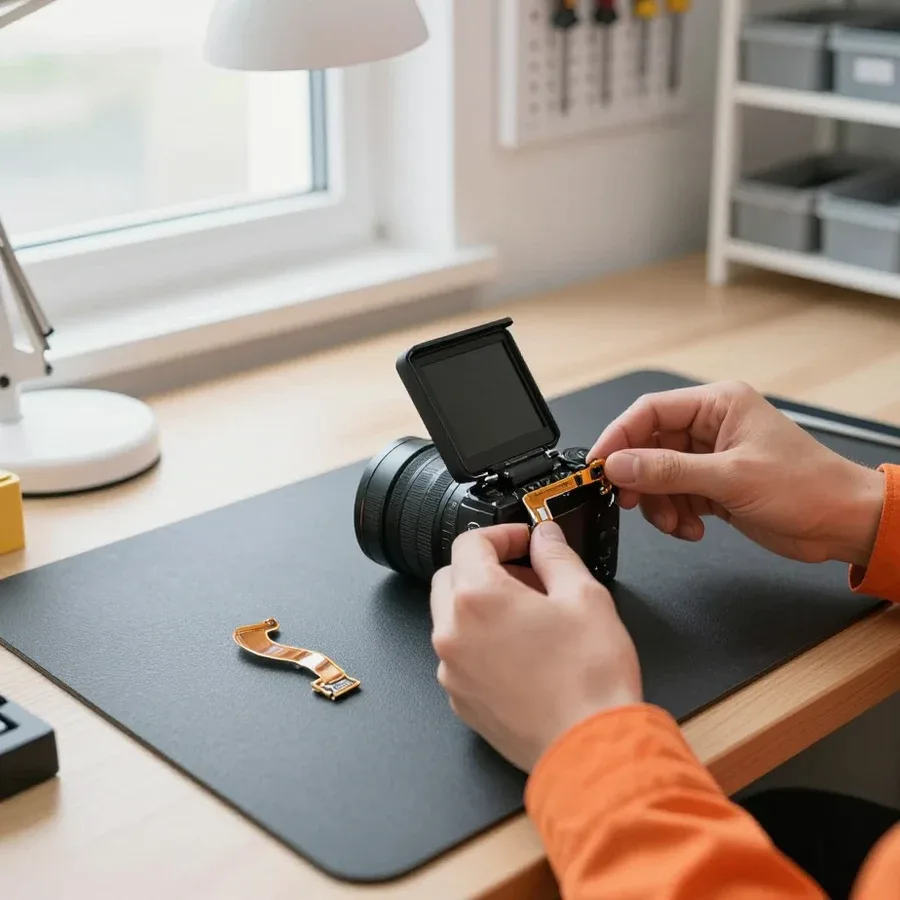
If disassembly, sensor cleaning, or control board work is needed, we do it at the service center. We don't touch a camera after water or a drop on site: the body is opened on a workbench, electronics are checked separately from mechanics, and optics and sensor are cleaned so no dust gets back in. Here the specialist disassembles the device, inspects components one by one, and finds hidden damage — corrosion after moisture, cracked flex cables, bent bayonet contacts. It's better not to open complex cases at home: at the service center they'll carefully take the camera apart and check each component without rushing or risking small parts. Before you come, remove the lens and memory card — check-in will be faster, and the technician will immediately see the condition of the bayonet and contacts.
Comparison of repair formats
| Format | When it fits | What the specialist does | Where diagnostics happen |
|---|
| At home | Won't turn on, doesn't see the card, lens sticks | Inspection, power and slot check, mechanism assessment | On site |
| At the service center | After water or a drop, sensor cleaning, board work | Disassembly, cleaning, part replacement | At the service center |
| At home if unsure | Symptom is unclear, need advice | Inspection and recommendation on format | On site |
How camera repair works and what affects the cost
Diagnostics are free, and the specialist gives you the final price based on the results. Here's how the inspection works and why the number doesn't appear right away.
How free diagnostics work
We provide free diagnostics: the specialist checks power, the card slot, the lens, and the board to find the cause, not just the symptom. First, the battery compartment cover is removed and the control board is tested — this shows whether power reaches the shutter and processor. Then the memory card slot contacts are checked: oxidized pins cause a write error that the owner mistakes for a sensor failure. The lens is tested for extension and focus, and flex cables and connectors are inspected for kinks. Based on the results, the specialist explains which component failed and what to do about it. Diagnostics are free whether or not you decide to repair the camera — so you don't risk paying for an inspection for nothing.
What affects the repair cost
The cost depends on which component failed and whether a part needs replacing, and the specialist gives you the price after free diagnostics. Cleaning the sensor and card slot, resoldering a contact, and replacing a flex cable are jobs of different complexity, and lumping them into one price makes no sense. The sensor and lens are the most expensive components: if the sensor itself is damaged, repair is rarely worth it, and we tell you that straight instead of pushing a replacement. If the lens is damaged, the optical unit and focus drive are priced separately. Don't agree to repair before diagnostics — without it, you can't know whether a part needs replacing or just cleaning and adjustment. The Tech Service technician gives you the price after the inspection and confirms it with you before starting work.
What affects the complexity of the job
- Moisture and oxidation: when water gets in, the control board, ribbon cables, and connectors are affected at the same time, and corrosion spreads across the contacts.
- Mechanical damage: a drop shifts the optical block and bends the lens mounts, so focusing goes off even after a part is replaced.
- Shutter wear: a shutter with high mileage requires disassembling the body and precise adjustment, not a simple replacement.
- Multi-component failure: when both the board and the lens are faulty, the work is done in stages, with checks at every step.
- Factory assembly: compact and film cameras are harder to disassemble than DSLRs due to tight layout and fragile latches.
Which cameras and brands we service
We service digital, DSLR, and mirrorless cameras of various brands, as well as lenses for them. Below is what exactly we take on and how camera types differ.
Digital, DSLR, and mirrorless cameras
We restore digital cameras, DSLR and mirrorless cameras, as well as lenses for them. We repair cameras in Astana based on the body type and the nature of the fault. Mirrorless cameras more often suffer from display ribbon cables and the lens mechanism — the body is more compact and has more moving connections. DSLRs often have shutter and focusing system failures: this unit experiences constant mechanical stress with every shot, and its lifespan ends faster than other parts. We also accept optics for both lines — from the bayonet mount to the autofocus drive. Diagnostics are free, so the technician determines the camera type before disassembly, not after — this way they immediately know which components to check first. Mirrorless models more often suffer from display ribbon cables and the lens mechanism, while DSLRs — from the shutter and focusing, so the check starts with the body type, not with a full disassembly of the device.
Brands Canon, Nikon, Sony, and Fujifilm
We service Canon, Nikon, Sony, and Fujifilm cameras, including Sony and Fujifilm mirrorless lines. We restore digital cameras in Astana by model: each line has its own typical weak points that the specialist knows in advance. For Canon and Nikon, these are more often DSLR bodies with shutter lifespan, for Sony and Fujifilm — mirrorless systems with electronic viewfinder and stabilizer. A specialist with 4 to 20 years of experience selects an approach for the specific body, not a universal scheme for all devices, and anticipates which component might have failed. Different brands have their own typical weak points, so the approach is chosen by model, not by a general template — a universal scheme here leads to unnecessary disassembly and wasted time.
Film and compact cameras
We take on film and compact cameras, but for these, diagnostics are most important — some components are already out of production. In compact models, the weak point is the flash and the lens extension mechanism: plastic gears wear out over time, and the lens stops extending fully. For film cameras, there are additional problems with the film advance drive and light protection of the body, and seals dry out over time and let light in. For such devices, it's worth first checking whether the needed part is available, and only then planning the restoration — otherwise you can waste time on disassembly without a result. We check the flash and film advance drive first, because their condition determines whether it makes sense to take on the restoration of a specific unit.
Warranty on repair and replaced parts
Warranty is the main argument when choosing a service. We explain what exactly our obligations cover, how we document their terms, and why this matters for a camera.
What the 1-year warranty covers
We provide a 1-year warranty on labor and parts, meaning we stand behind both the quality of service and the installed components. If after service the sensor starts showing stripes again or the lens stops focusing, the camera is accepted for re-inspection within this period. The coverage applies to replaced units and to performed operations — board soldering, sensor cleaning, lens adjustment. We discuss the terms before starting work so there are no misunderstandings. The technician explains which parts are new and which were only serviced — this determines what falls under a warranty case. For shooting this is critical: a faulty part doesn't show up immediately but after weeks of use, and then the replacement should be done without additional costs.
Why a parts warranty matters
Parts in a camera work together, and a defect in one element can appear after service when the camera is back in use. The shutter controls exposure time, flex cables and connectors transmit the signal from the sensor to the control board, and a failure in any link causes blur, an error, or a freeze. Externally a unit may look fine, but the defect shows up on the hundredth frame — during continuous shooting or in freezing conditions. That's why coverage only for labor leaves half the risks uncovered: if the part itself fails, the client pays for it again and for disassembly. Ask any service whether the warranty covers replaced elements, not just performed operations — otherwise a repeat replacement may be chargeable.
How we document warranty terms
We discuss the terms before starting work so the client understands what is covered and what is not. After free diagnostics, the technician states the scope of work and the parts, and at this stage the term is agreed — 1 year on labor and parts. At Tech Service, the client sees which units are replaced and which are only serviced — this determines what falls under a warranty case. The technician quotes the price after diagnostics, before disassembly and replacement. We put the agreements in writing so that months later there are no disputes about what exactly was replaced and what the coverage applies to. Ask in advance which specific work and parts the warranty covers — it makes it easier to compare offers from different services on substance.
How to tell a direct provider from an intermediary
The market has many aggregators and classifieds that pass the request to an unknown contractor. We explain how to distinguish a direct service from an intermediary and what to ask before work begins.
How a direct provider differs from an aggregator
Tech Service is a direct provider: our specialist comes to you, not an intermediary who passes the request to a third party. We have one person responsible for the entire camera journey — from arrival within 60 minutes across the city to returning the device after work — and that same person provides the 1-year warranty on labor and parts. An aggregator works differently: the platform takes the request and distributes it among contractors, while the actual work is done by a provider you have no direct relationship with. With this scheme, you don't know who will actually come or what warranty they'll give, so responsibility is blurred between the platform and the contractor. And it's hard to check in advance — both schemes look the same in an ad.
What questions to ask a service before work begins
- Who exactly will come: ask them to name the provider in advance and clarify whether they will come themselves or pass the request to a contractor.
- Warranty on labor and parts: check the term and that it covers installed parts, not just the work itself.
- Diagnostics before work: ask if it's free and whether they state the cause and scope of work before disassembling the camera.
- Who is responsible for the result: find out who to contact if the problem recurs — the same provider or the platform.
- On-site service: clarify whether the specialist works at the client's home or the device is taken to an unknown location.
Our technicians and experience
Our technicians have 4 to 20 years of experience, and they are the same people who come to your home. That range isn't just a formality: over the years, a specialist builds a mental map of typical faults for specific model lines—from a stuck lens to board errors—and uses the symptom to get to the cause faster. Diagnostics are free, and a city visit takes up to 60 minutes. The same person who arrives handles the device from start to finish, so you don't have to explain the breakdown history again. Experience with symptoms often suggests where to start checking, which saves time and reduces the risk of unnecessary camera disassembly. In my view, it's this continuity with a single technician that sets direct service apart from a scheme where the request gets passed around.
Camera repair key insights for photographers
To sum up: this section covers the key things to keep in mind before contacting a service center—from accurately describing the symptom to checking the warranty terms for labor and parts.
- Identify the symptom: won't turn on, doesn't see the memory card, lens is stuck, or spots on photos—a precise description narrows down the possible causes.
- Don't make it worse: don't turn on a wet camera, and don't force a stuck lens—this keeps the chance of a simple repair alive.
- Start with free diagnostics: discuss the cost only after the technician names the cause and the scope of work.
- Check the warranty: does it cover both labor and parts? That affects the overall reliability of the service.
- Choose a direct provider: that way you know who's responsible for the result, rather than having your camera passed on to third parties.
- Don't delay: the sooner the camera reaches a technician when it breaks, the fewer components are affected—especially with moisture exposure and drops.