Мария Р.Order No. AS-5267 · 10 June 2024
oursПривезли технику из офиса, нужен был акт. Техника на балансе ТОО, нужен был чек и акт. Никита М всё сделал при мне, за пятнадцать минут.
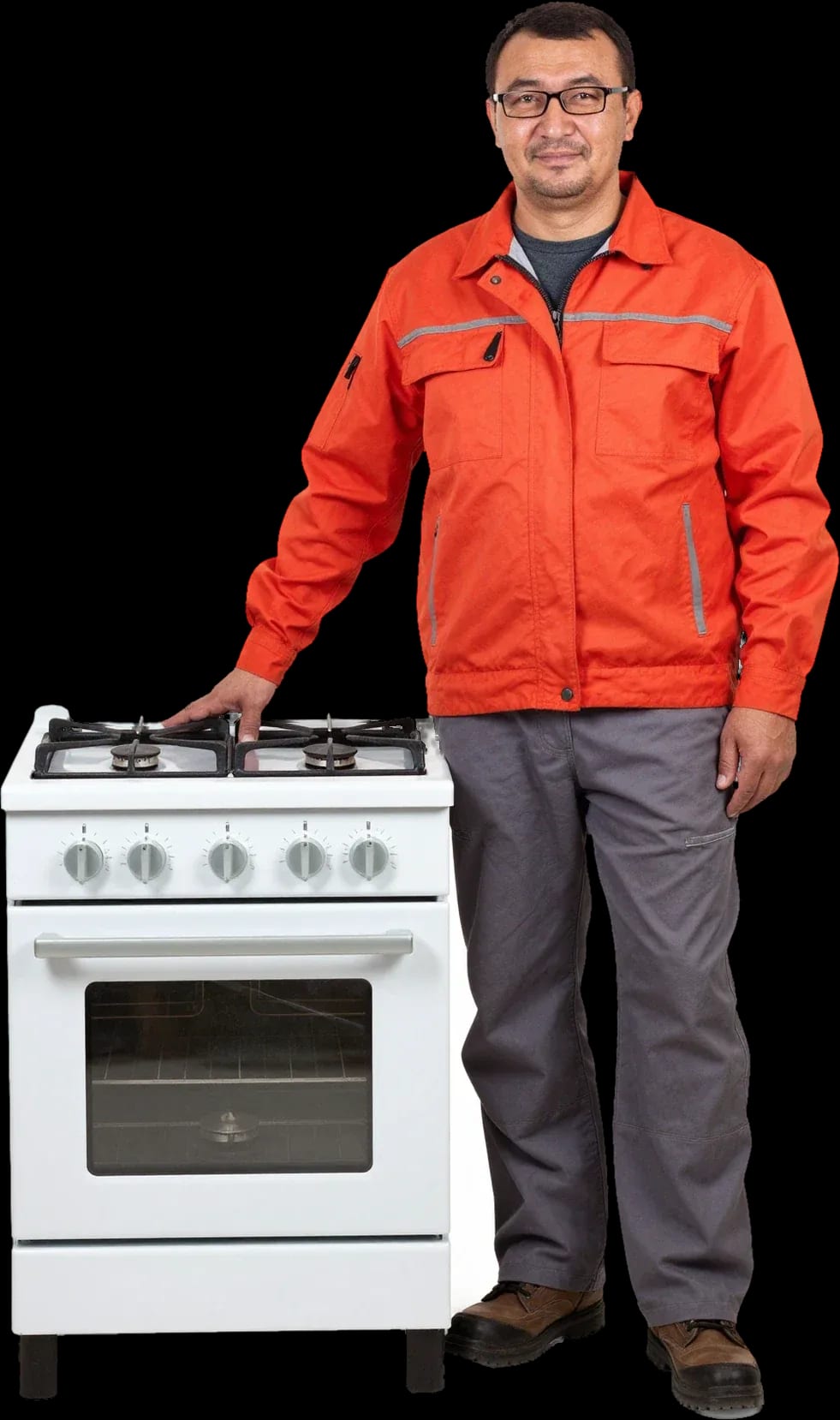
A technician arrives within 60 minutes anywhere in the city. Diagnostics are free.
Our own technicians4 to 20 years of experience




Repair prices
Below are frequent symptoms and likely causes. The technician will pinpoint the exact cause after diagnostics.
dirt, moisture, faulty igniter
from4 500 ₸
clogged jet, low pressure
from4 000 ₸
thermocouple, clog, draft
from5 500 ₸
leak at a connection, worn hose
from4 000 ₸
thermostat, oven burner, clog
from8 000 ₸
igniter, wire, ignition module
from8 000 ₸
clogged jet, faulty valve
from4 500 ₸
adjusting the legs, uneven floor
from4 000 ₸
1 visittime
from 8 000 ₸cost
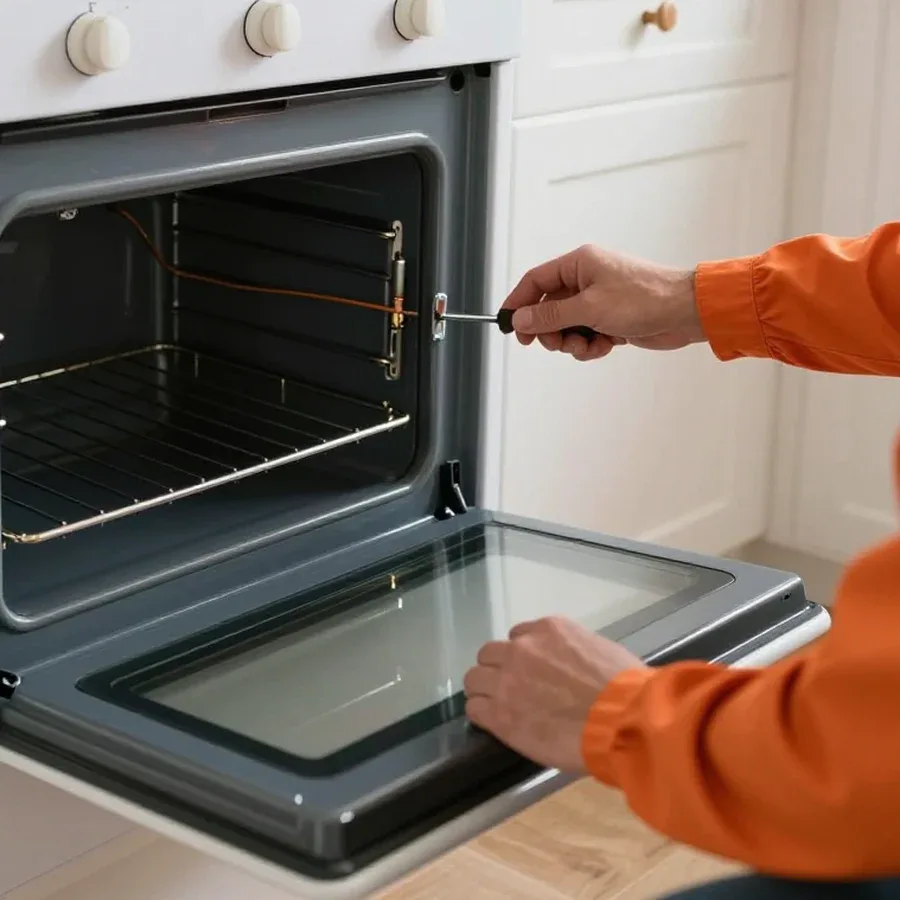 BeforeAfter

Five steps from request to checking the work.
Submit a request, specify your stove model, and describe the symptom.
The technician confirms the model, symptom, and access to the gas valve by phone.
The technician confirms access to the gas valve, the model, and your preferred time, and prepares the workspace.
The gas valve is shut off, the room is ventilated, and children are kept away from the work area.
Ask how to use the stove going forward and what to watch for in the first few days.
We reply during working hours
Describe the gas appliance problem and a convenient time — the technician will confirm the visit and bring the necessary parts.

Warranty question? Call us
+7 (778) 046 88 53 experience11 years
Stove and oven repair technician
 experience11 years
Dishwasher repair technician
 experience10 years
Senior washing machine technician
 experience11 years
Freezer repair technician
 experience16 years
Washing machine installation technician

Author: Beknur D.,Stove and oven repair technician
Published
Updated
Tech Service repairs gas stoves in Astana as a direct contractor: our technician comes to your home or the stove is fixed in our service center. Diagnostics are free, callout within 60 minutes across the city, and a 1-year warranty on labor and parts. The technician gives you the price after diagnostics, and you can pay via Kaspi QR, Kaspi Red, bank card, cash, or bank transfer for companies.
Failure to ignite is a symptom that can come from different components: the igniter, thermocouple, gas control, or fuel supply. Here's how a technician tells one cause from another.
The electric igniter is responsible for lighting the burner without matches, and when it fails, the stove won't ignite even though fuel is being supplied properly. The unit can be piezoelectric, where pressing a button produces a spark, or automatic, where a transformer generates a discharge from the mains. Failure shows up in different ways: no spark at all, the spark jumps to the wrong spot, or it weakens on one burner out of four. A common cause is dirt and moisture on the electrode: grease and condensation after washing divert the discharge to the body. Our technicians start by inspecting the electrodes and wiring, then check the button and transformer. If the igniter doesn't work, gas stove repair begins with the ignition unit. Lighting with a match can be a temporary measure, but if the igniter doesn't work, the cause is usually in the ignition unit itself, not the fuel supply, and it's worth fixing rather than working around.
If the stove goes out a few minutes after ignition, most often the gas control is tripping because it's getting a wrong signal from the thermocouple. The thermocouple is a thin metal rod next to the burner: the flame heats it, it generates a weak current, and the valve keeps the supply open. While the rod is hot, fuel flows; when it cools, the valve closes and the burner goes out. Wear, carbon buildup, or the thermocouple being displaced away from the flame breaks this chain: the sensor doesn't heat up, the current drops, and the safety valve shuts off the supply. The thermocouple monitors the presence of flame, and when it's dirty or worn, the automation cuts the supply even though the burner is fine, so it's important to check the unit rather than replace the burner. This failure is more common on old stoves where the rod has long been covered in carbon deposits.
The technician divides diagnostics into three parts — fuel supply, ignition components, and the electrical part such as the timer — and checks them one by one. If the burner won't ignite but the timer and backlight work, the problem is almost certainly in the gas part or the igniter, not the electrics: this narrows the search and saves time. Our gas stove diagnostics are free, and the technician compares all three areas before naming the cause. We start with the valve on the riser: if it's closed, the stove is completely dead. Then we inspect the electrodes, wiring, and ignition button, looking for carbon buildup and moisture on the contacts. After that, we check the thermocouple's position relative to the flame and the valve's response to heating. And only then do we look at the timer, backlight, and power supply if the stove is plugged in.
A weak or too strong flame isn't always a stove breakdown. Here's where a clog is to blame, where the jets are, and where it's the gas pressure in the line.
Weak burning is most often caused by a clogged burner or flame spreader, less often by the jets or gas pressure in the line. Our technicians start with the burners: grease, baked-on crumbs, and combustion products clog the holes, and the gas comes out unevenly — one side burns bright, the other barely holds a flame. The flame spreader is removed, washed, and the holes are cleared, then checked for proper seating: a misaligned part also changes the flame shape. If the pressure isn't restored after cleaning, the jets are inspected — calibrated holes through which gas is supplied to the burner. A clogged or drilled-out jet gives a consistently weak flame on one burner while the others work normally. Before replacing parts, the technician checks the burner and spreader for blockage: a clog causes an uneven flame that's easy to mistake for a faulty component.
Too strong a flame and soot usually point to jets that don't match the gas type or to a disrupted supply setting. Jets are designed for a specific gas — mains or cylinder — and after switching the gas source without replacing the parts, the flame becomes higher than normal and turns yellow. The second scenario is a flame spreader with deformed or enlarged holes: gas comes out in a larger volume and doesn't have time to burn completely. Soot on the bottom of a pot and yellow tips are a direct sign of incomplete combustion, which releases combustion products into the room. A sooting flame is dangerous not only because of the carbon buildup on cookware — it signals incomplete combustion, so it's best to leave jet adjustment to a technician rather than tweaking it at random.
| What we check | Sign of a problem | What the technician does |
|---|---|---|
| Burner and spreader | uneven, weak flame | cleans the blockage |
| Jets | soot, flame too strong | adjusts the supply |
| Gas line and pressure | weak flame on all burners | checks the connections |
A gas smell in an apartment is a situation where the sequence of actions before a specialist arrives matters. We go over a safe procedure and explain when you need the emergency service and when you need a repair technician.
You call the emergency gas service for a clear leak and smell in the room, and a repair technician when the stove works but a component is broken. A leak on the gas line, at threaded joints, or at the regulator is the gas service's domain: their job is to shut off the supply and eliminate the danger on the line up to the stove. Regular servicing covers burners, valves, the thermocouple, and electric ignition — that's where you need a home appliance specialist who takes the appliance apart and puts it back together. If the smell appeared after you replaced the hose or regulator yourself, that calls for an emergency inspection, not a scheduled visit — it's safer that way. A direct contractor with their own technicians comes specifically for a broken component, not for an emergency leak, and doesn't replace the gas service.
After the work, the technician checks the connections for leaks and tests the stove to make sure there's no leak. First they inspect the gas line and the joints where the hose connects to the stove and the gas valve, then check the connections with soapy water — on a tight joint the soap film doesn't bubble, while on a leaking one a bubble grows. Then they light each burner in turn, watch the color and stability of the flame, and check that the gas control and thermocouple shut off the gas when the flame goes out. A leak check isn't a formality: it shows that after replacing a component the gas line holds gas, and without it the job can't be considered complete. That's why we finish the repair with this check rather than just reassembling the component, and the 1-year warranty on labor and parts covers the verified result.
Not every stove needs to be taken to a workshop. We explain when a repair can be done at home, when you need the service center, and how a technician visit works.
We fix most gas stove breakdowns right at your home: our technician arrives with their own tools and works on site. Most often in the kitchen, we replace the thermocouple, clean and adjust the burners, fix the electric ignition, and tighten the gas line connections. This approach covers both typical flame complaints and failure to ignite. Home visits are also more convenient because the stove doesn't need to be removed or transported, and the technician can immediately see how it's connected to the gas line — this helps pinpoint the cause more accurately. Home visits cover the majority of requests, and we only resort to removal when a component can't be checked without it. The technician arrives with their own tools and immediately checks the ignition, thermocouple, and fuel supply — this way the cause is found faster than if the stove were transported to the workshop.
We take the stove to the service center when the breakdown requires disassembling a component or work that's inconvenient to do in the kitchen. These are cases involving the gas control, when the component needs to be removed and checked entirely, with deformation of the oven, or with replacement of components that are hard to access on site. Diagnostics at home shows whether the technician can handle it on site or if removal is needed. The criterion is simple: if the component can be removed and checked separately, work at the service center is faster and cleaner than in the kitchen — the technician will suggest the option after inspection. We don't push for transportation: if the breakdown can realistically be fixed on site, we do so. Before removal, the technician explains why the component can't be checked in the kitchen and agrees on further steps with you — the decision remains with the stove owner.
Warranty and payment procedure are what people check before calling a technician. Here's what our warranty covers, how the cost is quoted, and why the technician's experience matters when working with gas.
We provide a 1-year warranty on labor and parts so the result is predictable. The same term applies to both the installed component and the work performed — if the issue recurs, you don't have to figure out who's at fault. For a gas stove, this condition is especially important: after work on the burner, thermocouple, or gas control, the appliance must work reliably day to day, not just on the day of the visit. The warranty covers all components the technician touched: both the part itself and its installation. A warranty on parts separate from labor is needed because if a breakdown recurs, you don't have to prove whether the defect is in the part or the installation.
The technician quotes the cost after free diagnostics, once the cause is known, and you can pay via Kaspi QR, Kaspi Red, bank card, cash, or bank transfer for companies. This procedure eliminates the main complaint about on-site service — the discrepancy between a phone estimate and the actual bill: the amount is discussed when the stove is disassembled and the defect is found. Diagnostics are free, so you can have an inspection even when you haven't decided yet, and the technician has already identified the cause and scope of work. You can pay in cash, by card, or by transfer — everyone chooses the convenient option, and this doesn't tie the client to one method. This approach is convenient because the decision is made based on the inspection, not a phone estimate that often differs from the actual breakdown.
Our technicians have 4 to 20 years of experience, and with gas equipment that kind of track record directly affects safety. We work as a direct contractor: our own specialist arrives on the call, not a middleman who passes the request along and takes no responsibility for the result. Our technicians know the typical defects of different stove series — from a worn thermocouple to a clogged jet — and that helps them find the cause faster. We reach any address in the city within 60 minutes, so the inspection doesn't stretch into half a day and the cause becomes clear right on the spot. A gas stove is not just a household appliance but also part of the gas supply line, so an experienced technician checks the safety of the connections first and only then starts fixing the problem.
Some breakdowns involve components people think about less often — the supply valves and the timer. And some problems are prevented by ordinary care, if you know what you can safely handle yourself.
A stiff gas supply valve is usually caused by dirt or wear in the mechanism, and it's not something to ignore. Over time, grease mixed with dust builds up inside a plug valve, and the plug itself wears down — turning becomes tight and play appears. On stoves with flame failure protection, a thermocouple sits next to the valve, and its fit is checked along with the mechanism. A Tech Service technician takes the valve apart, cleans and lubricates the plug, checks the connections for leaks with soapy water and soaps all the joints of the supply line, then after reassembly checks once more that the valve turns smoothly and doesn't leak. A valve that takes effort to turn is harder to shut off at the right moment, so it's checked not only for convenience but also for its ability to cut off the gas quickly — during a leak, every second counts.
The timer is part of the stove's electrical system, so its failure has nothing to do with the gas supply and is diagnosed separately. The timer and electric ignition are powered by the mains or a battery, and the control board sits away from the burners — its faults cause no spark, spontaneous shutdowns, or incorrect timekeeping. In such cases, diagnostics follow two lines: the technician checks the ignition, the condition of the spark plugs and wiring, while the gas part is tested separately for leaks and flame stability. If the timer doesn't work but the burners light normally, that confirms the gas part is fine, and diagnostics focus on the electrics — this narrows the search down to the board, button, or contacts, and the technician doesn't waste time checking a component that's clearly working.
Here's a short list of what determines the outcome of gas stove work and what to rely on when you need to make a decision.
Tech Service technicians repair other appliances too — with the same 1-year warranty on labour and parts.
 Refrigerator Repair in Almatyfrom 3 000 ₸
 Washing Machine Repair in Almatyfrom 3 000 ₸
 Dishwasher Repair in Almatyfrom 3 500 ₸
 Oven Repair in Almatyfrom 3 000 ₸
 Cooktop Repair in Almatyfrom 3 500 ₸
 Air Conditioner Repair in Almatyfrom 3 500 ₸
 Boiler and Water Heater Repair in Almatyfrom 2 500 ₸
 Freezer Repair in Almatyfrom 6 000 ₸
 Tumble Dryer Repair in Almatyfrom 5 000 ₸
 Coffee Machine Repair in Almatyfrom 2 500 ₸
 Robot Vacuum Cleaner Repair in Almatyfrom 3 500 ₸
 Vacuum Cleaner Repair in Almatyfrom 1 500 ₸
 Microwave Oven Repair in Almatyfrom 2 000 ₸
 Hair Dryer Repair in Almatyfrom 1 500 ₸
 Iron Repair in Almatyfrom 3 000 ₸
 Electric Kettle Repair in Almatyfrom 2 500 ₸
 Mixer Repair in Almatyfrom 2 500 ₸
 Multicooker Repair in Almatyfrom 500 ₸
If your oven isn't working, first check the outlet, the circuit breaker in the panel, and the selected mode, then assess the symptom: not heating…
3 October 2025 · 12 minutes read
If your dishwasher won't drain, the most common culprits are a clogged filter or drain hose; less often, it's the pump, impeller…
24 March 2026 · 12 minutes read
A washing machine can hum for many reasons, and the first thing to figure out is when the sound appears.
20 March 2026 · 12 minutes read
If your washing machine isn't filling with water, the most common culprits are a closed valve, a clogged inlet filter screen on the hose…
20 February 2026 · 13 minutes read
If your microwave isn't heating but the light and turntable still work, the problem is usually one of the high-voltage components — the magnetron, diode…
15 February 2026 · 12 minutes read
If your refrigerator stops working, first check the outlet, the power cord, and the thermostat setting, and after defrosting let it stand for a while.
4 February 2026 · 12 minutes read