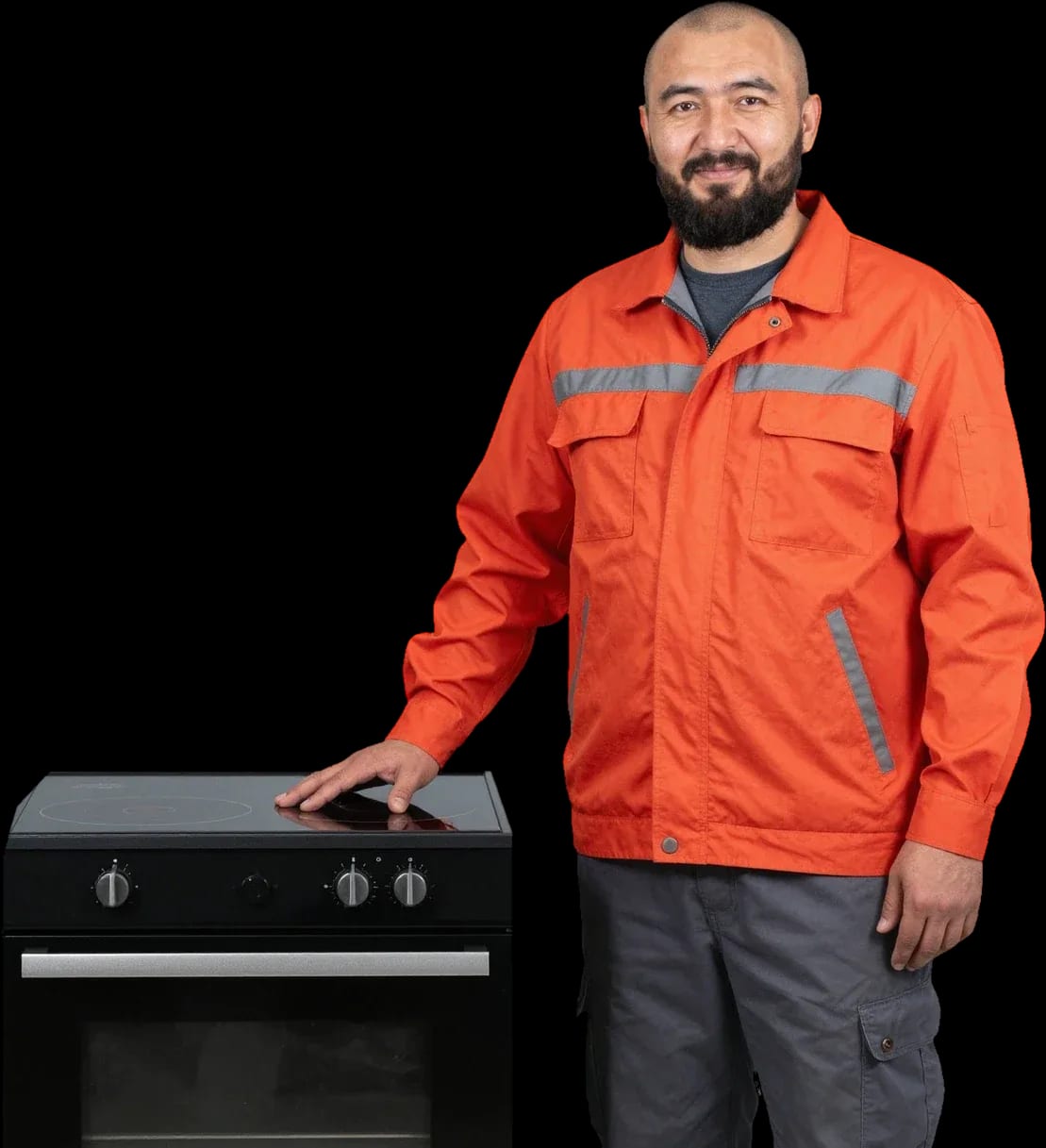
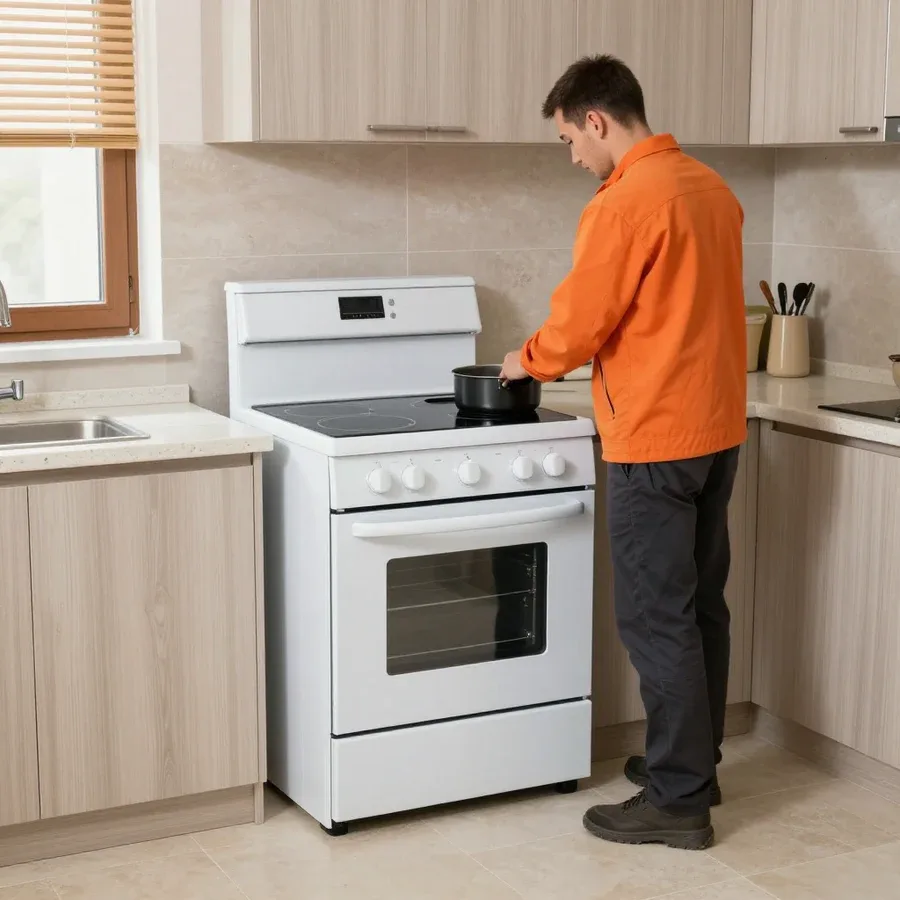
Tech Service repairs electric stoves in Astana as a direct contractor: our technician arrives at your home within 60 minutes anywhere in the city, or the stove is repaired at our service center. Diagnostics are free, the technician explains the cause and cost after diagnostics, and we provide a 1-year warranty on labor and parts.
Why the stove doesn't heat, trips the breaker, or won't turn on
Most requests start with a simple symptom — a burner doesn't heat, the breaker trips, or the panel is dead. Let's look at the usual causes and what checks you can safely do yourself before the technician arrives.
Why the burner stopped heating and how to tell if it's the heating element or the switch
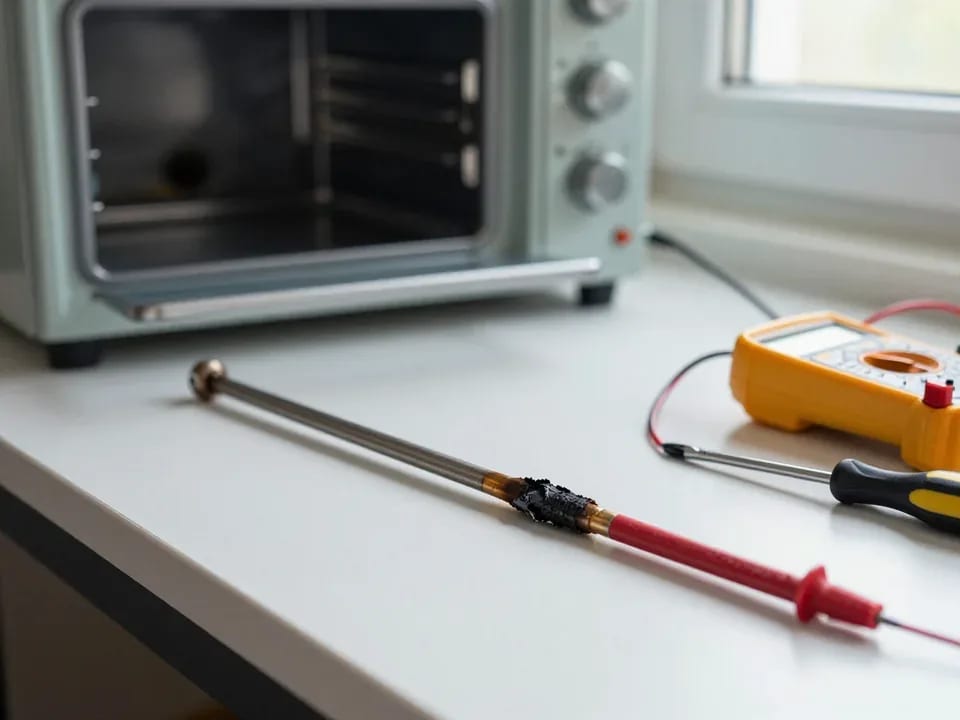
Most often, a burner that doesn't heat means a burnt-out heating element or coil, a worn power switch, or a burnt terminal — we determine the exact cause during free diagnostics. In cast-iron burners, the heater is pressed into the disc and fails as a whole; in spiral burners, the open wire burns out; and in glass-ceramic cooktops, a ribbon or halogen radiator sits under the surface. The power switch clicks and changes settings but doesn't heat if the contacts inside are burnt or the terminal at the input is melted. An electric stove repair technician tests the heater with a multimeter and checks the switch circuit separately — that shows what to replace. If only one burner out of several heats, the problem is almost always in that zone's heater, not the control board, so there's no need to check the whole stove.
Why the electric stove trips the breaker and whether it's safe to use
The breaker usually trips due to a heating element shorting to the body, damaged wiring, burnt terminals, or a faulty relay — it's better not to use the stove before the technician arrives. A short means current leaks to the metal body, and touching it puts you at risk of electric shock, so unplug the stove and don't turn it on again until it's inspected. A burnt terminal heats up and melts the insulation nearby, and a faulty relay sticks and doesn't turn off the zone even after you turn the knob. In this situation, it's best not to delay calling an electric stove repair technician: we arrive anywhere in the city within 60 minutes and on site distinguish a stove fault from a wiring or breaker problem. If the breaker trips immediately when you plug the stove in, rather than during heating, the cause is more often in the connection and wiring — then we separate the stove's part from the electrician's part.
What clicking and crackling mean and when it's normal
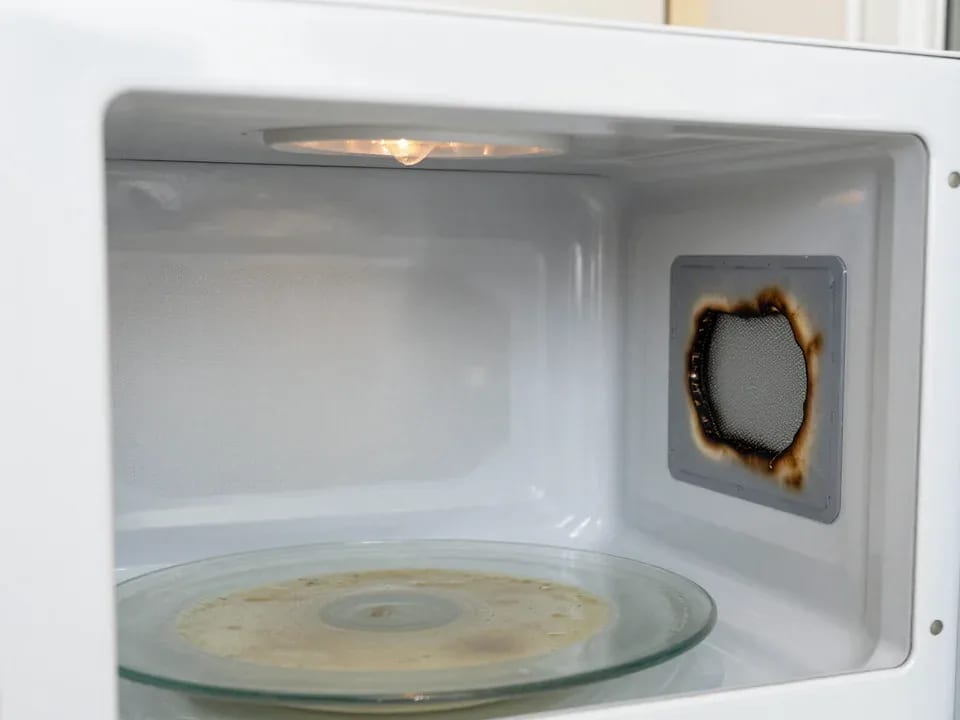
Rhythmic clicking during operation is normal thermostat cycling, but continuous crackling, a burnt smell, or sparking under the panel are not normal. The thermostat and relay periodically open the circuit to maintain the set temperature, so occasional clicks with pauses are a working sound, not a breakdown. Continuous crackling indicates burning contacts, sparking indicates damaged insulation, and a burnt smell indicates overheating terminals or wiring. A glass-ceramic cooktop requires careful handling due to its fragile surface, and crackling in it after a sudden temperature change often means a crack has already started, which is only visible when backlit. Don't put stress on such a surface before inspection — even if the stove continues to heat, a thin crack spreads with the next heating and requires replacing the entire panel.
Error codes and specifics of different stoves
A signal on the display and the type of surface hint at where to look for the fault. Let's go over what an error code means in general and the differences in working on cast-iron, glass-ceramic, and touch panels.
What an error code on the panel means and whether the stove needs to be taken to a service center
The signal on the display points to a specific component — a temperature sensor, control board, or touch panel — and in most cases we diagnose it on-site, so there's no need to haul the stove to a service center. Error codes work differently across models: on one, the error indicates an overheating cooking zone; on another, it points to a faulty thermistor or a break in the control circuit. Our diagnostics are free, so we confirm the code with instrument testing of the components, not just by the number on the screen. The same signal can mean different things from different manufacturers, so we tie the interpretation to the specific model rather than a generic table. Before you call, write down the full code, including letters and numbers — that way the technician can bring the right tools and narrow down the checks right away.
How servicing cast-iron, glass-ceramic, and touch panels differs
| Surface type | What breaks most often | What we check first | Where we repair |
|---|
| Cast-iron burners | Heating element, coil, switch | heating of each zone and terminals | on-site |
| Glass-ceramic | surface, zone heater | cracks when backlit, heating | on-site or in the service center |
| Touch panel | control board, sensors | response to touch, error signal | on-site or in the service center |
Do you repair stoves of specific brands?
We service household electric stoves from common brands, including Mechta, Elektra, Hansa, Samsung, and Bosch, and we source parts for the specific model. Each brand has its own design: Mechta and Elektra have easier access to heaters and switches, while Hansa and Samsung have the control board set deeper and require partial disassembly of the body, and Bosch electronics are more tightly integrated with the touch panel. The set of typical faults also varies — what's fixed by replacing a switch on one brand may point to the board on another. Our electric stove repair technician arrives anywhere in the city within 60 minutes, so it helps to provide the model when you call: it speeds up diagnostics and helps us pinpoint the checks.
Repair at home or in the service center
The format depends on the component and surface type. Here's when a specialist comes to you and when it's more convenient to repair the stove or a separate panel at the service center.
When the stove is repaired at home
We fix most faults — burners, heating elements, switches, control boards, connections — right at your home; the specialist arrives and starts diagnostics immediately. The on-site technician reaches any point in the city within 60 minutes and begins by checking the terminals and the circuit breaker in the panel: a loose terminal connection causes heating and false tripping that's easy to mistake for a stove malfunction. This format is also more convenient because the appliance stays at its connection point — you can immediately see whether the issue is related to the wiring and circuit breaker, not just the heating element. Our diagnostics are free, so the cause is identified before any work begins. Electric stove repair in Astana at home is also convenient because there's no need to disconnect and transport the appliance. In my opinion, calling a technician to your home for an electric stove is especially justified for apartments with old wiring: half of the "breakdowns" there turn out to be a matter of contacts in the outlet and panel.
When the appliance is taken to the service center
We take a stove or cooktop to the service center when complex repair of the control board is needed or when working with a glass-ceramic surface, which is inconvenient and risky to do on site. The electronic module requires soldering and testing on a disassembled unit, and glass-ceramic is easy to damage during transport — a crack on the cooking surface will cost more than the fault itself. That's why we decide whether to transport the appliance after diagnostics, not in advance over the phone: it's impossible to distinguish a board failure from a simple broken heating element by describing the symptom. The direct contractor takes the appliance to their own service center and returns it after the work, without passing it on to a third party. Almaty residents should keep in mind: if the stove is built into the kitchen unit, removing the panel adds a separate step, and the technician assesses it on site.
Can the oven be repaired separately from the cooktop
Yes, the oven as part of the stove is repaired separately from the cooktop — they are different units, and a fault in one does not require replacing the other. Ovens fail for their own reasons: the lower or upper heater burns out, the thermostat acts up, the fan stops spinning. If heat is not retained, it's more often the seal or door hinges rather than the heating — such minor issues are fixed on site in one visit. The cooktop continues to work, and there's no need to touch it. In our experience, separate oven repair is easier for the client: there's no need to disassemble the entire stove and wait for the sealant around the contour to dry. The 1-year warranty covers both labor and replaced parts.
How diagnostics and repair work
To avoid surprises, we'll show you the sequence of steps — from request and technician arrival to appliance inspection, work approval, and the repair itself. This way you'll understand the sequence of actions at each stage in advance.
How fast does the technician arrive and is the visit paid
The on-site technician arrives within 60 minutes anywhere in the city, and diagnostics are free — you don't pay for the visit or inspection. This applies to all districts of Almaty: both in new developments on the left bank and in older neighborhoods across the river. The electric stove repair technician inspects the appliance on site immediately, without taking it to the service center unless necessary. A note about the request: if your description already makes it clear that the case is non-standard, it's more honest to say so right away on the phone. Otherwise the person will spend an hour on the road, and diagnostics will still require additional clarification. Such a conversation saves time for both you and the technician. If the symptom repeats, write down in advance under what conditions it appears — this will also shorten the inspection.
What the technician does during diagnostics
During the inspection, our specialist checks the heating of each zone, the switches, the control board, and the connection, then names the cause of the breakdown and the cost of work. First, they check how the stove is connected to the power supply: terminals, cable, circuit breaker in the panel. The connection check comes first because some 'stove breakdowns' turn out to be a wiring or circuit breaker issue — and then no intervention in the appliance is needed. Next, they turn on the burners one by one and measure the heating, test the heating elements and power switches, and check the condition of the control board and sensors. Based on the free diagnostics, you get a clear explanation of which unit failed and why — without vague phrases like 'something with the electrics'. If the cause requires a part replacement, the technician immediately says what exactly will need to be replaced and how it will affect the stove's operation going forward.
How repair is approved and which parts are replaced
After the inspection, the technician explains which part has failed and agrees with you on the scope of work and replacement parts before starting. They replace burners, heating elements, power switches, control boards, and thermostats — the components that cause the stove to not heat, not turn off, or work intermittently. Sometimes it's cheaper and more reliable to replace a worn-out component than to repair it: both options are discussed openly, and the decision is yours. Work doesn't start without your consent, so the final amount matches what was quoted after diagnostics. In my view, this is what sets a calm repair apart from a stressful one — agreeing on everything before work begins. When the scope and part are clear in advance, the technician arrives prepared and doesn't waste the visit on extra clarifications on site.
Warranty and what to do if the problem comes back
Warranty is the main factor when choosing a technician: it shows whether the provider is ready to stand behind the result. Here's what our warranty covers and what to do if the fault returns.
What the 1-year warranty covers
We provide a 1-year warranty on both labor and parts — covering the quality of work and the installed components. These are two separate commitments: one covers how the technician did the job, the other covers the part itself. In practice, the parts warranty matters separately because a component can fail before any error by the technician becomes apparent. If within a year after the service the electric stove acts up again, we determine where the failure occurred: installation quality or the part itself. In the first case, we redo the work; in the second, we replace the part — and in both cases we don't blame the failure on usage. We keep records of the replaced component and the work performed, so on a repeat call it's clear where we looked for the cause. Before calling a technician for electric stove repair, ask whether the warranty covers parts — otherwise a repeat failure of the component will have to be paid for again.
What to do if the stove stops working again after repair
If the fault returns within the warranty period, we fix it under warranty — we determine where the failure occurred and get the stove working again. Call or message us, describe how the stove is behaving, and we'll arrange a repeat visit. Before the second visit, try to recall the conditions when the problem appeared: which burner, at what temperature, after turning on or during operation, and whether a code appeared on the panel. This helps the technician pinpoint the cause instead of just repeating the previous visit. Keep handy information about which component was replaced the first time — that makes the conversation more specific and lets the technician bring the right part. And don't try to disassemble the stove yourself before the specialist arrives: tampering can erase traces of the fault and make it harder to find the cause.
How to pay for the repair
We accept payment via Kaspi QR, Kaspi Red (instalments), bank card, cash, or bank transfer for companies, and the technician quotes the price after free diagnostics, once the cause and scope of work are clear. That makes sense: the amount depends on which component is being replaced and the stove model, so quoting before inspection would be inaccurate. Diagnostics are free — you only pay for the repair itself and parts, if needed. The technician states the amount before work begins so you can decide without surprises. You can pay via Kaspi QR, Kaspi Red, card, cash or bank transfer, and this doesn't affect timelines or warranty. Diagnostics are free, so you don't pay for the inspection itself — you only pay for the repair and parts, if needed. You can confirm the payment method in advance when calling a technician for electric stove repair — that way you'll be prepared for the visit and won't have to look for an ATM.
Direct provider or middleman
The appliance repair market has many aggregators and classifieds. Let's look at the differences between a direct provider and a middleman and how that affects the result and warranty.
How a direct provider differs from an aggregator
Tech Service is a direct provider: our own technician comes to you, not a contractor found through an intermediary, so we stand behind the work and the warranty. An aggregator only passes the request to an available contractor and has no part in the work itself. With us, the on-site specialist follows our diagnostic and service rules, and the 1-year warranty on labor and parts is issued by the service, not by a third party. An intermediary adds an extra link between you and the technician, which makes it harder to file a warranty claim — with a direct provider, there is only one party responsible. In my view, this is the main criterion for choosing: it matters to know who is accountable for the result when the stove is needed in the kitchen again.
How to tell that the technician is from the service
Our specialist arrives on the service's own request and works by our diagnostic and warranty rules, not as a freelance contractor from a classifieds site. When you book, clarify three things: which organization the person works for, who carries the warranty obligations, and where to turn if the problem comes back. With a direct provider, all three answers match — they are backed by the same company, and you can easily check that by the service name. An electric stove technician comes to your home, runs free diagnostics, and names the cause of the fault. If they can't tell you over the phone who exactly will come and on whose behalf they work, that's a reason to ask — the answer determines who you'll claim the warranty from.
Why technician experience matters for stove repair
Our technicians have 4 to 20 years of experience, and that track record directly affects how accurately the cause of a breakdown is identified on the first visit. An electric stove is no more complex than other appliances, but the same symptom can point to different faults: a burner won't heat whether the heating element has burned out, the switch is stuck, or there's a break in the wiring. An experienced specialist can often tell from the symptom and error code which component to check first — this cuts down on unnecessary part replacements. A beginner goes down the chain at random and replaces working components. In our practice, accumulated experience shows most clearly on stoves with electronic controls, where error codes need to be interpreted with the model in mind.
Why electric stove repair is often the smart move
An electric stove breakdown almost always starts with a clear everyday symptom and ends with a decision that depends on a proper check and choosing the right provider.
- The symptom narrows the search: "the burner won't heat" or "the breaker trips" rules out some possibilities, but only an on-site check reveals the exact cause.
- The error code and panel type: hint where to look for the defect — in the heater, control board, or wiring.
- Home or service center: some work can be done at home, but complex components and glass-ceramic surfaces are safer to repair in the workshop.
- Warranty and transparency: a year on labor and parts is the main guideline when choosing a provider, along with agreeing on the scope before work begins.
- A direct provider: with its own technicians, makes it easier to claim the warranty if the problem comes back.