Tech Service repairs mechanical, quartz, and smart watches in Astana: our technician comes to your home within 60 minutes or you can drop off your watch at our service center. Diagnostics are free, the technician gives you the price after diagnostics, and we provide a 1-year warranty on labor and parts. We work as a direct contractor, with no middlemen.
What watches we repair
Models differ in design, and that determines what exactly gets fixed: mechanical, quartz, electronics in smart models, or the pendulum assembly in floor clocks. Here's what we take in for repair.
Mechanical and quartz wristwatches
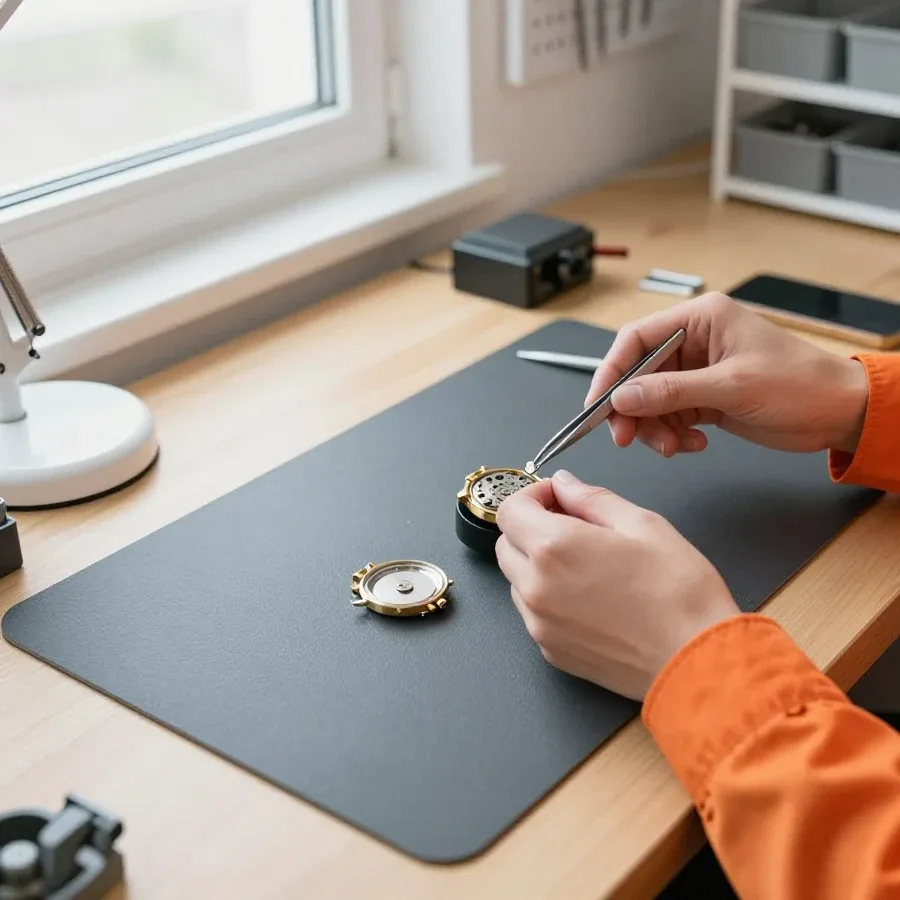
We repair mechanical wristwatches with overhaul and movement regulation, and quartz watches with battery, movement, and hand replacement. For mechanical watches, we disassemble the movement, clean the parts, apply fresh lubricant, and set the accuracy. For quartz watches, we replace the button-cell battery, check the coil contact, and if needed install a new movement with hands. Diagnostics are free, so the technician first identifies the cause and then agrees on the work. You can't just wind a mechanical watch after a long period of disuse — thickened lubricant turns into an abrasive, so preventive maintenance costs less than replacing worn gears. Our specialists have 4 to 20 years of experience, and we provide a 1-year warranty on every repair. Before disassembly, a watch repair technician in Astana checks the balance amplitude — it shows whether a full overhaul is needed or just an adjustment.
Smart, hybrid, and kids' watches
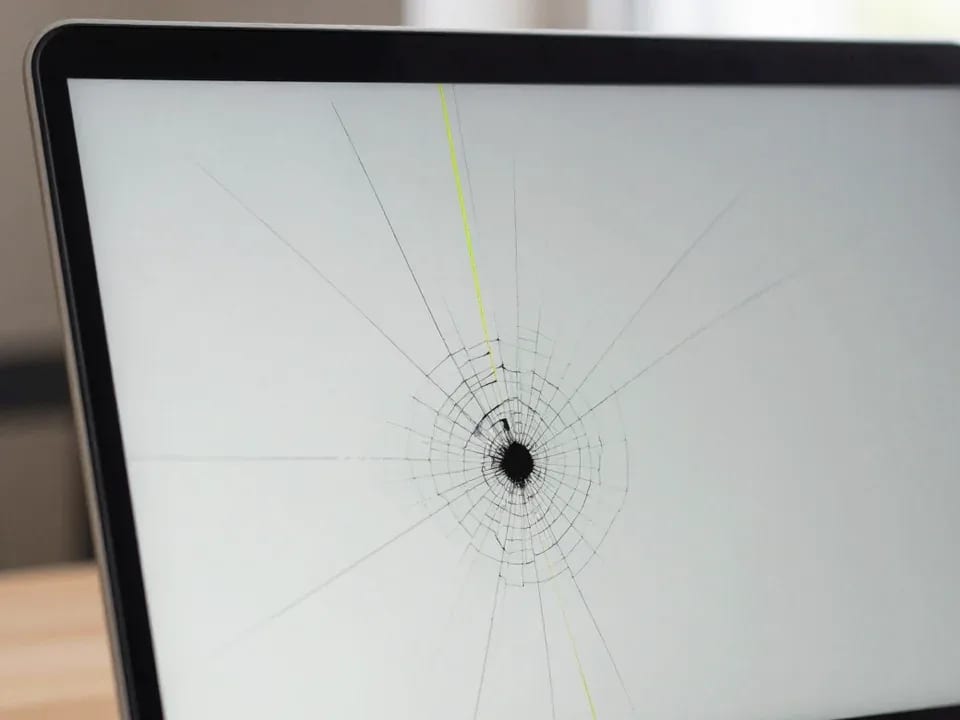
For smart watches, we replace the display and touchscreen, battery, and charging port; for hybrid and kids' models, we troubleshoot buttons and synchronization. A cracked screen is not just a crack: under damaged glass the touchscreen stops responding, and you can't restore control without replacing the module. In hybrid models, the hands run from a separate unit while the electronics handle the phone connection, so we look for pairing issues in the board, not the hands. If a smart watch drains quickly, the cause is often a background module or a stuck sensor rather than the battery — replacing the battery without diagnostics won't fix the problem. On kids' models, we separately check the call button and the stability of the connection with the parent app.
Wall, floor, pocket, and antique clocks
| Clock type | What we most often repair | What we check |
|---|
| Wall clocks | movement, hands, mounting | running, chime, accuracy |
| Floor clocks with pendulum | movement, pendulum, chime | pendulum adjustment |
| Desk clocks with alarm | movement, alarm | alarm triggering |
| Pocket watches | movement, glass, case | sealing, running |
| Antique clocks | overhaul, case restoration | preservation of parts |
What happened to your watch and why
A movement rarely stops suddenly — every symptom has a cause, and it determines what the technician does. Here are three common scenarios and how we handle each.
The watch has stopped or runs slow or fast
If a mechanical watch has stopped, it usually needs an overhaul; if the deviation is minutes, it needs accuracy adjustment. Stopping means the lubricant has thickened or dried out and the spring can't drive the gear train. Losing minutes per day is usually due to a misadjusted balance, less often due to dirty components. Our technicians start with free diagnostics: they check the balance amplitude and the condition of the lubricant, then adjust the accuracy or schedule an overhaul with full disassembly and cleaning. Running fast or slow by a few minutes per day is not a breakdown yet — it's a sign of misadjustment or thickened lubricant; disassembling the movement for that is not always necessary. When the deviation exceeds ten minutes per day, don't delay — wear on parts accelerates.
Water got into the watch, the dial is fogged
When water gets inside, we take the case apart, dry the movement, and check the gaskets and seals—otherwise corrosion will eat through the parts in a matter of days. Moisture gets in through a worn crown gasket or case back seal, settles on the dial and hands, and then reaches the steel pivots and springs, causing rust. The technician cleans the assembly in a special solution, replaces the seals, and puts everything back together with a water-resistance check. Don't dry it with a hairdryer or on a radiator—heat drives moisture deeper and speeds up corrosion; it's better to take it to a technician right away. Even if the dial dries on its own, salt traces remain inside—without disassembly they destroy the pivots and lead to parts replacement. Fogging on the inside of the glass is the first sign that the case seal is compromised.
Smartwatch won't charge and drains fast
If the smartwatch won't charge, we check the charging port and the battery; if it drains quickly, we also check background modules and the sensor. Oxidized contacts, a worn battery, and a stuck background process produce the same symptom but are fixed differently. The technician inspects the port under magnification, tests the battery capacity, and checks which modules are using power in the background. If the battery is worn, we replace it; if there's oxidation, we clean the contacts; if there's a sync failure with the phone, we reset the settings. An oxidized port often looks fine on the outside—the contact only fails under load, so without diagnostics it's easy to mistake it for a dead battery. When the smartwatch drains in a few hours, don't put off the visit: deep discharge speeds up battery degradation.
How repairs work at home or in the service center
We offer two formats: a technician comes to your home, or you drop the watch off at the service center. In both cases, everything starts with free diagnostics, and then we agree on the scope of work with you.
Technician at your door in 60 minutes
A mobile technician arrives at your home within 60 minutes anywhere in the city and performs free diagnostics on the spot. This format is convenient when you don't have time to take the device to the service center or don't want to transport it unnecessarily. The technician comes with tools and determines on site what's wrong with the movement, a dead battery, or the charging contacts. A simple battery or strap replacement is done right away while you're there. It's worth calling a specialist to your home for quartz and smartwatches and simple jobs, but a full mechanical overhaul is still done at the service center, where the movement is disassembled and cleaned on professional equipment. In our experience, the call-out option is more often chosen by smartwatch owners who need to get their device working again without traveling across the city.
Service center repairs and what free diagnostics includes
At the service center, watches are accepted for free diagnostics, and based on the results the specialist quotes the price and agrees on the work and parts with you. Diagnostics includes a visual inspection of the case and glass, a check of the movement and accuracy, an assessment of the movement and seals, and for smart models, a battery and contact test. As a result, you get a clear picture: what exactly failed, which parts need replacing, and what work is ahead. Approval after diagnostics protects you from surprises—you see what's being replaced and why before work begins, and you can decline anything unnecessary. In our experience, this procedure eliminates most disputes: the client knows upfront what they're paying for. We also discuss which parts will be replaced and which can be kept.
How long mechanical watch repair takes
The timeframe depends on the fault and the availability of the necessary parts, so the specialist gives an exact time after diagnostics, not in advance. A mechanical overhaul is not a quick operation: disassembly, ultrasonic cleaning of parts, lubrication, replacement of worn components, and reassembly are done in stages. After assembly, the movement is regulated for accuracy and tested for several days to ensure stability. Replacing a strap or battery takes much less time than a full movement disassembly. There's no point rushing an overhaul: every skipped lubrication or adjustment step leads to accelerated wear and another visit to the service center. That's why we don't give a rough estimate but set the timeframe after we've seen the movement from the inside.
Overhaul, maintenance, and case restoration
An overhaul is not just a simple lubrication but a full service cycle of the movement. Let's break down its stages, how it differs from maintenance, and when it's time to think about case restoration.
What an overhaul is and why it's needed
An overhaul involves disassembling the movement, ultrasonic cleaning of parts, lubrication, and reassembly, after which the movement keeps time again. Our technicians perform the full cycle: they lay out the calibre by components, wash each part in an ultrasonic bath, check the condition of pivots and jewels, apply fresh lubricant to friction pairs, and reassemble. The work applies not only to wristwatches—pocket and wall clock movements are serviced the same way, adjusted for part size and spring thickness. A full cycle is needed not only for a "broken" watch: a running mechanical watch requires it every few years; otherwise, the old lubricant thickens and starts acting as an abrasive, wearing down friction pairs faster than under normal use. A watch service technician determines the scope of work after opening the case—based on the condition of components, not appearance: an externally fine calibre may have dry jewels and wear on pivots.
How maintenance differs from an overhaul
| Work | What's included | When needed |
|---|
| Maintenance | cleaning and lubrication | routine service |
| Overhaul | disassembly, cleaning, lubrication, reassembly | stoppage, timing issues |
| Parts replacement | replacement of worn components | movement wear |
| Timing adjustment | precision tuning | running slow or fast |
Case restoration and polishing
We restore cases and polish worn surfaces, while carefully preserving original parts on vintage and pocket watches. The case and caseback suffer first: scratches, scuffs on the bezel, dirt in the joints between parts, tarnished coating on the lugs. Polishing brings back the metal's shine but removes a thin layer—so it's not done endlessly; otherwise, edges thin out and the crispness of shapes is lost, along with the factory geometry. For vintage pieces, we first assess whether engraving and relief will be affected: sometimes it's wiser to stop at gentle cleaning than to remove metal for the sake of gloss. Case restoration goes hand in hand with movement service—so the watch comes back in appearance, operation, and accuracy. In my opinion, for pocket models with history, it's better to preserve the patina than to get a perfect but faceless shine.
Warranty and terms of service
A warranty is not a formality at the end of service but a condition worth understanding before it starts: what exactly is covered, who is responsible for the result, and how work is coordinated. Let's go over the three points most often asked before a technician's visit.
1-year warranty on labor and parts
We provide a 1-year warranty on labor and separately a 1-year warranty on parts, so both the service itself and the installed components are covered. These are two different areas of responsibility: the first covers the quality of disassembly, assembly, and adjustment of the movement; the second covers the part itself installed by the watch technician. If within a year the repaired component starts malfunctioning again, we identify the cause and fix it under warranty rather than attributing the repeat visit to natural wear. For the owner, this means that replacing a balance wheel or mainspring doesn't turn into a new expense a couple of months later. The parts warranty is no less important than the labor warranty—if a part fails, it is replaced, not everything redone at your expense.
Technician experience and direct service without intermediaries
Our technicians have 4 to 20 years of experience, and Tech Service is the direct contractor, so the person working on your order is the one accountable for the result. We don't hand watches off to third-party subcontractors or act as a middleman between the owner and the technician: the technician who arrives and opens the case sees the job through to the end. Experience ranging from 4 to 20 years means different specialties: some focus on automatic mechanical movements, others on quartz circuits and smart models, and the technician sent out is the one whose expertise matches your specific issue. With no middleman between you and the technician, service history isn't lost — on a repeat visit, the specialist can see which component was replaced and when. Hence a practical tip: keep a record of which part was changed — it speeds up diagnostics on your next visit.
Payment and work approval
You can pay via Kaspi QR, Kaspi Red, card, cash or bank transfer, and we approve work and parts after free diagnostics, once the cause is clear. First the technician opens the case, checks the movement, and quotes a price — no guesswork before disassembly. Approving before work starts is convenient because you can decline some replacements if they're not critical: the specialist will tell you which operations can wait and which are better done now while the movement is apart. This approach protects you from surprises at the end — you know the list of operations in advance and won't find extra line items once the watch is reassembled. Payment via Kaspi QR, Kaspi Red, card, cash, or bank transfer removes the question of how to pay: you choose the method, not the service. And one more thing — the technician records the approved list of work before disassembly, so the final list matches what you signed off on.
When repair isn't worth it and what to do before the technician arrives
An honest look at when restoration costs more than the watch itself, and simple steps to take before the technician arrives so you don't make the problem worse.
When watch repair isn't worth it
If the entire movement is worn out or the needed parts can't be found, restoration may cost more than the item itself — the technician will tell you honestly after diagnostics. Worn pivot staffs, wear in the jewels, cracks in the plate, and corroded wheels add up to replacing the worn components of the assembly as a whole, not just one item. At Tech Service, work and parts are approved after diagnostics: you see the list and decide whether to proceed. For inexpensive quartz models, a movement replacement is sometimes comparable to buying a new watch, but for vintage or sentimental watches, restoration is justified even when it's complex. Our approach: first we assess the scope, then we quote the price — sometimes it makes more sense to invest in preserving the case and dial than to replace the entire assembly.
What to do before the technician arrives
- Don't open the case: removing the case back without the right tools can easily damage the gaskets and break the case's water resistance.
- Don't use a hair dryer: heat drives moisture deeper into the movement and speeds up corrosion of the parts.
- Note the symptom: write down when the watch stopped, started losing time, or fogged up — this speeds up diagnostics.
- Don't force the crown: if the movement is jammed, force on the crown can break the gear teeth.
- Keep the glass fragments: if the glass is broken, they must not get inside the movement.
- Describe the circumstances: a fall, water, a knock against a doorframe — details that shorten the search for the cause.
How to prepare your watch for a service visit
Before visiting the service center, just take the watch off your wrist, remove the strap to avoid extra stress, and bring everything related to the problem. It's best to detach a leather strap from the case in advance — it doesn't like moisture or bending — but leave a metal bracelet on if the attachments are intact. Wipe the case and case back with a dry soft cloth, but don't rub the dial or hands: the technician will remove dust under the glass. If you've kept previously replaced parts or the box with documents, they help the technician understand the watch's history and find compatible parts when replacing worn components. In our experience, such parts often explain why the assembly behaves unusually.
When watch repair makes sense
When troubleshooting a breakdown, you start with the symptom and work back to the cause, not the other way around. Below is a quick summary of the whole topic so you can decide on service calmly and without unnecessary expense.
- The symptom points to the cause: stopping, lagging, fogging, and charging issues lead to different repairs, so you start with diagnostics rather than randomly replacing parts.
- Overhaul is a full cycle: disassembly, cleaning, lubrication, and reassembly restore the mechanism's precision, while routine maintenance only keeps it going between full services.
- Choose the service format based on the breakdown: simple jobs are convenient at home, while deep restoration of the movement and case is done at a service center equipped for disassembly.
- Warranty matters for both labor and parts: protection for installed parts is just as important as protection for the work itself—clarify both before you start.
- Sometimes restoration isn't worth it: an honest assessment after diagnostics helps you avoid overpaying when the cost is comparable to buying a new item.