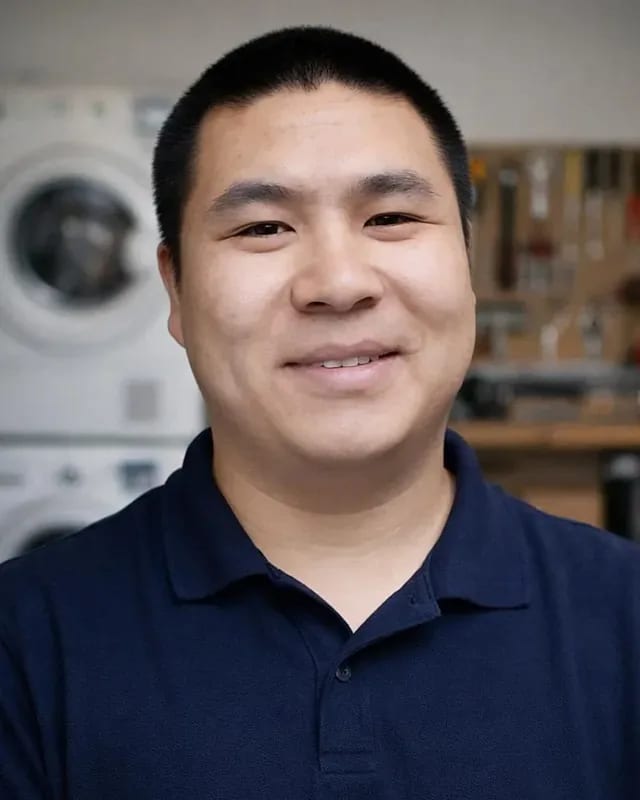
 experience9 years
Ruslan Ts.
Washing machine and refrigerator repair technician
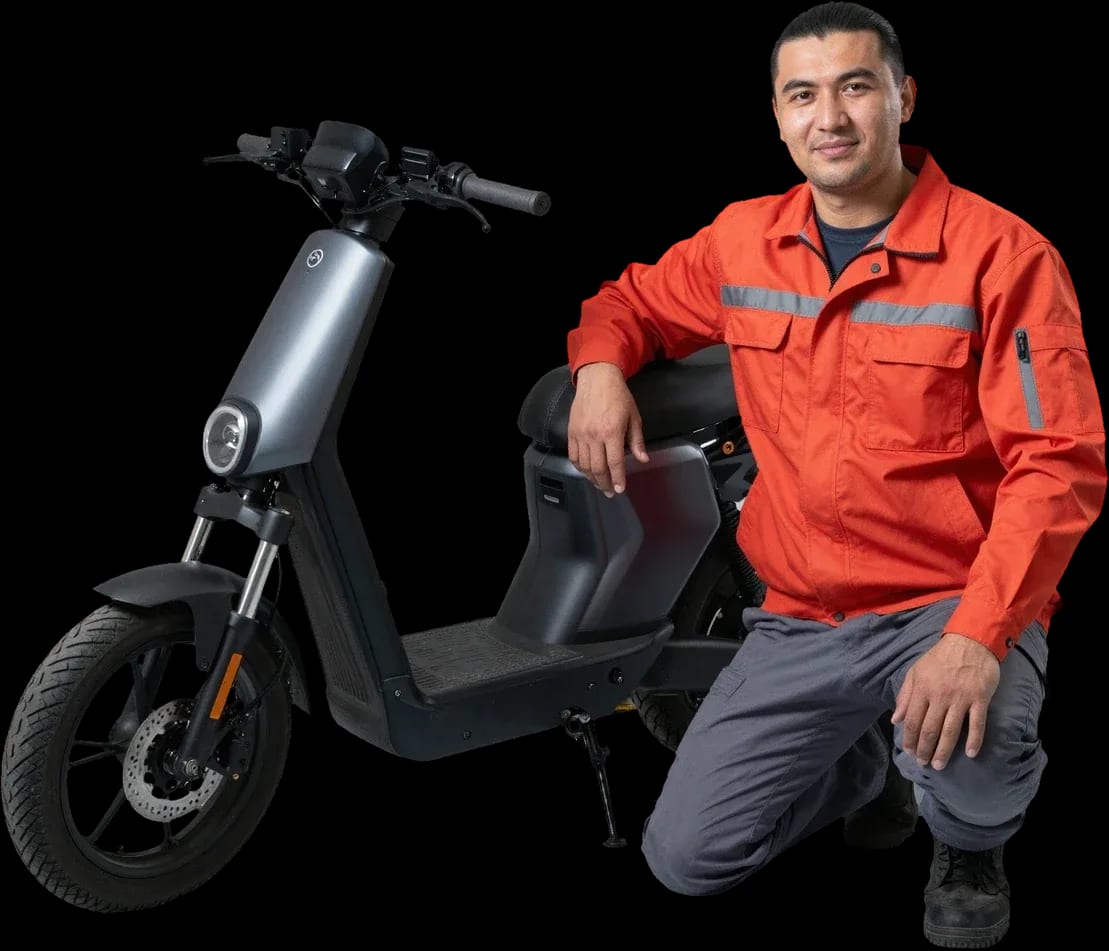
A technician arrives within 60 minutes anywhere in the city. Free diagnostics, 1-year warranty on labor and parts.
Our own technicians4 to 20 years of experience



Repair prices
Below are typical symptoms and components that are checked first. The exact cause is determined by the technician after free diagnostics.
connector, fuse, controller
from5 000 ₸
charging port, BMS, power supply
from3 500 ₸
Hall sensor, phase wires, controller
from6 000 ₸
throttle grip, Hall sensor, wiring
from2 500 ₸
throttle grip, controller, hub motor
from2 500 ₸
bearing, magnets, mounting
from6 000 ₸
bearings, bushings, fasteners
from3 000 ₸
BMS, connectors, throttle sensor
from2 500 ₸
1–2 hourstime
from 8,000 ₸cost
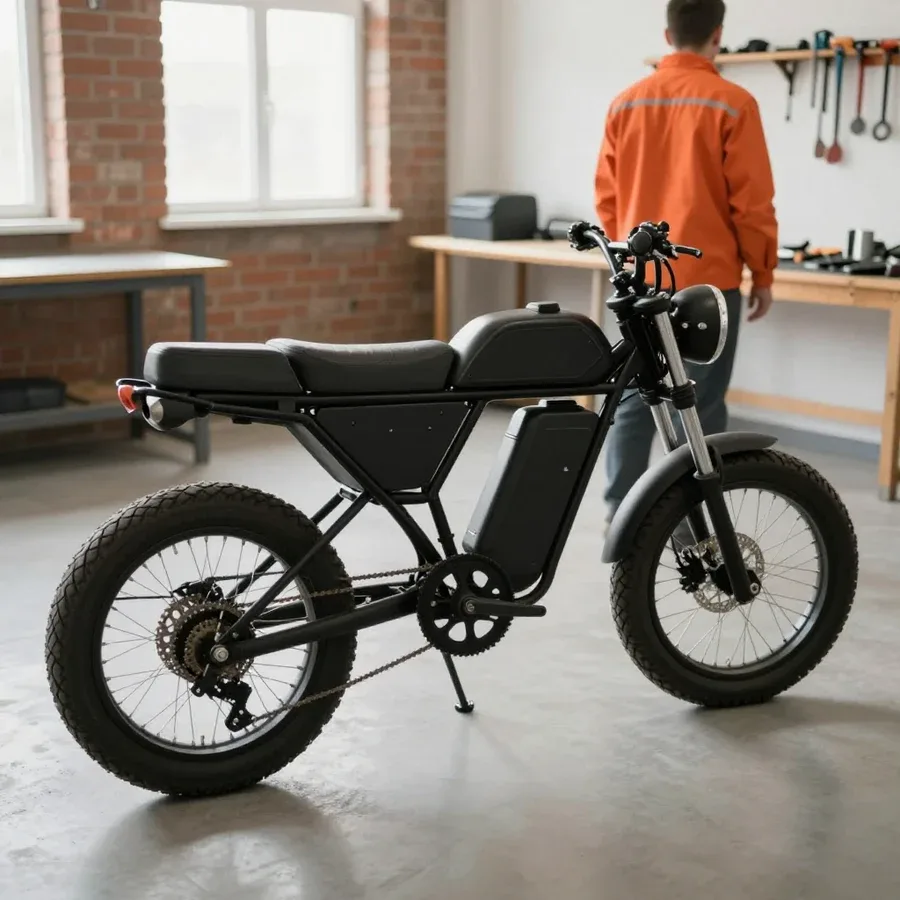 BeforeAfter

Five steps from request to checking the work after repair.
Choose a convenient time and location — the technician will confirm the visit and come to your address.
The technician inspects the vehicle on site: checks connectors, mounts, and components accessible without disassembly.
The technician agrees on the scope of component checks based on the symptom: power, controller, battery, hub motor.
The technician records the list of work and parts in the order; you approve the scope before repair begins.
The technician performs a test ride under load, and you accept the result of the work.
The home appliance repair department in Almaty has 8 technicians with 8 to 12 years of experience.
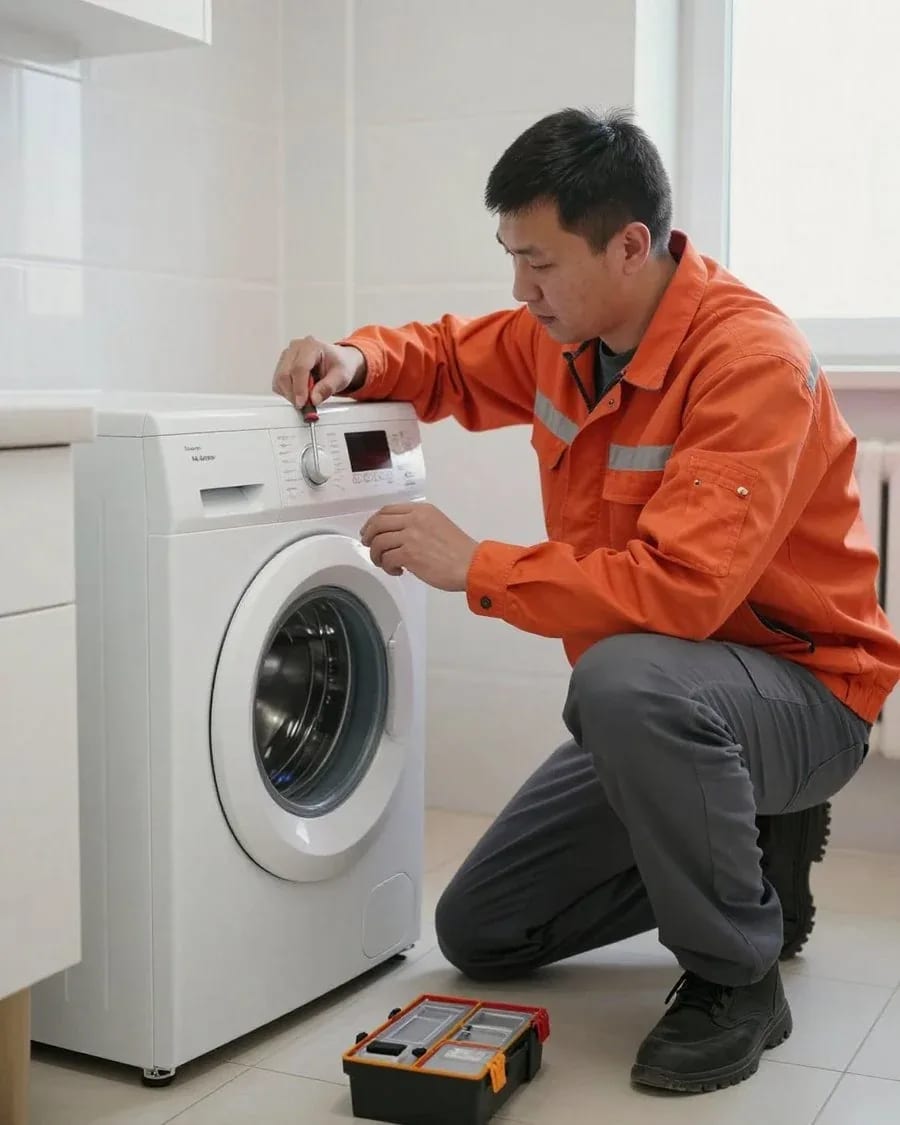
The department has 8 specializations — they are listed on the technicians' cards.
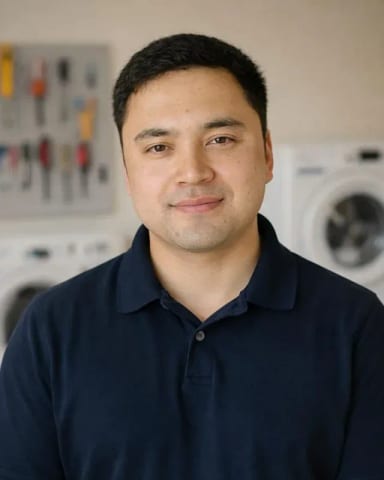
experience9 yearsWashing machine and refrigerator repair technician
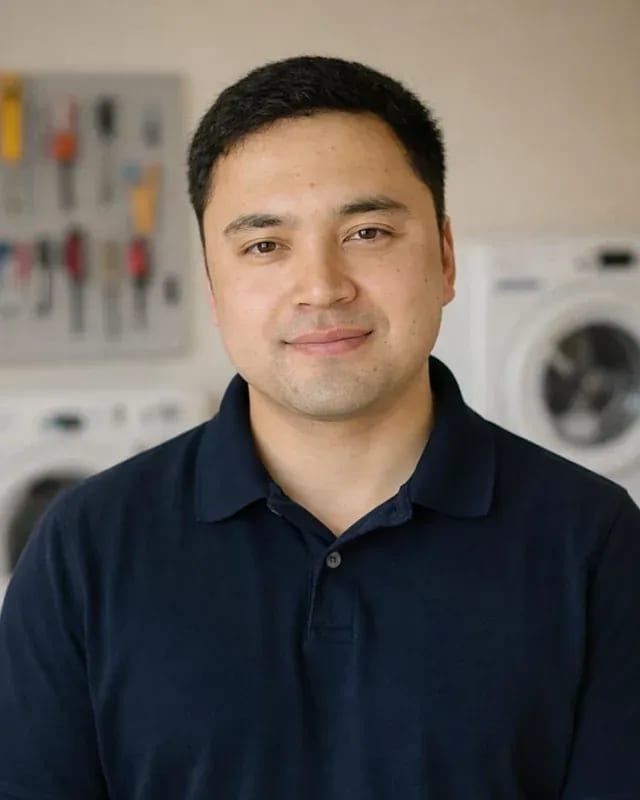 experience12 years
General household appliance repair technician
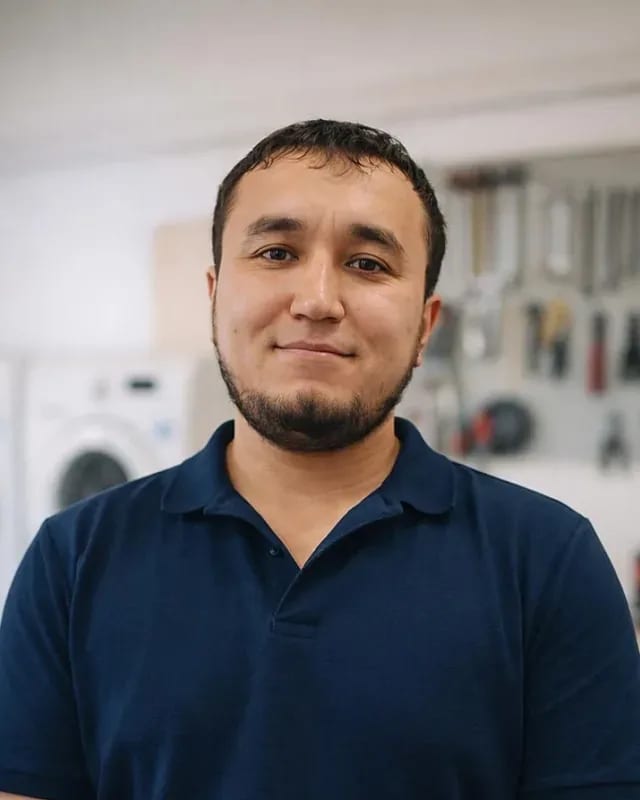 experience10 years
Field technician for washing machine and refrigerator repair
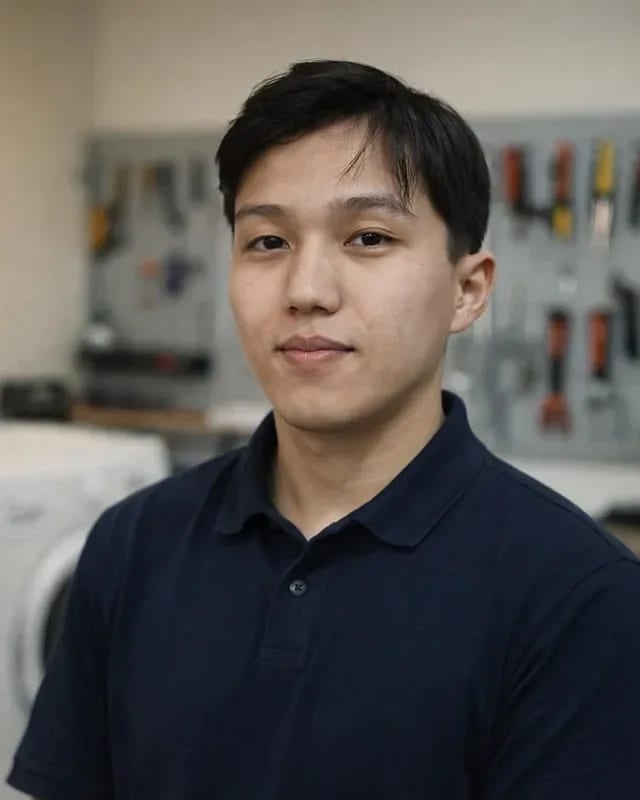 experience8 years
Expert washing machine repair technician
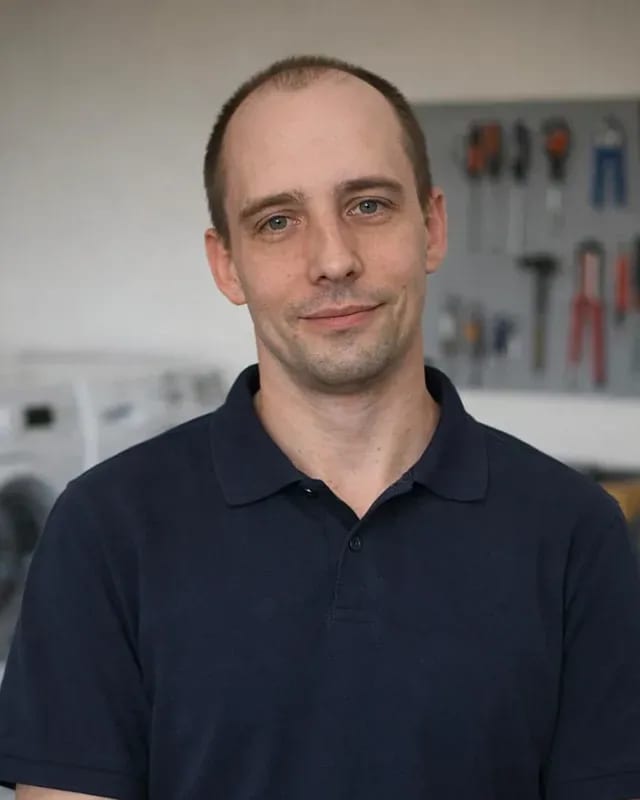 experience8 years
Field refrigerator repair technician
 experience8 years
Senior washing machine repair technician
 experience11 years
Dishwasher repair technician
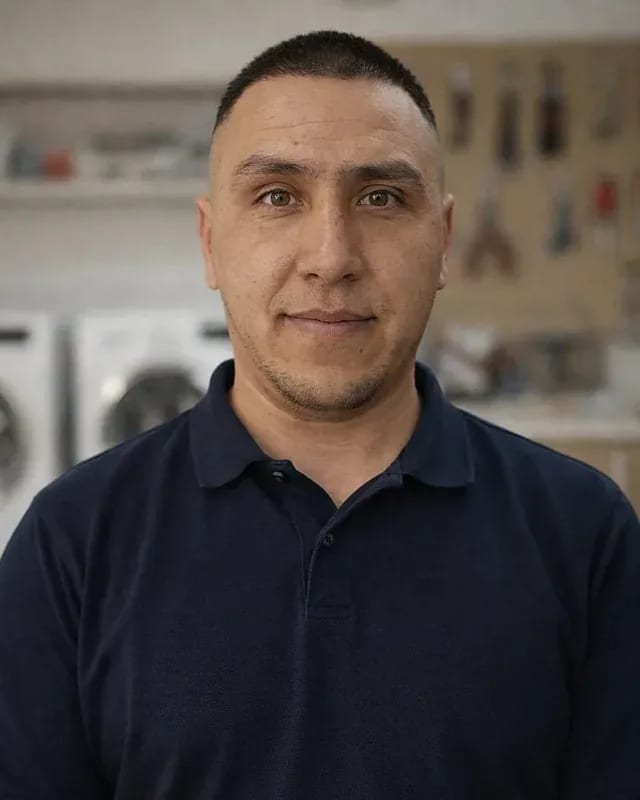 experience9 years
Washing machine repair technician
We reply during working hours
Tell the technician the symptom, model, and address — they will agree on a convenient visit time and outline the scope of checks. Kaspi QR, Kaspi Red, card, cash, or bank transfer are accepted.

Warranty question? Call us
+7 (778) 021 13 16Tech Service repairs electric motorcycles and light electric two-wheelers in Almaty with our own technicians, no middlemen. A technician comes to your home within 60 minutes anywhere in the city or accepts the vehicle at the service center, diagnostics is free, and we give you the price after it. We provide a 1-year warranty on labor and parts.
Owners come with a specific symptom: it won't turn on, it jerks, it overheats. Each of these signs usually points to a particular component, and replacing parts at random means paying twice.
We start by checking the power circuit — fuses, connectors, and the ignition switch — because "won't turn on" most often means a break or a protection cutoff, not a burnt motor. The technician tests the wiring from the battery compartment to the controller, inspects the terminals for oxidation and signs of overheating, and checks whether power reaches the throttle sensor. After winter and washing, connectors often show greenish corrosion — it causes poor contact, and the vehicle behaves as if the battery is dead. We also check the ignition switch and the emergency cutoff button separately: they wear out faster than the rest of the wiring. Before taking the vehicle to the service center, it's worth checking whether the protection tripped after a voltage spike — that's the most common cause of a false "breakdown".
Jerking and power loss usually point to the controller and throttle sensor rather than the battery, and diagnostics under load give the exact answer. The technician connects measuring instruments and watches how the voltage at the controller output behaves when you open the throttle: dips and spikes at that moment indicate problems with the power switches and the Hall sensors in the hub motor. We check the throttle sensor for signal smoothness — a worn track gives a stepped response, and the motorcycle starts to jerk. We don't rule out the traction battery right away: a cell that sags under load produces similar symptoms. If the jerking appears only under load (uphill, with a passenger), that narrows it down to the controller and connectors — tell the technician about this in advance.
Moderate heating under load is normal, but if the controller and hub motor are hot after a short ride, it's a sign of overload or a fault. The controller heats up due to excessive current, poor contact in the power connectors, a seized bearing, while the hub motor heats up due to an inter-turn short in the windings, worn brushes in brushed versions, or a dragging brake that constantly slows the wheel. The technician measures the temperature of the components after a test ride, checks the winding resistance and the condition of the power cables. Overheating of the controller's power switches is often related to impaired heat dissipation: the heatsink is clogged with dirt, and the case is pressed right against the plastic. Constantly riding "hot" accelerates wear on insulation and electronics — it's better to show the vehicle to a technician before the component fails completely.
The traction battery is the most expensive component of an electric motorcycle, so the question "repair or replace" needs extra care. Here's what diagnostics shows and how to read the symptoms of the battery assembly.
We check the charger, charging port, and BMS one by one, because "won't charge" looks the same for three different causes. First, the technician measures the output voltage of the charger: if it sags under load, the adapter is at fault, not the motorcycle. Then he inspects the connector for oxidation and burnt contacts — after winter storage and washing, this is a common find. The third step is the battery management board: it may block charging due to cell imbalance or a triggered temperature protection. We also check how the indicator behaves at full voltage: if the gauge shows maximum but the range has dropped, the cause is more likely in the battery pack itself or the board than in the charger, and that changes the work plan. The technician records the voltage on each cell group — this measurement shows exactly where capacity is lost.
We decide whether to repair or replace after a free diagnostic check: sometimes it's enough to get the assembly and control board back in working order, and sometimes the whole unit is replaced. The technician opens the case and checks the voltage on each group of cells — a difference of a few tenths of a volt indicates an imbalance, which is fixed by balancing the modules without replacing the cells. When the control board can't hold its parameters or the traces have burned out, it's replaced separately while the assembly itself is kept. A deep discharge after a long period of disuse is treated with slow recovery under voltage control on each cell, and care is essential here: forcing current will finish off weakened cells. Repair makes sense when individual cells or the control electronics have degraded but the case and most of the assembly are intact — in other cases, replacement is more reliable. We provide a 1-year warranty on labor and parts, so you won't have to redo the chosen option at your own expense.
| Symptom | What we check | Likely solution |
|---|---|---|
| Not charging | Port, charger, BMS | Repair the port or BMS |
| Discharges quickly | Assembly, cells | Balancing or cell replacement |
| Charges but won't move | BMS, controller | Repair the board or controller |
| Won't hold a charge after winter | Assembly, storage | Restore or replace the assembly |
Control electronics are what most often cause unclear symptoms. We explain how to read an error code on the dashboard and when the controller is repaired versus replaced entirely.
We decode the error code based on the controller and display model, because the same numbers mean different things for different manufacturers. On an electric motorcycle dashboard, the same combination can indicate overheating power switches, a broken Hall sensor in the hub motor, or voltage drop under load. That's why the technician first cross-checks the firmware and control unit markings against the code table for the specific model, and only then tests the relevant unit with a multimeter. Our specialists have 4 to 20 years of experience, and in most cases the number on the screen narrows the search to two or three points within minutes. Write down the code and the conditions under which it appeared — while riding, after rain, during charging — this is often more important than the number itself for finding the cause.
We diagnose the controller first and repair it when possible; we suggest replacement when the board is irreversibly damaged. A typical repairable case is a burned-out power switch, a swollen capacitor, or a broken trace: these are replaced by soldering, and the unit keeps working. Irreversible cases include a burned board with damage to multiple layers and an area around the processor flooded with electrolyte. Before any intervention, we check the wiring and connectors — oxidized contacts and frayed wires cause the same symptoms as a burned-out unit but are easier to fix. We provide a 1-year warranty on labor and parts. After replacing the controller, it's important to check the entire circuit — otherwise the cause that made it fail will quickly take out the new unit too.
Moisture most often gets into the connectors and the controller board, causing an error or a complete shutdown — it's not a death sentence, but it does require drying and checking the contacts. A single pressure wash is enough for water to travel along the wiring harness into the housing and short adjacent pins. The technician checks the connectors for green residue, tests the fuses for continuity, and inspects the board for signs of corrosion, then dries the unit and treats the contacts with a protective compound. Moisture in the connectors is dangerous not because of the short itself, but because it triggers electrochemical corrosion: the metal oxidizes for weeks, and at some point the contact fails while you're riding. Don't try to blow it out and keep going — residual moisture in the connectors causes corrosion, and after a while the equipment will fail again, this time more seriously.
The format of the work depends on the breakdown. Below we explain which operations can realistically be done on site, which components are only opened up in the workshop, and how we come to the owner.
At home we perform diagnostics and fix everything that doesn't involve disassembling heavy components — wiring, connectors, fuses, controller settings. The technician checks the power circuit from the terminals to the ignition switch, tests the connections for oxidation and overheating, and checks the fuses and contacts after washing or rain. Setting up the electronic unit is also done on site: we connect the diagnostics, read the parameters, and adjust the current and cutoff thresholds right in your yard. Electric motorcycle repair in Almaty in such cases is done without evacuation — the specialist works with what's accessible without removing the battery pack and the wheel. A call-out is especially convenient when the equipment won't start and is hard to transport — we arrive within 60 minutes anywhere in the city and tell you the cause right away.
We handle the battery pack, hub motor, and complex electronics at the service center, where there are conditions for disassembling and testing components. The traction battery requires opening the housing, checking the cells, and balancing — this operation can't be done outdoors without risking the seal. The hub motor is disassembled on a stand: the winding, Hall sensors, bearings, and magnets are checked, and in the field access to them is closed. Complex control unit boards with burnt traces are also diagnosed and soldered in the workshop, not on the curb. If the specialist on a call-out sees that deep disassembly is needed, he will honestly say so right away — you don't pay for the call-out twice and you understand the plan in advance.
| Type of work | At home | At the service center |
|---|---|---|
| Diagnostics and finding the cause | Yes | Yes |
| Wiring, connectors, fuses | Yes | Yes |
| Controller setup | Yes | Yes |
| Battery pack repair | No | Yes |
| Hub motor repair | No | Yes |
A transparent process removes the owner's main fear — it's unclear how much the restoration will cost and what protects the result. We break down the diagnostic steps, the terms of the 1-year warranty, and the role of the direct contractor.
Our diagnostics are free: the technician finds the cause based on the symptom, explains it, and only then quotes the cost of the work. First he listens to the owner, then checks component by component — the battery and its connector, the controller, the hub motor, the wiring, and the sensors. Based on the symptom "won't turn on," "jerks," or "overheats," the specialist rules out the obviously working elements and narrows it down to one or two suspects. This is the stage where it becomes clear whether a specific part needs repair or the whole component needs replacement. Come with a description of when and under what conditions the symptom appeared — an accurate description saves time and helps get to the cause faster. The technician comes to your home within 60 minutes anywhere in the city, so diagnostics can be done where the equipment is parked and won't start.
We give a 1-year warranty on labor and parts, which means both the work performed and the installed components are covered for a year. The warranty covers the specific unit that the technician serviced: if the same symptom returns a few months later, the claim is handled under the completed work, not as a new breakdown. That's why the description records exactly what was replaced or restored, so it's easier to see whether a case falls under the warranty. It's important to keep track of which unit was serviced: the owner should remember or write down the replaced part, because on a repeat visit the technician can immediately see what to go back to. After the work, we test the equipment in operation—acceleration, heating, charging—to make sure the fault is fixed, not just hidden.
An aggregator passes the request to an unknown technician, while a direct service provider is responsible for the result from diagnostics to warranty. When there's a middleman between the owner and the person holding the tools, the chain of responsibility gets longer: one takes the request, another shows up, a third promises the warranty. With a direct service provider, the technicians are on staff with 4 to 20 years of experience, and they handle the specific motorcycle from the first measurement to the post-repair check. When the service is done by the same people who guarantee it, there's no "who's to blame" dispute between the middleman and the technician—there's a single point of responsibility. For the owner, this means one thing: if the symptom returns, just go back to the same service provider instead of figuring out who to file a claim with.
Investing in old equipment or buying new is a matter of money and the remaining life of the components. And a few habits in handling an electric motorcycle can noticeably extend its life.
Restoration makes sense when one unit is worn out and the rest are fine; if the entire electrical system and traction battery have degraded, replacement is often more reasonable. Our technicians with 4 to 20 years of experience look at the "battery—controller—motor wheel" combination as a whole: an outdated battery with reduced capacity quickly kills a new controller, and vice versa—a healthy battery can keep an old motor wheel going for another season. At Tech Service, the decision is made during free diagnostics, when the condition of each unit is visible individually, not just the symptom the two-wheeler was brought in with. An honest estimate is based on the condition of several units at once, not on a single symptom—that's why diagnostics matter more than first impressions.
The main enemies of an electric motorcycle are moisture in the connectors and long storage with a discharged battery; both causes can be prevented. Rain and washing trap water in the wiring contacts, the terminals gradually oxidize, and the fuse connectors start to heat up. In winter, the two-wheeler sits idle for months, and a lithium traction battery in a discharged state loses capacity irreversibly—in spring the owner gets "won't hold a charge" without any actual breakdown. A check at the first signs of moisture takes little time: inspect the wiring, dry the connectors, and make sure the fuses are intact. Store the electric motorcycle with a partially charged battery and dry connectors—this noticeably reduces the risk of "won't hold a charge after winter," and in spring you won't have to take half the machine apart for an oxidized contact.
Here are the key things an electric motorcycle owner should keep in mind: what affects the diagnosis, when restoration makes sense, and what to look for when choosing a technician.
Tech Service technicians repair other appliances too — with the same 1-year warranty on labour and parts.
 Refrigerator Repair in Almatyfrom 3 000 ₸
 Washing Machine Repair in Almatyfrom 3 000 ₸
 Dishwasher Repair in Almatyfrom 3 500 ₸
 Oven Repair in Almatyfrom 3 000 ₸
 Cooktop Repair in Almatyfrom 3 500 ₸
 Air Conditioner Repair in Almatyfrom 3 500 ₸
 Boiler and Water Heater Repair in Almatyfrom 2 500 ₸
 Freezer Repair in Almatyfrom 6 000 ₸
 Tumble Dryer Repair in Almatyfrom 5 000 ₸
 Coffee Machine Repair in Almatyfrom 2 500 ₸
 Robot Vacuum Cleaner Repair in Almatyfrom 3 500 ₸
 Vacuum Cleaner Repair in Almatyfrom 1 500 ₸
 Microwave Oven Repair in Almatyfrom 2 000 ₸
 Hair Dryer Repair in Almatyfrom 1 500 ₸
 Iron Repair in Almatyfrom 3 000 ₸
 Electric Kettle Repair in Almatyfrom 2 500 ₸
 Mixer Repair in Almatyfrom 2 500 ₸
 Multicooker Repair in Almatyfrom 500 ₸

If your dishwasher won't drain, the most common culprits are a clogged filter or drain hose; less often, it's the pump, impeller…
24 March 2026 · 12 minutes read
A washing machine can hum for many reasons, and the first thing to figure out is when the sound appears.
20 March 2026 · 12 minutes read
If your washing machine isn't filling with water, the most common culprits are a closed valve, a clogged inlet filter screen on the hose…
20 February 2026 · 13 minutes read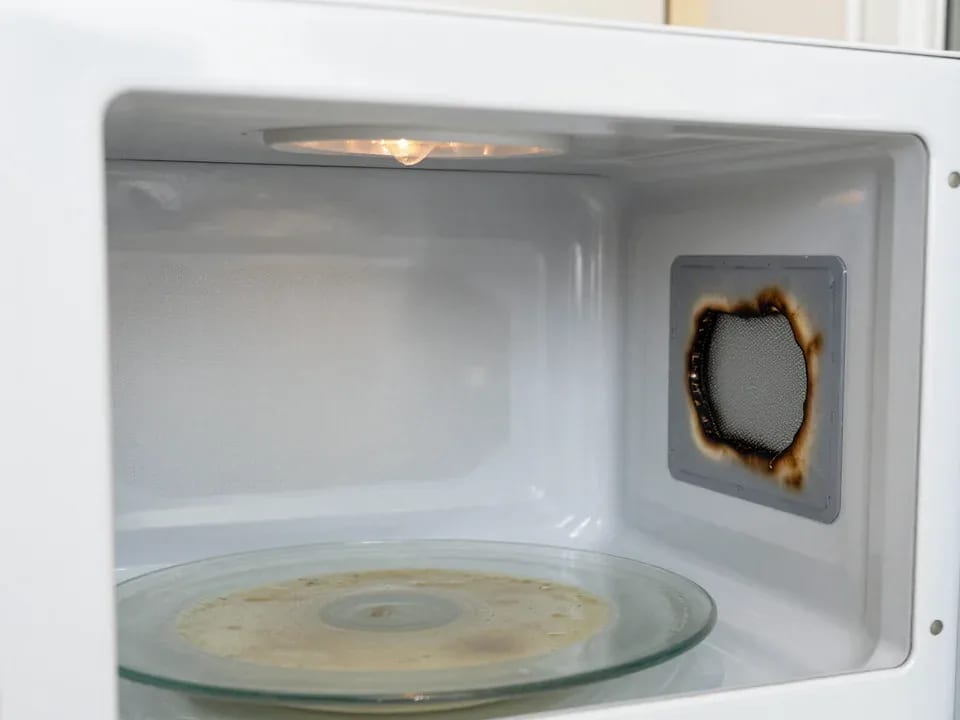
If your microwave isn't heating but the light and turntable still work, the problem is usually one of the high-voltage components — the magnetron, diode…
15 February 2026 · 12 minutes read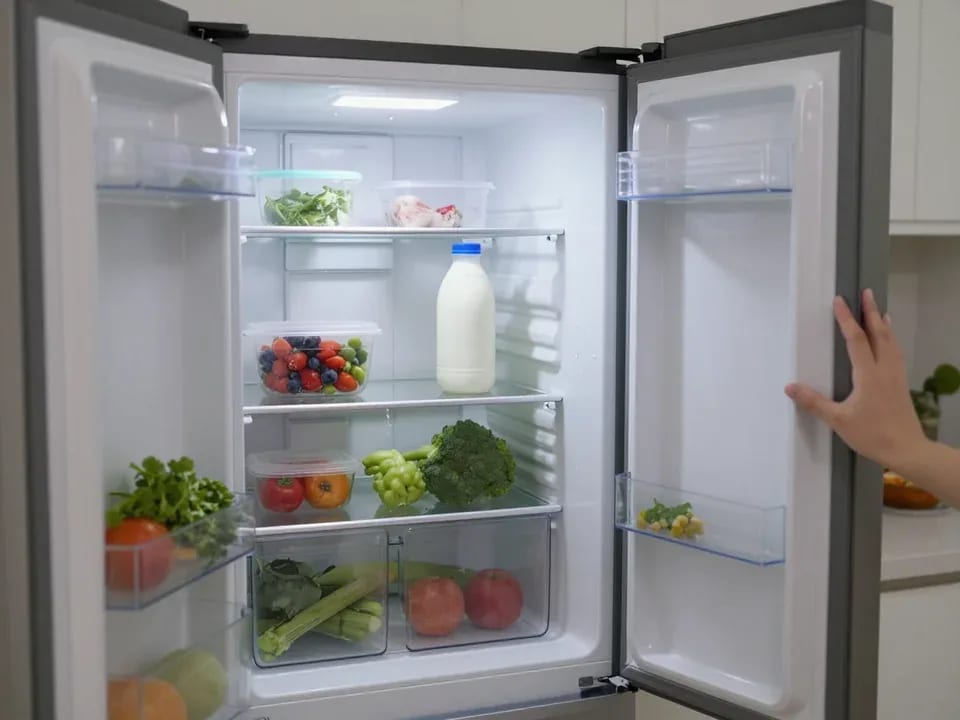
If your refrigerator stops working, first check the outlet, the power cord, and the thermostat setting, and after defrosting let it stand for a while.
4 February 2026 · 12 minutes read
Washing machine error codes are self-diagnostic codes that point to a specific component: drain, water fill, heating, motor, or door lock.
29 January 2026 · 13 minutes read