 experience13 years
Ivan K.
Audio and DVD repair technician

A technician arrives within 60 minutes anywhere in the city. Free diagnostics.
Our own technicians4 to 20 years of experience




Repair prices
Below are typical symptoms and likely causes. The technician will pinpoint the exact fault during diagnostics.
fuse, power supply, transistor
from13 000 ₸
oxidized contacts, worn potentiometer
from5 500 ₸
protection relay, transistor, solder joint
from13 500 ₸
clogged heatsink, thermal paste, fan
from8 500 ₸
mounting, filter capacitors
from12 000 ₸
short in the output stage, overload
from18 000 ₸
poor connector contact, power interference
from11 000 ₸
cracked solder joint, dried-out capacitor
from12 000 ₸
1–2 hourstime
from 8,500 ₸cost
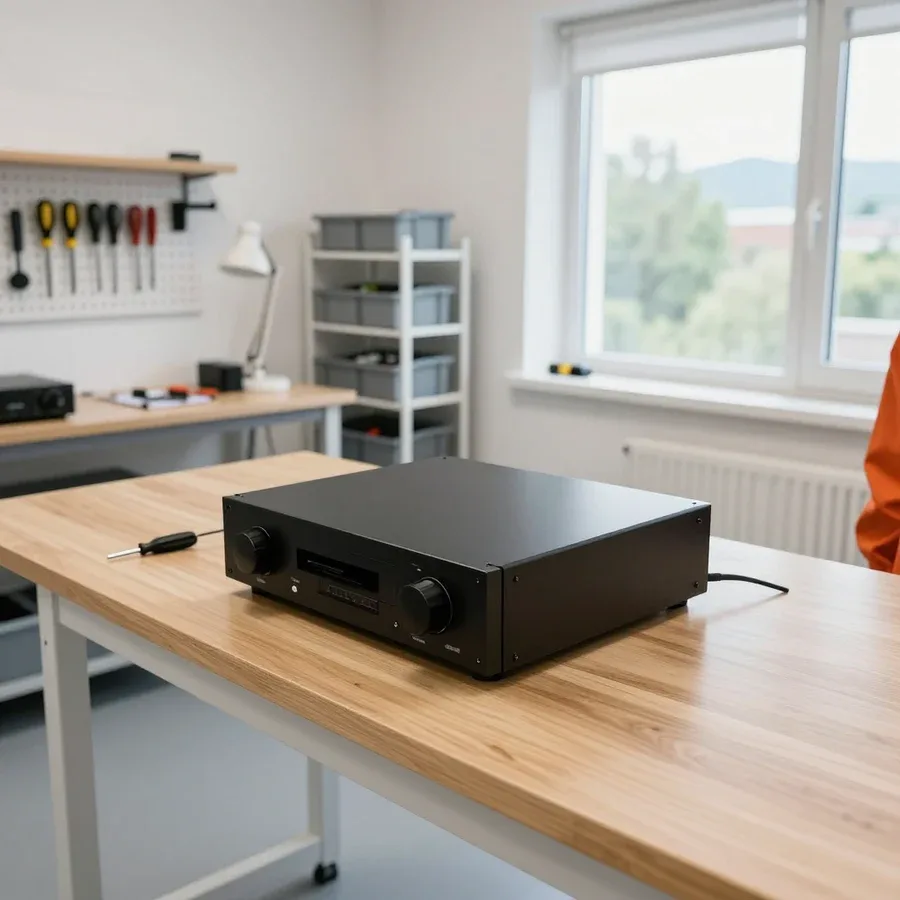 BeforeAfter

Five steps from request to checking the amplifier's performance.
Describe the symptom and amplifier model so the technician brings the right tools.
The technician arrives anywhere in the city within 60 minutes after the request is confirmed.
They check the power supply, output stages, and contacts to find the faulty component.
You approve the list of work and parts, then the technician starts the repair.
Choose a convenient time slot and the technician will confirm the arrival time.
The digital device repair department in Almaty has 7 technicians with 7 to 18 years of experience.
The department has 7 specializations — they are listed on the technicians' cards.
experience13 yearsAudio and DVD repair technician
 experience10 years
Senior TV repair technician
 experience10 years
TV board repair technician
 experience10 years
Electromechanical technician
 experience18 years
Smartphone repair technician
We reply during working hours
Describe the symptom and amplifier model — the technician will prepare the right tools and parts for the visit.

Warranty question? Call us
+7 (778) 046 88 53
Author: Ivan K.,Audio and DVD repair technician
Published
Updated
Tech Service repairs audio amplifiers in Almaty: home, car, professional and tube amps. Our technician comes to your home within 60 minutes or takes the unit to the service center, diagnostics are free, and we quote the price after inspection. We provide a 1-year warranty on labor and parts, and our technicians have 4 to 20 years of experience.
Audio amplifiers are a broad category, and servicing a home, car or studio unit is different in each case. Here's what classes of equipment we work with and how the approach to diagnostics differs.
We service audio amplifiers of all main classes — home, car, professional and studio — not just car amps, which dominate local search results. In our practice, restoring a unit starts with identifying its class, because the power supply design and the load on the output stages depend on it. In home models, the power supply and output stage are more often affected; in car amps, it's the wiring, terminals and connectors; in professional and studio gear, it's the amplifier board, controls and solder joints under constant load. A car amplifier lives in harsh conditions: vibration, temperature swings in the cabin and voltage drops in the electrical system gradually loosen contacts. In home equipment, the defect usually develops slowly — electrolytic capacitors dry out and transistor bias drifts. The class of the unit determines where to look for the fault: in a car system, wiring and terminals are more often to blame; in a home unit, the output stage and power supply — that's why the technician starts diagnostics with different components.
We also take on tube amplifiers and AV receivers, but the approach is different: tube gear has its own high-voltage circuits, while receivers have a digital section and many inputs. In a tube amplifier, diagnostics go from the anode voltage and tubes to the output circuits; in a home theater receiver, we first check the connections, channels and protection, because the digital amplifier board is linked to the video path and numerous connectors. Tubes age unevenly: one loses emission before the others, and channel balance shifts — the owner hears this as a skewed soundstage. In a receiver, the culprit is more often oxidized input contacts or settings knocked off after a voltage spike rather than the signal path itself. It's dangerous to open a tube amplifier without discharging the high-voltage capacitors, even after unplugging, so it's best not to open such units yourself.
| Amplifier class | Where we most often look for the defect | What we check first |
|---|---|---|
| Home | Power supply, output stage | Capacitors, transistors, protection |
| Car | Wiring, terminals, connectors | Contact, fuses, cables |
| Professional and studio | Amplifier board, controls | Solder joints, contacts, overheating |
| Tube | High-voltage circuits | Tubes, capacitors, anode voltage |
| AV receiver | Digital section, inputs | Connections, channels, protection |
From the symptom alone, the technician already knows where to look at the first stage. Here are the most common complaints from owners and what usually lies behind them.
If the unit won't turn on, the power supply or failed capacitors are usually to blame. If it turns on but there's no sound, the problem may not be in the unit itself but in the signal source or speakers. Electrolytic capacitors lose capacitance over time, and the power supply sags enough that the device either won't start or starts and immediately goes silent. We also check the fuses separately: a blown fuse often masks a more serious fault in the power circuit. Our technician at Tech Service tests the unit separately from the speakers and signal source so we don't replace working components. Before taking your gear to the service center, check the cables and source—sometimes a "dead" amplifier simply isn't getting a signal, and diagnostics will show that quickly.
Overheating and protection tripping aren't a fault in themselves—they're the protection system reacting to overload, poor cooling, or degraded components in the output stage. Transistors lose their parameters over time, start running hotter, and take neighboring components with them. Dust-clogged heatsinks and dried thermal paste make the heat worse, so protection trips before the unit can reach working volume. We fix both the overheating and the reason protection trips, rather than just resetting the error. If the amplifier goes into protection when you turn it on rather than at high volume, that often points to a short circuit in the output stage, and it's best not to use the unit until it's repaired. Heating up with no load at zero volume is a separate signal: it means problems in the stage itself, not heavy speakers.
A missing channel is most often caused by a fault in the output stage or terminals, while distortion and noise come from worn controls, contacts, or transistors. Oxidized terminals and connectors cause intermittent contact, making the channel work one moment and go silent the next. Volume and tone controls collect dust and oxidize over time, which causes scratching and crackling when you turn the knob. Transistors that fail can make a channel go silent or distort. We restore the missing channel, starting with checking contacts and finishing with testing the output stage. Distortion that's only audible at high volume often comes from dried-out capacitors or a bad contact, and at low volume the fault simply doesn't show up.
An amplifier can be fixed right at the customer's location or taken to the service center. Here's how a technician visit works and when the unit still needs to be brought in.
A Tech Service technician arrives at your home within 60 minutes anywhere in the city, runs free diagnostics on site, and tells you whether the amplifier can be fixed right away or needs to be taken to the service center. A home visit is convenient when the gear is in a rack, connected to speakers and a signal source, and the owner wants to understand the cause without moving a heavy unit. At the address, the specialist checks the connections, inspects terminals and connectors, tests the power supply, and listens to how the device behaves under load. Some faults are visible at this stage—oxidized contacts, reversed polarity, a damaged power cord, a loose connector. Our technician comes with their own tools and instruments, so the initial inspection doesn't depend on what the customer has on hand. Home visits are good for solving issues with connections, terminals, and power, while complex board soldering is more often done at the service center, where there are proper conditions for precise work.
If the defect is in the output stage, power supply, or requires replacing components on the board, the technician takes the unit to the service center, where work is done under stable conditions. At home, it's hard to provide a steady workspace: soldering a densely packed board in mid-air is inconvenient, and heating nearby components risks damaging good parts. At the service center, the unit is disassembled, traces and capacitors are inspected, output stage transistors and power supply parameters under load are checked. This scope of work requires time and a step-by-step approach — first find the cause, then replace parts, and only then reassemble and test the sound. Our service center work comes with a 1-year warranty on labor and parts, so component replacements are recorded in the order, not done "by eye." It's better not to try to fix complex board defects on-site at the customer's place: precise soldering and testing require a stable workspace, otherwise there's a risk of damaging nearby components.
| Work | At home | At the service center |
|---|---|---|
| Checking connections and cables | Yes | — |
| Cleaning and checking terminals | Yes | — |
| Power diagnostics | Yes | Yes |
| Replacing board components | — | Yes |
| Output stage repair | — | Yes |
| Checking controls and contacts | Yes | Yes |
The first question an owner of broken equipment asks is about price — before even discussing the cause. An honest answer can only be given after inspection, so let's break down what diagnostics includes, what the sum consists of, and who you pay.
Our diagnostics are free: a specialist inspects the amplifier, checks the power supply, output stage, and terminals, determines the cause, and only then quotes the repair cost. During the inspection, the power supply and output stages are checked — that's where the defect most often is found, causing the unit to not turn on or go into protection. Contacts and terminals are tested separately: oxidation on connectors causes distortion and channel loss even when the boards themselves are fine. Free diagnostics benefits both sides: the customer doesn't pay for the inspection, and the technician doesn't take on work blindly or guess the price. So the first step for any malfunction is to schedule a visit, not to look for an approximate price over the phone.
The cost depends on which specific unit has failed, so it's impossible to quote over the phone before inspection — the specialist gives it after free diagnostics. Replacing the output stage and restoring the power supply are different in labor intensity, yet their external symptoms are the same: the unit is silent or the protection relay clicks. Agreeing on the cost after diagnostics protects you too: you see exactly what is being replaced and decide whether to proceed. If a technician is ready to give an exact sum over the phone without seeing the unit, that's a reason to be wary: the actual defect may be different, and the final sum will grow during the process. In our practice, inspection almost always reveals more than one cause — a secondary defect shows up after the first power-on.
Tech Service is the direct contractor: our own technician comes to you, not an intermediary who passes the request to third parties, so we are responsible for quality and warranty. Our specialist inspects the unit, quotes the price, and does the work — there is no dispatcher between you and the technician retelling the fault over the phone. When you go through an aggregator or catalog, responsibility is split between the platform and the contractor, and if the fault returns, getting warranty service is harder. The 1-year warranty on labor and parts applies precisely because there is one contractor who is accountable for the result. Within the city, the technician arrives within 60 minutes, and payment is accepted in any convenient way.
Many equipment owners know the fear: “I pay for a repair, and a month later the unit breaks again.” Here is how the warranty works after amplifier service and what to do if the defect comes back.
We provide a 1-year warranty on labor and parts — this covers both on-site visits and in-shop service. The same condition applies to household, car, and professional models: whether we replaced output transistors or power supply capacitors, the client gets a year of peace of mind. The warranty on parts is as important as on labor: if a replaced component fails after a few months, it remains our responsibility, not a new breakdown at the client's expense. In practice, this means that on a repeat visit, the technician first checks whether it is the same unit that was replaced, and only then discusses further steps. Keep the note about the replaced part — it makes it easier to match the symptom with the previous visit and avoid paying twice for the same defect.
If the amplifier fails again within the warranty period after our service, we investigate the cause again and fix it under warranty. First, the technician compares the current fault with what was done last time: is it the same unit, the same channel, has the nature of the noise or overheating changed. A repeat breakdown does not always mean the work was poor — sometimes the first defect masked a second one, and it only becomes visible after the unit works again. For example, replacing a burnt transistor restores sound, but a hidden power drop shows up weeks later. That is why on a repeat visit we look broader: we check the entire circuit, not just the component that was replaced. The client just needs to describe the conditions under which the defect appeared — at idle, under load, or after warm-up.
Cheap repairs often mean replacing a part with a random one or fixing only the visible symptom without finding the cause, and then the breakdown returns. If a technician replaces a burnt component without determining why it burnt, the new one will not last long — the cause of overheating or overload remains and will take the part out again. Output stages suffer first: transistors and capacitors fail not by themselves but due to an abnormal mode or a stuck protection system that stopped shutting off the unit when overheating. Work without checking this circuit is treating the effect, not the cause. In our practice, repeat visits under such a scheme happen noticeably more often than after a full diagnosis of the unit. That is why during inspection we always check what exactly caused the part to fail.
Sometimes it is easier to replace the unit, and sometimes DIY repair only makes the breakdown worse. Here is how to make a decision on the merits and why intervention without experience is a risk.
If the defect affects several components at once or the board is damaged so badly that repair isn't worth it, the technician will tell you straight after diagnostics instead of pushing unnecessary work. A typical case is burnt output stages along with blown traces: restoring them requires replacing a whole group of components, and the total labor approaches the lifespan of the device. The second scenario is an amplifier board with deep signs of overheating and corrosion, where the solder holds onto degraded circuit board material. On the secondary market, some amplifier models become less reliable after such a repair than they were before the breakdown. At Tech Service, after free diagnostics, we tell you directly when a repair isn't justified — that's part of how we work, not an excuse. The decision between repair and replacement depends not only on the breakdown but also on the overall condition of the device: if the other components are already at their limit, investing in a repair may not pay off.
DIY repair is risky because without experience it's easy to damage the board, burn working components, or get shocked by capacitors that stay charged after power-off. Even a power supply that looks discharged holds a charge, and careless soldering overheats traces and lifts contact pads. A common story: instead of replacing one burnt transistor, the whole stage gets swapped without finding the root cause, and a week later the device comes back in worse shape. Home DIY repair without a schematic and a multimeter turns into guesswork, and hunting for spare parts by eye only adds cost. Even if you manage to bring the device back to life yourself, without checking the cause of the breakdown it often fails again, and then the repair costs more than it would have initially.
You can figure out where the sound disappeared by connecting the amplifier to different speakers or a different signal source: if the problem persists, the amplifier itself is at fault. The check takes a couple of minutes and needs no tools: swap in known-good speakers, then connect another source — a phone or a turntable. If one channel is missing on both speakers, the output stage is to blame; if only one speaker crackles, it's likely the speaker or the cable. A loose connector, oxidized contact, or broken wire can produce the same symptoms as a board failure, so replacing wiring at random makes no sense. A common mistake is upgrading the speakers when the defect is in the device itself, so a simple check with another source saves time and money.
Amplifier repair comes down to three decisions: where to fix it, who to trust, and how to protect yourself from a repeat breakdown. Below are brief takeaways to help you make these decisions without extra costs.
Tech Service technicians repair other appliances too — with the same 1-year warranty on labour and parts.
 Refrigerator Repair in Almatyfrom 3 000 ₸
 Washing Machine Repair in Almatyfrom 3 000 ₸
 Dishwasher Repair in Almatyfrom 3 500 ₸
 Oven Repair in Almatyfrom 3 000 ₸
 Cooktop Repair in Almatyfrom 3 500 ₸
 Air Conditioner Repair in Almatyfrom 3 500 ₸
 Boiler and Water Heater Repair in Almatyfrom 2 500 ₸
 Freezer Repair in Almatyfrom 6 000 ₸
 Tumble Dryer Repair in Almatyfrom 5 000 ₸
 Coffee Machine Repair in Almatyfrom 2 500 ₸
 Robot Vacuum Cleaner Repair in Almatyfrom 3 500 ₸
 Vacuum Cleaner Repair in Almatyfrom 1 500 ₸
 Microwave Oven Repair in Almatyfrom 2 000 ₸
 Hair Dryer Repair in Almatyfrom 1 500 ₸
 Iron Repair in Almatyfrom 3 000 ₸
 Electric Kettle Repair in Almatyfrom 2 500 ₸
 Mixer Repair in Almatyfrom 2 500 ₸
 Multicooker Repair in Almatyfrom 500 ₸
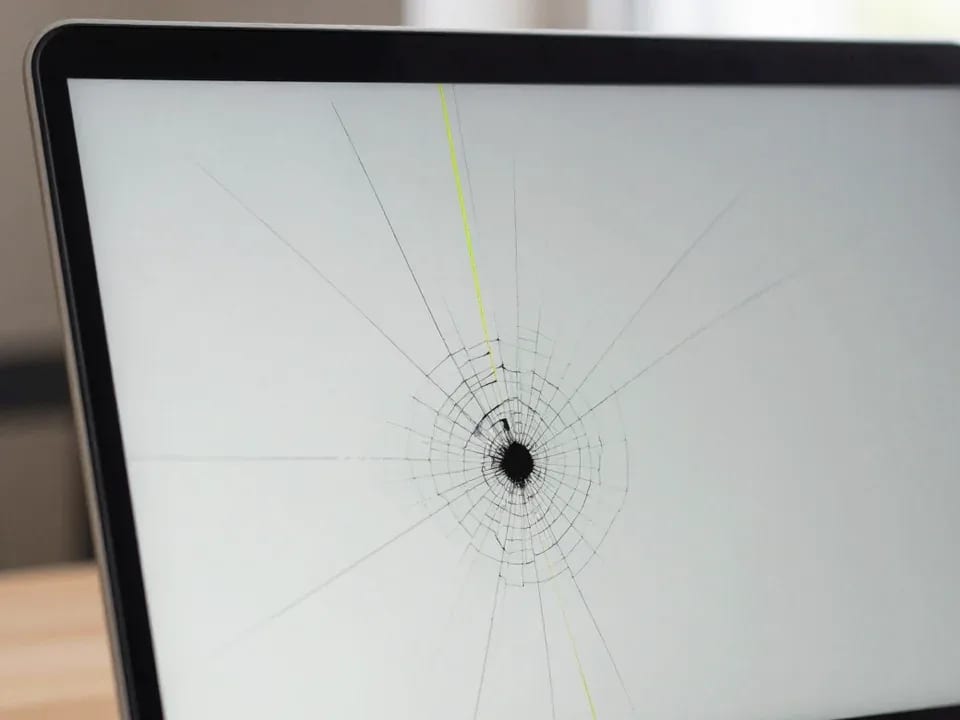
If your laptop screen is broken, turn the device off first, don't press on the display, and check the picture through an external monitor.
12 March 2026 · 11 minutes read
If your phone won't charge, start by checking the adapter, cable, and port, then the charging settings.
16 February 2026 · 12 minutes read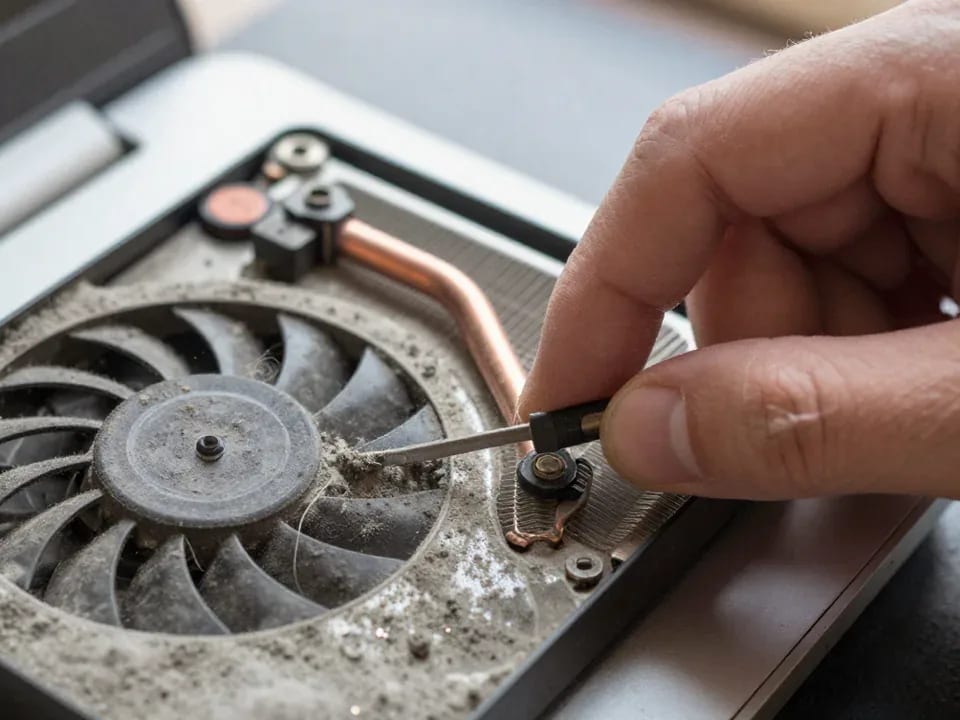
If your laptop freezes, the first thing to do is restart it and check Task Manager to see what's loading the CPU and memory.
25 January 2026 · 12 minutes read
If your phone falls in water, take it out right away, turn it off, and don't charge it.
19 January 2026 · 12 minutes read
If your phone camera isn't working, first check app permissions, clear the cache, and restart your phone — this fixes some software glitches.
24 December 2025 · 13 minutes read
If your laptop won't boot, first determine which of two states you're in: the device doesn't respond to the power button at all…
13 December 2025 · 12 minutes read