Tech Service repairs professional rotary ovens in Almaty: our technician arrives at your site within 60 minutes or we fix the oven at our service center. Diagnostics are free, you get a 1-year warranty on labor and parts, and our technicians have 4 to 20 years of experience. We work with bakery and pastry equipment, not household ovens.
Why the oven won't heat up or hold temperature
Undertemperature and unexpected shutdowns are the most common reasons to call a technician. Let's look at which components are responsible and what we check first.
What to check if the oven isn't reaching temperature
Most often the heating elements or the thermostat are to blame, and our technician checks them first when servicing rotary ovens in Almaty. Heating elements are responsible for reaching the set temperature: if one element burns out, the chamber heats up more slowly; if several fail, it never reaches the set mode. The thermostat reads the temperature sensor and turns off the coils once the set value is reached; if the sensor is off, the panel shows normal while the air inside the chamber is cooler. Before calling a technician, compare the set value on the panel with the actual temperature using a manual thermometer — a difference of 15-20 degrees confirms a problem with the sensor or heater. While waiting for the technician, don't try to heat the unit longer than usual — it won't speed up heating but will put extra load on the remaining elements. If the oven isn't reaching temperature, rotary oven repair in Almaty starts with checking the heating elements and thermostat.
Why the oven shuts down by itself during baking
Shutdown after 20-30 minutes of operation usually indicates overheating or a thermostat failure that stops reading the temperature correctly. The thermostat regulates maintaining the mode in the chamber: if the contacts stick, the coils don't turn off in time, the safety protection trips, and the oven shuts down mid-shift. The second cause is compromised thermal insulation of the chamber: heat escapes faster through the worn layer, the controls compensate for losses, and overheat protection trips earlier than it should. The third factor is a temperature sensor with drifting readings: it sends lower data, the thermostat keeps the coils on longer than needed, and the chamber overheats. If the equipment shuts down mid-shift, don't bypass the protection and turn it back on — that masks a failed sensor until a more expensive breakdown occurs.
How a technician finds the cause of undertemperature
We start with free diagnostics: we check the integrity of the heating elements, the thermostat readings, and the actual heating of the chamber. Using a multimeter, we test each heating element individually — a break is immediately visible, and partial degradation shows up as lower resistance. Then we compare the sensor readings with a reference instrument at several points in the chamber and assess the difference between the upper and lower zones. Undertemperature isn't always in the heater — sometimes the oven heats normally but loses heat through the door seals, and this is only visible by the temperature difference: even with working heating elements and thermostat, the gap between zones still exceeds the norm. Based on the inspection, the technician names the cause and the cost, and a 1-year warranty on labor and parts applies after any repair.
The rotor and trolley won't rotate
If the trolley stands still while the oven hums, it's almost always the drive, not the heating. Let's look at how motor and gearbox symptoms differ and what the technician checks first.
The trolley won't rotate but the oven hums
Humming without rotation usually means a problem with the drive or gearbox, not the motor itself. The rotating mechanism of a rotary oven consists of a motor, a reduction gear, and the trolley rack mounts: the motor provides rotation, the gear transmits it to the shaft, and a failure at any point stops the trays. We start by inspecting the entire kinematic chain under load and listening to the drive — the nature of the hum and jerks shows where torque is lost. Don't try to turn the trolley by hand while the unit is on: that puts extra load on the reduction gear and can turn a repair into a replacement. Our technicians arrive within 60 minutes across the city, diagnostics are free, and we provide a 1-year warranty on labor and parts.
How motor and gearbox symptoms differ
| Component | Symptom | What we check |
|---|
| Rotation motor | Jerking, unusual noise, smell of overheating | Winding, starting torque, mounting |
| Reduction gear | Steady hum, no rotation at all | Gear engagement, lubrication, shaft play |
| Rotation mechanism | Carriage sits unevenly, squeaking in a circle | Seats, guides, shaft |
What the technician checks in the rotation mechanism
We check the drive, the reduction gear, and the carriage seats to find the source rather than replace a part at random. The motor is inspected for shaft play and winding condition, the gearbox for gear wear and lubrication, and the rack is turned by hand to assess movement along the guides. Often the picture only becomes clear under load: at idle the fault may not show, so the mechanism is tested with baking trays, and the technician also listens to the unit at different speeds to catch the moment of slipping. If the carriage sits unevenly, the cause may be the guides rather than the drive—then the fix is limited to adjustment. Our technicians work with rotary ovens from 4 to 20 years old, and you can pay via Kaspi QR, Kaspi Red, bank card, cash, or bank transfer for companies.
Uneven baking, error codes, and other signals
The oven may turn on and hold temperature properly but produce defective results or signal an error. Let's look at which signs point to a specific component and when it's unsafe to continue the shift.
Why baking comes out uneven
Uneven baking is most often linked to the circulation fan or the chamber's thermal insulation, and less often to the thermostat. When one side of the tray browns more than the other, we first check the fan impeller: loose mounting, stuck-on grease, and bearing wear reduce airflow, so the hot zone shifts toward one wall. Damaged thermal insulation in the chamber gives a similar picture—heat escapes through the body, and heating becomes spotty. The thermostat is less often to blame: it maintains overall temperature but doesn't control how heat is distributed throughout the volume. Our technicians achieve evenness through airflow and insulation restoration, not by tweaking the sensor. If one side consistently burns, it's worth checking how the air flows, not just the temperature—these are different components.
Can you keep working if an error code is showing on the panel
It's better not to work with an error on the panel: the code points to a specific component, and ignoring the signal leads to a more serious breakdown. The controller detects a deviation—overheating, sensor break, rotation failure—and blocks some functions for a reason. If you continue the shift, the protection may be forced off, and then the power module or drive fails. You can decode the code yourself using the oven's documentation, but it doesn't always indicate the cause—sometimes it's a consequence, not the source. A temperature sensor error sometimes means not the sensor itself but a bad contact in the control panel harness. The technician compares the code with the controller readings, checks the entire circuit, and only then identifies the component that needs replacement.
Burnt smell and condensation on the door
A burnt smell requires immediate shutdown of the equipment, while condensation on the door usually points to a worn seal. What burns could be grease stuck on the heating elements, wiring, or the plastic of the door handle—the source is determined after disconnecting from power. Condensation accumulates when the seal has lost its elasticity: moisture enters the chamber from outside, and steam escapes unevenly. We replace seals and door handles, restoring the door's tight fit. The seal is replaced not only because of condensation—heat loss through it increases the load on the heating elements and speeds up their wear. So at the first sign of moisture on the glass, check the door edge around the entire perimeter rather than waiting for the oven to stop holding its setting. Cracks and hardened areas on the rubber are visible during inspection without disassembly—their appearance usually coincides with the start of uneven baking at the edges of the tray.
On-site or in the shop: how repairs work
Not every breakdown can be fixed on-site. Here's what a technician does at your place, which parts need workshop repairs, and how an on-site visit with diagnostics works.
What a technician can fix on-site
We fix most common breakdowns on-site: heating elements, thermostats, seals, handles, and control panel parts. The technician arrives with their own tools and a multimeter, checks the heating circuit, tests the temperature sensor, and inspects the door seal for tears and hardened rubber. Replacing a heating element or thermostat on a rotary oven takes one visit if the part is accessible without removing the chamber casing. Seals and handles are almost always replaced on-site, but the control panel depends on the model: on some ovens, it's easier to remove the board in the workshop. A 60-minute arrival across the city means the technician comes with tools, but not always with the right part — keep this in mind when planning shifts and allowing time before evening baking.
When the oven goes to the shop
We send the unit to the shop when work is needed on rotating parts or complex electronics that are inconvenient to disassemble on-site. The drive, gearbox, and rotor motor require removing the trolley, disassembling the mechanism, and checking the bearings — this can't be done in a kitchen without risking damage to the mounting seats. The control panel with the board and display is also easier to diagnose on a workbench with power and measuring instruments. We perform repairs in the shop for parts that can't be checked on-site and return the oven to service after testing rotation and heating. Before sending it off, the technician explains why on-site work isn't possible — so you understand what you're paying for and don't agree to a blind disassembly.
How the technician visit and diagnostics work
The technician arrives within 60 minutes, performs free diagnostics, and quotes the cost of work before starting. First, they ask how the oven behaves, then check power, heating, and rotation, test the heating elements and sensors, and inspect the rotor mechanics. Based on the inspection, the technician provides the cost and scope of work, and you decide whether to proceed. Payment is accepted in any convenient way, and the warranty is 1 year on labor and parts. The final amount is given after diagnostics because the same breakdown may require different amounts of work — this protects you from unexpected extra charges. We perform diagnostics free of charge, so declining doesn't create extra costs and doesn't obligate you to agree to disassemble the oven right during a shift.
Who to trust with a professional oven, not a household one
A rotary oven is industrial equipment, not a kitchen oven. Here's why the equipment class changes the approach to repairs and how to choose a technician.
How a rotary oven differs from a household oven
| Parameter | Rotary oven | Household oven |
|---|
| Operating mode | Continuous shifts | Short cycles |
| Loading | Trolley rack with baking sheets | One baking sheet |
| Airflow | Fan circulating air throughout the chamber | Heating elements |
| Component weight | Industrial motor and gearbox | Household motors |
| Downtime | Stops production | Doesn't affect production |
| Bearing load | Constant, high | Occasional |
Which oven brands we service
We repair equipment from Bongard, Miwe, Sveba Dahlen, WLBake, Salva, and Unox, working specifically with professional bakery equipment. Our technicians have 4 to 20 years of experience, so they know the design of the rotor, airflow, and control panels for each of these lines. Parts for a specific brand are selected individually—this determines whether a unit can be restored or needs replacement. Before visiting, we confirm the model from the nameplate so the specialist brings the right parts and doesn't waste time on a repeat order. Diagnostics are free, and a technician arrives within 60 minutes in the city. In my view, sticking to a specific brand saves time: a one-size-fits-all approach doesn't work here, and a part from another line often leads to a repeat call after a few shifts.
Why a direct provider is better than an aggregator
Tech Service is a direct provider with its own team of technicians, not an aggregator, so a specific service is responsible for the work. When you go through an intermediary, responsibility is blurred between the dispatcher and the contractor, but with a direct provider the warranty is the same at every stage. We offer a 1-year warranty on labor and parts, accept payment via Kaspi QR, Kaspi Red, card, cash, or bank transfer for companies, and the technician quotes the price after free diagnostics. Our specialist comes to your home or repairs the unit at our service center—the equipment owner chooses the route. With an intermediary, the warranty is often from an unknown technician rather than from the person who did the work. Direct service removes the extra link: you deal with the person who actually gets your equipment running again, and the warranty comes from the provider, not the middleman.
Warranty, cost, and maintenance
Warranty and service determine how long an oven will run after repair. Let's look at what the warranty covers, what makes up the cost, and why preventive maintenance matters.
What the repair warranty covers
We provide a 1-year warranty on labor and parts, meaning we stand behind both the quality of the repair and the installed parts. The warranty covers the specific unit that the technician replaced or adjusted: heating element, thermostat, rotor motor, gearbox, control board. If the same unit fails again within a year, we fix it under warranty rather than charging for a new service. Wear unrelated to the work and mechanical damage after third-party intervention are not covered. In my view, the more important point is this: the warranty confirms that the technician is responsible for the result, not just for showing up. Before accepting the equipment, ask exactly which unit and work the warranty covers—this prevents disputes if the symptom returns months later.
What determines the repair cost
The cost depends on which unit has failed and whether a part needs replacing, and the technician quotes it after free diagnostics. The same complaint—'not heating'—can mean replacing the heating element, adjusting the thermostat, or repairing the control board; the difference in scope and parts is significant. That's why we don't give a price over the phone: without an inspection, it would be a guess. The technician arrives, checks the heating circuit, sensors, and mechanics, then explains the cause and agrees on the cost before starting work. If the proposed option doesn't work for you, you pay nothing for diagnostics. Most often, the part determines the cost: heating elements, thermostats, and rotor bearings are the main expenses for underheating and humming. Ask for a breakdown of labor and parts—that way you can see what you're paying for.
Why preventive maintenance for a rotary oven matters
Preventive maintenance reduces the risk of downtime during a shift: checking heating elements, the thermostat, and seals reveals wear before a breakdown. Carbon buildup on heaters, loss of elasticity in the door seal, play in the rotor bearings, and drifted thermostat settings accumulate gradually and don't show up while the oven is running. Seasonal servicing removes these risks: a technician checks the heating circuit, calibrates the thermostat, inspects the rotation mechanism and seals, and replaces worn parts before they stop production. Emergency callouts are almost always more expensive and take longer than scheduled maintenance because they catch equipment mid-operation—with a ruined batch and a missed shift. Almaty residents should keep in mind: during peak bakery season, the wait for a callout grows, while a scheduled inspection is planned in advance and doesn't depend on how busy the service is.
Key points on rotary oven repair
Repairing a rotary oven comes down to accurate diagnostics and fixing one or two causes—from heating to the rotation mechanism. Below are the key takeaways to help you choose a contractor and avoid overpaying for unnecessary work.
- Diagnostics first, repair second: a free on-site check shows exactly what has failed and rules out replacing working components.
- A symptom is not the cause: underheating, a stopped rotor, and an error code often point to different components, so the technician checks the whole chain, not just one part.
- A direct contractor is more reliable than a middleman: the technician comes himself and is responsible for the result, with no passing you between subcontractors.
- A warranty is a must: a 1-year warranty on labor and parts gives you time to test the oven through real shifts and make a claim if the fault recurs.
- Prevention is cheaper than an emergency: regular inspection of the heating, gearbox, and seals reduces the risk of a sudden stop in the middle of baking.
 experience9 years





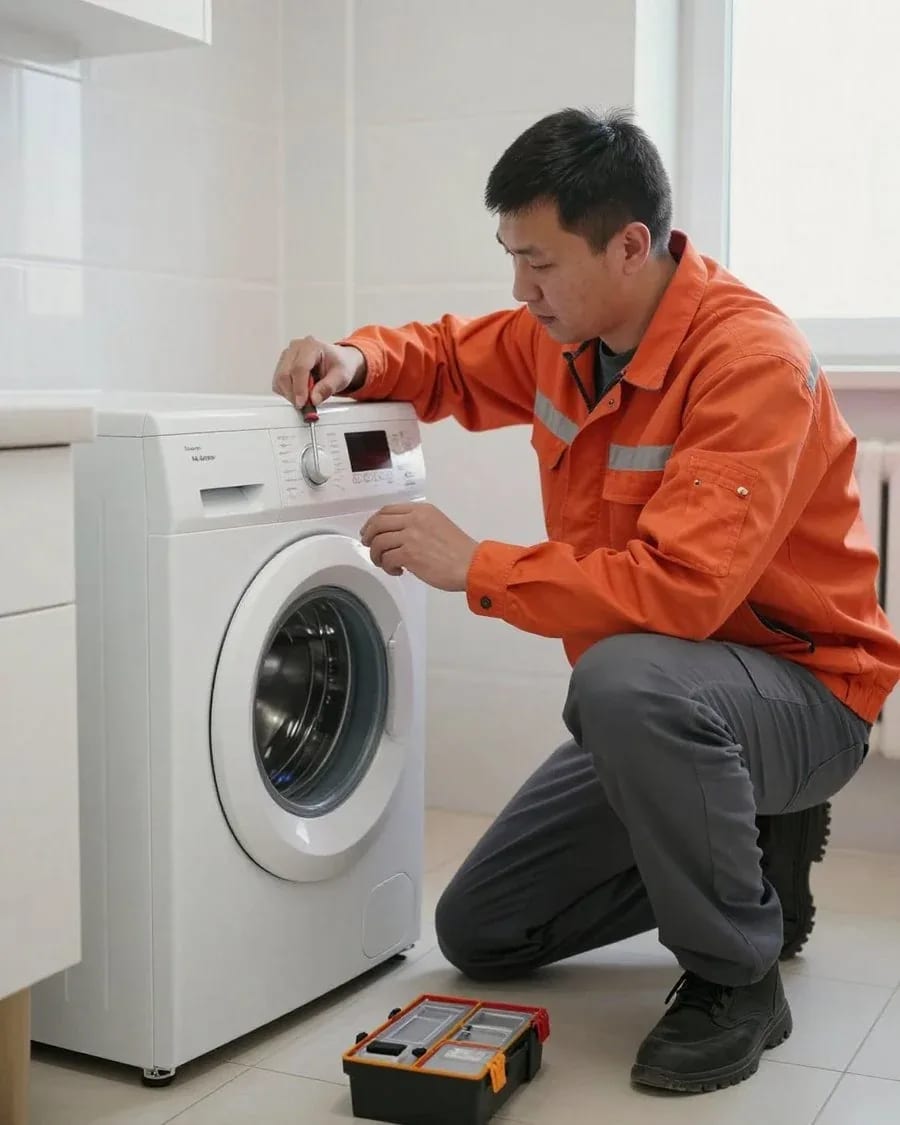
 experience12 years
 experience10 years
 experience8 years
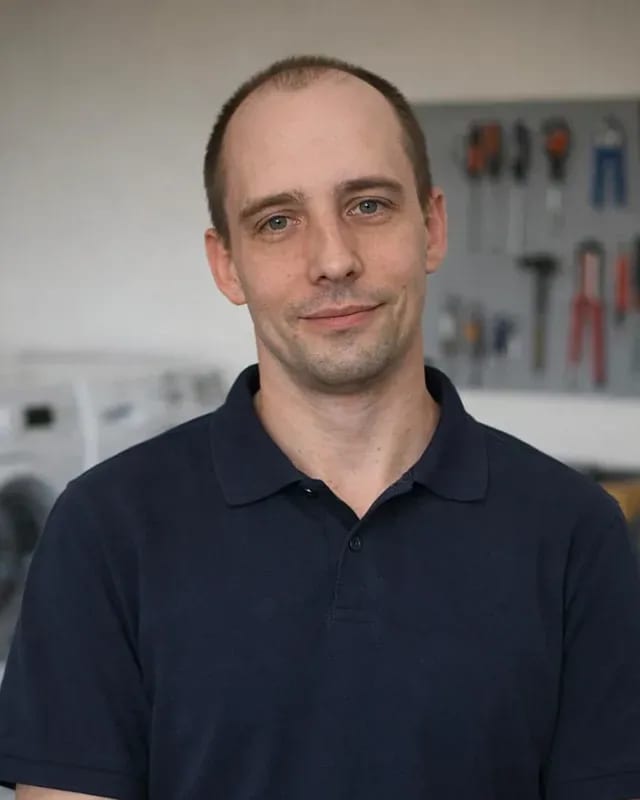 experience8 years
 experience8 years
 experience11 years
 experience9 years

 Refrigerator Repair in Almatyfrom 3 000 ₸
 Washing Machine Repair in Almatyfrom 3 000 ₸
 Dishwasher Repair in Almatyfrom 3 500 ₸
 Oven Repair in Almatyfrom 3 000 ₸
 Cooktop Repair in Almatyfrom 3 500 ₸
 Air Conditioner Repair in Almatyfrom 3 500 ₸
 Boiler and Water Heater Repair in Almatyfrom 2 500 ₸
 Freezer Repair in Almatyfrom 6 000 ₸
 Tumble Dryer Repair in Almatyfrom 5 000 ₸
 Coffee Machine Repair in Almatyfrom 2 500 ₸
 Robot Vacuum Cleaner Repair in Almatyfrom 3 500 ₸
 Vacuum Cleaner Repair in Almatyfrom 1 500 ₸
 Microwave Oven Repair in Almatyfrom 2 000 ₸
 Hair Dryer Repair in Almatyfrom 1 500 ₸
 Iron Repair in Almatyfrom 3 000 ₸
 Electric Kettle Repair in Almatyfrom 2 500 ₸
 Mixer Repair in Almatyfrom 2 500 ₸
 Multicooker Repair in Almatyfrom 500 ₸