 experience9 years
Ruslan Ts.
Washing machine and refrigerator repair technician
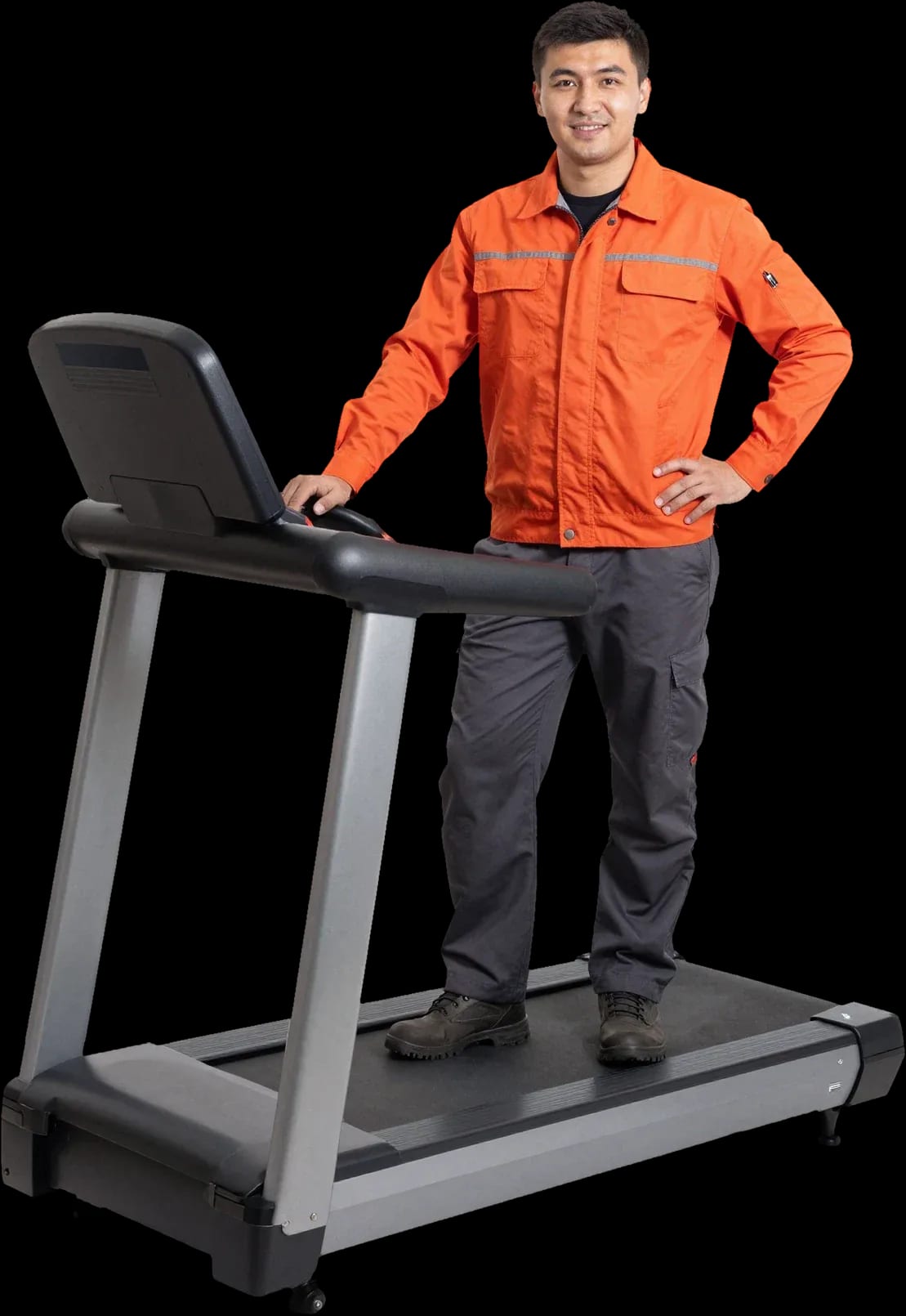
A technician arrives within 60 minutes anywhere in the city. Diagnostics are free.
Our own technicians4 to 20 years of experience




Repair prices
Below are typical symptoms and likely causes; the technician will pinpoint the exact cause during diagnostics.
power, fuse, control board
from5 000 ₸
belt tension, rollers, wear
from2 500 ₸
the technician reads it during diagnostics
from5 500 ₸
fasteners, rollers, running belt
from7 000 ₸
belt tension, rollers, wear
from7 000 ₸
overheating, ventilation, motor
from7 000 ₸
incline motor, sensor, control board
from5 000 ₸
sensor, control board, motor
from2 500 ₸
1 visittime
from 5 500 ₸cost
 BeforeAfter

Five steps from request to final check.
Submit a request, specify the model and symptom.
A technician arrives within 60 minutes anywhere in the city.
The technician lists the work and parts in the request, and you confirm the scope before repair begins.
Check the belt movement, button response, and that no error codes appear.
Components are tested under load and the treadmill is run through a test cycle.
The home appliance repair department in Almaty has 8 technicians with 8 to 12 years of experience.
The department has 8 specializations — they are listed on the technicians' cards.
experience9 yearsWashing machine and refrigerator repair technician
 experience12 years
General household appliance repair technician
 experience10 years
Field technician for washing machine and refrigerator repair
 experience8 years
Expert washing machine repair technician
 experience8 years
Field refrigerator repair technician
 experience8 years
Senior washing machine repair technician
 experience11 years
Dishwasher repair technician
 experience9 years
Washing machine repair technician
We reply during working hours
Describe the issue and a convenient time — the technician will confirm the visit and quote the repair cost before work starts.

Warranty question? Call us
+7 (778) 046 88 53Tech Service repairs treadmills in Almaty as a direct contractor: our technician comes to your home or picks up the equipment for service. Diagnostics are free, we arrive within 60 minutes anywhere in the city, and you get a 1-year warranty on labor and parts. Our technicians have 4 to 20 years of experience.
The machine won't start or shuts off after a couple of minutes — this points to a specific component, not a total breakdown. Here's what the technician checks and what the codes on the display indicate.
Most often the treadmill won't turn on because of the power supply, control board, or cable. Our technician identifies the culprit during free diagnostics. The power cable is checked first: a pinched cord, oxidized contacts in the connector, or damaged insulation at the base of the plug produce the same symptom — silence when you press the button. Under load, the power supply drops its output voltage, so the console may flicker and go dark even though the outlet works. The control board connects the motor, sensors, and display — its traces and power switches suffer from voltage spikes and dust packed under the housing. This kind of treadmill repair in Almaty starts with tracing the circuit, not replacing parts at random. We test each section of the circuit separately so we don't replace a working component. If the machine is dead after a power surge and the outlet is fine, the problem is almost always the board — we test it before replacing, not swap it blindly.
If the machine shuts off by itself after a few minutes or gets water inside, we don't power it on before diagnostics — turning it on under voltage finishes off the board. Overheating is usually caused by dust-clogged motor cooling: the fan blows air, but the heatsink is packed with lint from the belt, so protection trips early. Moisture on the control board leaves oxidation between contacts that shows up weeks later — the treadmill starts stopping on its own or throwing a sensor error. After water exposure, the motor rusts from the inside and its winding loses resistance. After a flood or a damp balcony, the belt is dried and checked before the first start; otherwise a short circuit takes out the motor along with the electronics.
The belt slips off, slips, or the treadmill jerks — these symptoms point to different components. Here's what the technician checks and in what order the cause is fixed.
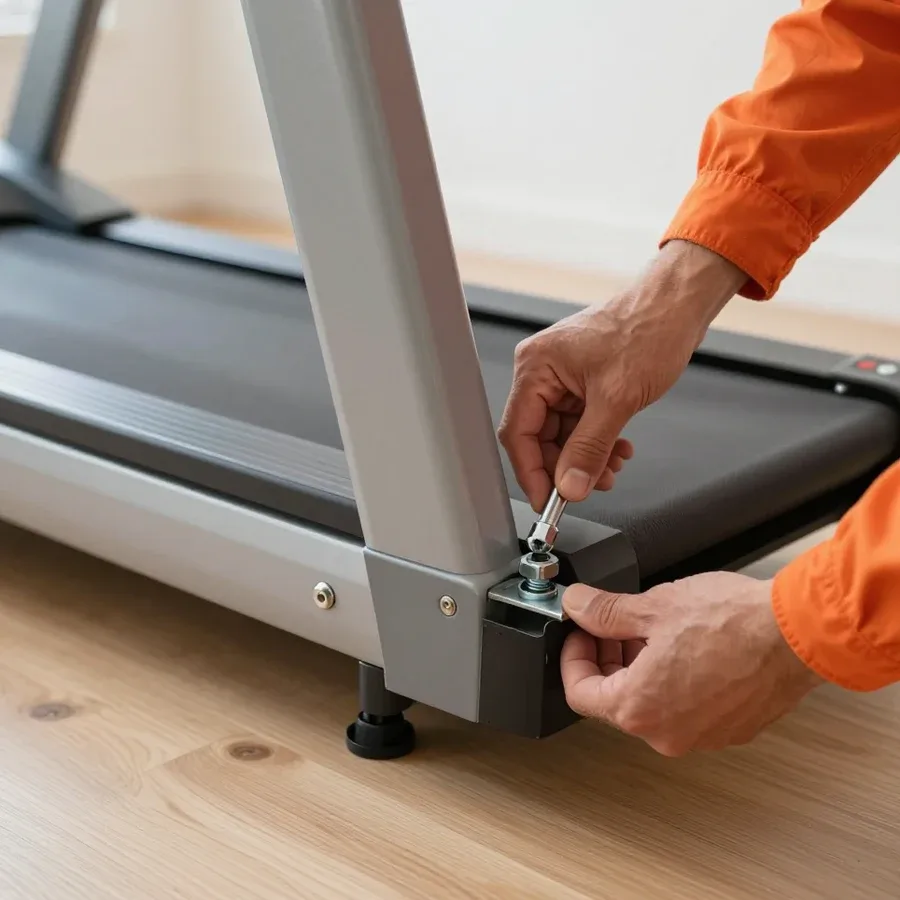
We adjust a slipped belt for tension and centering, and if it's stretched or worn, we replace it with a new one. Sideways shifting is usually visible at the edge of the running belt near the frame: a gap appears on one side, while on the other the belt rubs against the side and leaves a dark mark. Adjustment is done via the tension bolts on the rear roller: the technician loosens or tightens them in pairs and checks the run against the centering marks by turning the roller by hand. A stretched belt can't be saved by tightening — it's removed and replaced, otherwise it will come off the rollers again under load. Tightening the belt by eye is risky: an over-tightened belt kills the front roller and motor, so centering is done using the marks on the frame. If the belt slips off regularly, the treadmill repair technician will check not only tension but also the condition of the rollers and shaft.
We associate jerking at speed with the drive belt, motor, or control board, and the technician tells them apart by the nature of the jerk during free diagnostics. If the running deck jerks sharply with a click, the drive belt is checked: a loose belt slips on the pulley, while an overtightened one loads the motor bearings. A smooth drop in speed under the runner more often points to worn motor brushes or a power drop under load, while chaotic stops with a code on the display point to the control board. The technician removes the belt, turns the shaft and rollers by hand, measures tension, and listens to the motor under load to avoid replacing a working unit. If jerking appears only under the runner's weight and the deck runs smoothly at idle, the drive belt is more often to blame than the electronics.
| Part | Sign of wear | What the technician does |
|---|---|---|
| Running belt | slips off, slips | tension adjustment or replacement |
| Deck | overheating, friction marks | deck replacement with lubrication |
| Rollers and shaft | humming, jerking | inspection, cleaning, replacement |
| Drive belt | jerking under load | tensioning or replacement |
| Deck shock absorbers | vibration, knocking | inspection and replacement |
Humming, knocking, and vibration rarely go away on their own—they usually signal wear in a specific part. Here's what causes them and when it's time to call a technician.
We most often find humming during operation in the rollers, shaft, or drive belt, and the technician identifies the source on site. Over time, the running belt rollers lose lubrication in the bearings and start humming at low speeds, while a stretched drive belt adds a squeal to the hum during acceleration. We check the shaft for play and runout—a worn support produces a monotonous hum that intensifies with load. We inspect the drive belt for cracks and stretching: a loose belt slips and makes noise, while an overtightened one loads the motor bearings. We also listen to the tensioner area and motor mount—rattling at high speed often comes from there, not the motor itself. We eliminate unusual noise only after locating the specific part—random replacement doesn't solve the problem. If the treadmill works but has started making noise, repairing it is easier at an early stage, while prevention costs less than replacing a part—waiting until complete failure isn't worth it.
We associate vibration and knocking with deck shock absorbers, loose fasteners, or a worn belt, and we check them one by one. Over time, the shock absorbers under the deck lose elasticity, and the ride becomes stiff, with impact transmitted to the frame with every footfall. We inspect the frame and support posts for loose fasteners: loose bolts cause rhythmic knocking that matches your stride. We check the running belt for misalignment and edge wear—pulled to one side, it hits the rollers and transmits vibration to the deck. We also check belt tension: too loose, it slips and jerks the rollers; too tight, it overloads the shaft. Vibration blamed on an uneven floor often comes from loose frame fasteners—tightening them restores smooth operation without replacing parts.
We check overheating under load by looking at the motor, deck, and belt lubrication, and the technician names the cause after free diagnostics. The motor heats up when it has to overcome increased friction: a dry deck and dirty belt increase resistance, and the motor runs at its limit. We inspect the deck for scuffs and signs of overheating, and the belt for dryness and dust buildup on the underside. We also check motor airflow: dust-clogged ventilation channels hinder cooling, and the motor shuts down before it can cool. Belt lubrication reduces friction between the belt and deck, and the load on the motor drops. A dry deck increases friction, and the motor heats up more—regular belt lubrication takes some of the load off the motor.
Some breakdowns are fixed on the spot, while others require work at the service center. Here's how to choose the right format, what to consider, and the common paths our customers take.
We fix most breakdowns at home — belt adjustment, rollers, sensors, and some electronics work. Treadmill repair at home is convenient because you don't need to haul the equipment to the service center. A technician comes to you with tools for typical components and checks belt tension, front and rear roller condition, roller mounts, and the speed sensor signal along the way. A city visit takes up to 60 minutes, and diagnostics on site are free, so you know the scope of work after the first visit. Tension adjustment and roller replacement don't require disassembling the frame or using a lift — that's what makes it possible to work in an apartment or on a balcony. The visiting technician brings tools for typical components, so not every treadmill needs to go to the service center — the format is decided after diagnostics.
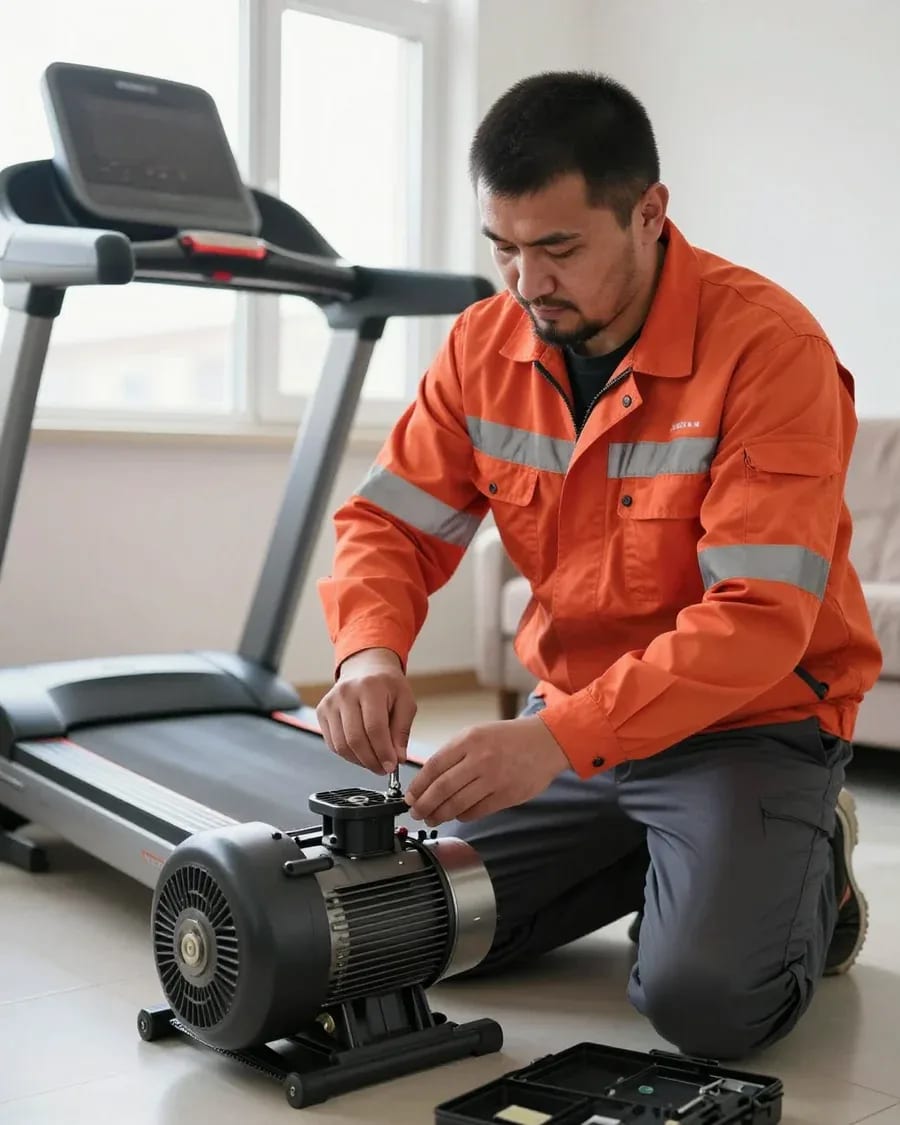
We take the treadmill to the service center when the motor, control board, or deck needs replacement — work that can't be done neatly at home. These components require disassembling the housing, accessing the frame mounts, and testing the electrical part under load, and doing that on an apartment floor is inconvenient and risky for other parts. The technician first inspects the component, determines what needs full replacement and what can be restored, and only then suggests bringing the equipment to the service center. We don't disassemble the housing or remove the motor mid-air in a living room: frame mounts differ across models, and without proper access it's easy to damage neighboring components. If a part needs full replacement, the work is agreed upon in advance rather than taking the treadmill apart blindly — so you understand the scope before work begins.
We also service treadmills bought on OLX or brought from abroad — parts are selected based on the component and model. Such equipment has no service history, so the model and year are confirmed from the nameplate on the frame, and compatibility of the motor, board, or roller is checked against the markings on the component itself. Home visits in the city start with checking the moving parts: used equipment most often has worn deck and belt, while the motor may be fine. For equipment without service history, the first thing we check is the deck and lubrication — that's where hidden wear is often found that isn't visible at purchase. Imported models often have different roller mounts — verify the part number before ordering a part, otherwise the replacement won't fit.
Before work begins, it's important to understand how diagnostics work, what commitments the service center makes, and how payment is handled. We cover these three questions in order — no fine print.
Diagnostics are free, and the technician quotes the cost of work after diagnostics — before service begins, you know the exact scope. During the visit, the specialist checks the power supply, control board, motor, and speed sensors, measures belt tension and deck condition, and listens to the roller bearings. Based on the results, they list which components need restoration and which need replacement, and only after approval from the owner do they start work. If the breakdown isn't confirmed, you don't pay for the check — this removes the risk of paying for the visit itself. In my experience, the most common case of a "non-working" treadmill is a pulled emergency key or an overloaded outlet, and such cases are resolved on the spot without disassembly. We accept calls throughout the city, and the technician arrives within 60 minutes.
We give a 1-year warranty on labor and parts — this covers both motor replacement and control board replacement. The terms are the same for any component: a new motor, a rebuilt control module, or rollers and the running belt. The parts warranty means that if a replaced component fails again, it is handled under the same warranty rather than as a new claim — the owner doesn't pay twice for the same part. Our technicians have 4 to 20 years of experience, so we install components that handle daily use. Before accepting the work, confirm that the warranty covers the specific component that was replaced, not a vague 'treadmill repair' in general terms.
We first check the control board for repairability and only replace it entirely when it can't be restored. Typical cases that can be fixed by soldering include a blown power transistor, swollen capacitors, or a broken trace after a voltage spike; if the board is flooded or the controller is burned out, replacement is more cost-effective and reliable. You can pay via Kaspi QR, Kaspi Red, bank card, cash, or bank transfer for companies — whatever is convenient for the owner. Payment via Kaspi QR, Kaspi Red, card, cash, or bank transfer is convenient, but the decision to repair or replace is based on the condition of the board, not on payment convenience — the technician explains the choice before starting work and shows the faulty component. Ask why that particular option was chosen: if the specialist can't show the burned part and explain the cause of failure, it's worth pausing and clarifying the diagnosis.
A quick self-check before calling a technician saves time, and regular care extends the life of the running belt. We've put together a short checklist and maintenance tips to help you see what you can handle yourself and when you need a specialist.
Lubricate the belt as it dries out, and after winter storage on a balcony don't start the treadmill without checking — moisture and thickened lubricant cause malfunctions. Pay attention to friction: if the belt runs tight or you hear a dry squeak underneath, the lubricant has worn out. Apply a thin layer across the full width of the deck, let it spread at low speed, and only then go to your working pace. After storage, check the deck and lubricant first rather than running the machine at maximum speed — a dry deck on the first start overheats the motor and leads to shutdown under load. Equipment that has been sitting often fails not because of a breakdown but due to dried film and dust on the rollers: wipe them and run the belt at minimum speed before a normal workout.
Regular tension adjustment, lubrication, and checking fasteners reduce the risk of motor and belt failure. Check tension by the sag at the rear roller: a belt that's too loose slips and rubs against the deck, while one that's too tight strains the motor and rollers. Every few months, inspect the frame and leg fasteners — loose bolts cause vibration and knocking during movement. Sweep dust from under the belt, otherwise it packs into the rollers and speeds up wear. Maintenance is based on load, not the calendar — a club treadmill needs more frequent checks than a home one used by a single person. And a hum that appears at a steady pace is a reason to check the roller bearings before the noise turns into knocking.
Bottom line: a treadmill breakdown almost always comes down to a specific component, not the whole machine. Here's a quick summary to help you when you call a technician.
Tech Service technicians repair other appliances too — with the same 1-year warranty on labour and parts.
 Refrigerator Repair in Almatyfrom 3 000 ₸
 Washing Machine Repair in Almatyfrom 3 000 ₸
 Dishwasher Repair in Almatyfrom 3 500 ₸
 Oven Repair in Almatyfrom 3 000 ₸
 Cooktop Repair in Almatyfrom 3 500 ₸
 Air Conditioner Repair in Almatyfrom 3 500 ₸
 Boiler and Water Heater Repair in Almatyfrom 2 500 ₸
 Freezer Repair in Almatyfrom 6 000 ₸
 Tumble Dryer Repair in Almatyfrom 5 000 ₸
 Coffee Machine Repair in Almatyfrom 2 500 ₸
 Robot Vacuum Cleaner Repair in Almatyfrom 3 500 ₸
 Vacuum Cleaner Repair in Almatyfrom 1 500 ₸
 Microwave Oven Repair in Almatyfrom 2 000 ₸
 Hair Dryer Repair in Almatyfrom 1 500 ₸
 Iron Repair in Almatyfrom 3 000 ₸
 Electric Kettle Repair in Almatyfrom 2 500 ₸
 Mixer Repair in Almatyfrom 2 500 ₸
 Multicooker Repair in Almatyfrom 500 ₸

If your dishwasher won't drain, the most common culprits are a clogged filter or drain hose; less often, it's the pump, impeller…
24 March 2026 · 12 minutes read
A washing machine can hum for many reasons, and the first thing to figure out is when the sound appears.
20 March 2026 · 12 minutes read
If your washing machine isn't filling with water, the most common culprits are a closed valve, a clogged inlet filter screen on the hose…
20 February 2026 · 13 minutes read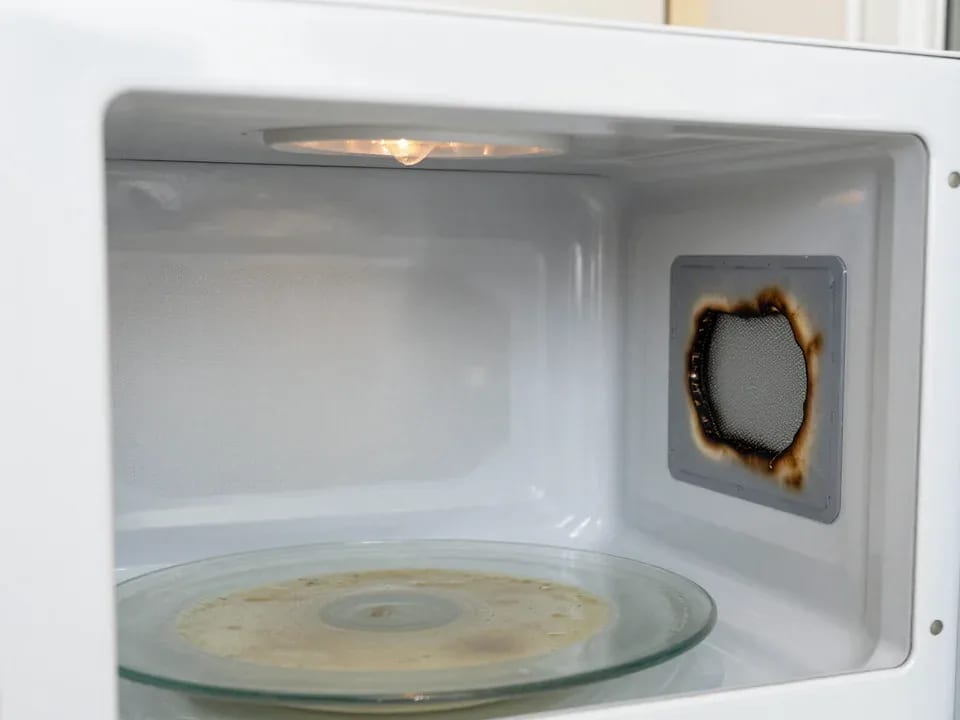
If your microwave isn't heating but the light and turntable still work, the problem is usually one of the high-voltage components — the magnetron, diode…
15 February 2026 · 12 minutes read
If your refrigerator stops working, first check the outlet, the power cord, and the thermostat setting, and after defrosting let it stand for a while.
4 February 2026 · 12 minutes read
Washing machine error codes are self-diagnostic codes that point to a specific component: drain, water fill, heating, motor, or door lock.
29 January 2026 · 13 minutes read