 experience14 years
Vladimir D.
Air conditioner service technician
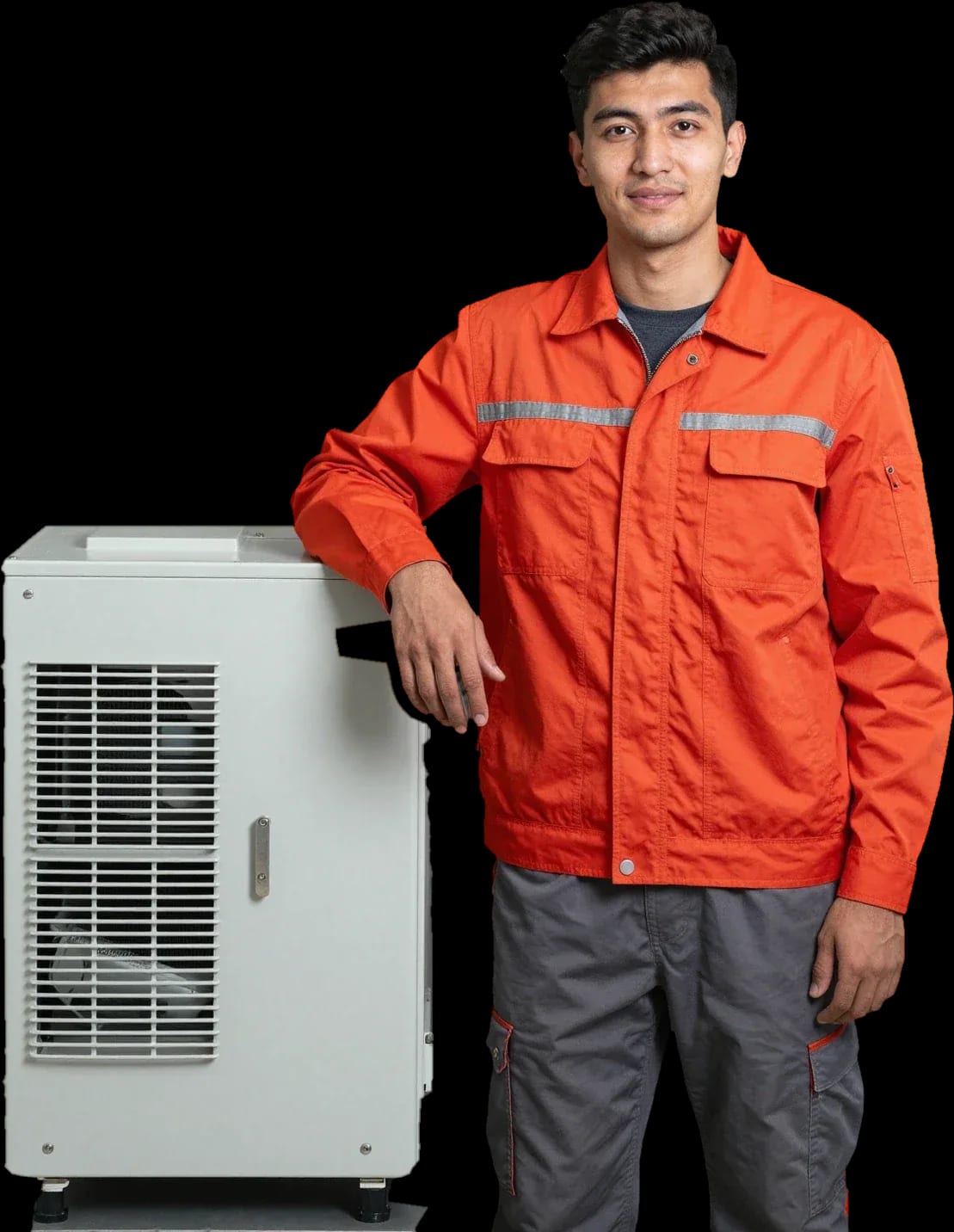
A technician arrives within 60 minutes anywhere in the city. Free diagnostics.
Our own technicians4 to 20 years of experience




Repair prices
Eight typical symptoms: from reduced cooling capacity to compressor noise. The technician confirms the cause after inspecting the components on site.
clogged heat exchanger, refrigerant leak
from16 500 ₸
controller failure, incorrect setpoints
from52 000 ₸
low refrigerant charge, dirty filter
from16 500 ₸
depressurization of the circuit
from16 500 ₸
bearing wear, mounting vibration
from20 500 ₸
overcurrent protection, starting automation
from20 500 ₸
controller battery drained, power interruption
from52 000 ₸
airlock, impeller wear, clog
from14 500 ₸
1–2 hourstime
from 16,500 ₸cost
 BeforeAfter

Five steps from request to post-repair performance check.
Describe the symptom and chiller model, the technician will clarify details by phone.
Provide access to the chiller and power panel so the technician can start without delay.
The technician checks the chiller components and identifies the cause of the fault.
Work begins after you approve the scope and cost.
The technician checks the components on site and returns the chiller to operation.
The climate control equipment repair department in Almaty has 8 technicians with 4 to 20 years of experience.
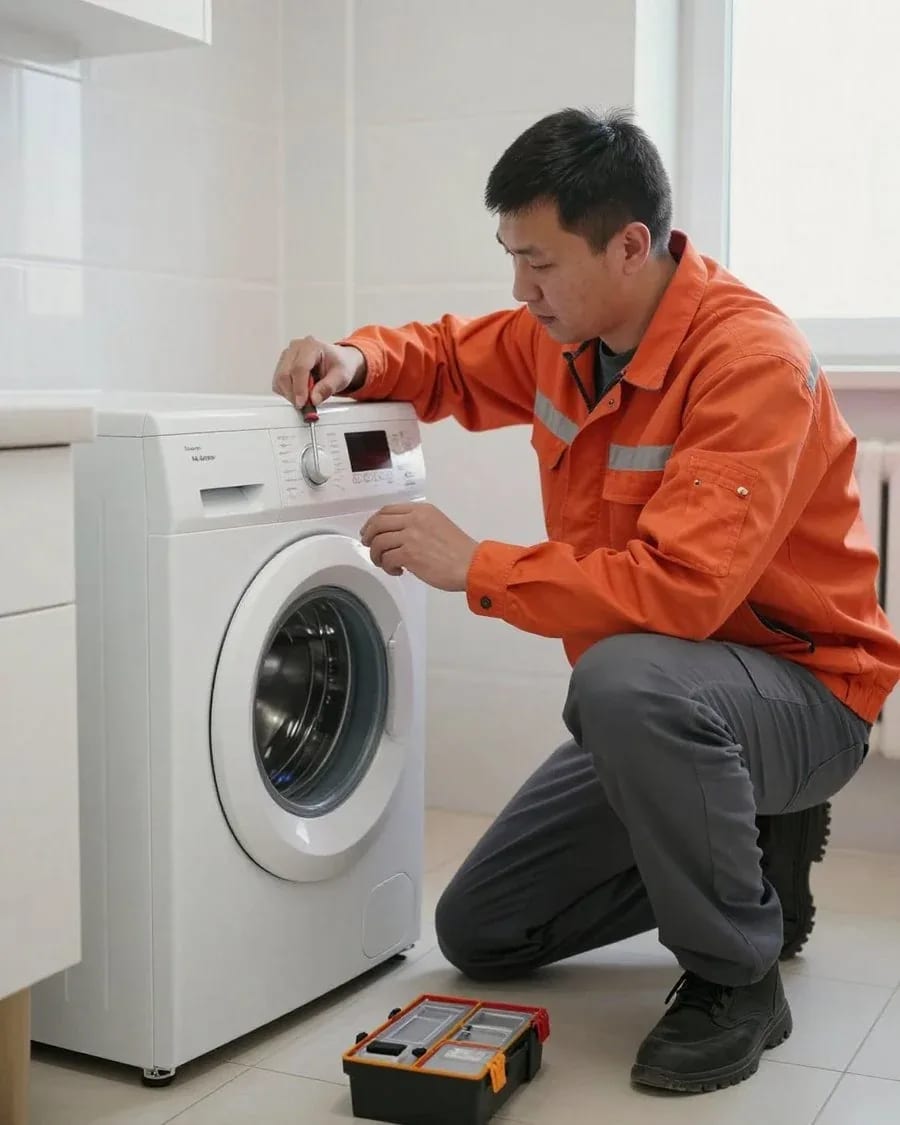
The department has 8 specializations — they are listed on the technicians' cards.
experience14 yearsAir conditioner service technician
 experience20 years
Senior air conditioner installer
 experience12 years
Air conditioner repair technician
 experience16 years
Industrial air conditioner technician
 experience4 years
Air conditioner service technician
 experience14 years
Air conditioner maintenance technician
 experience7 years
Climate control system repair technician
 experience5 years
Air conditioner installation technician
We reply during working hours
Describe the chiller fault and a convenient time. The technician will clarify details by phone and arrange the visit.

Warranty question? Call us
+7 (775) 030 02 94Tech Service provides chiller repair in Almaty as a direct contractor: our technician arrives at your home within 60 minutes anywhere in the city or takes the equipment to our service center. Diagnostics are free, there is a 1-year warranty on labor and parts, and you can pay via Kaspi QR, Kaspi Red, bank card, cash or bank transfer for companies.
The chiller signals a problem itself — with a code on the display or a change in behavior: it won't start, shuts down often, or loses cooling. Here are common signals, their likely causes, and what you can safely do before the technician arrives.
Most often the unit won't start due to a triggered protection, a compressor failure, or a control board fault, and you can't tell them apart by appearance. The automation blocks the compressor from starting when sensors signal an unacceptable condition — temperature, pressure, or current. At that moment the control board either doesn't send a start command or puts the equipment into error after a few seconds of operation. Externally all three scenarios look the same: there are indicators, the fan may spin, but there's no cooling. A separate case is the HP error, where high-pressure protection shuts down the compressor before it reaches operating mode. Before the technician arrives, don't restart the unit repeatedly: repeated starts with a faulty compressor accelerate wear, and resetting the error erases the clue for diagnostics. If your own checks don't help, it's best to leave chiller repair in Almaty to a specialist experienced with this equipment.
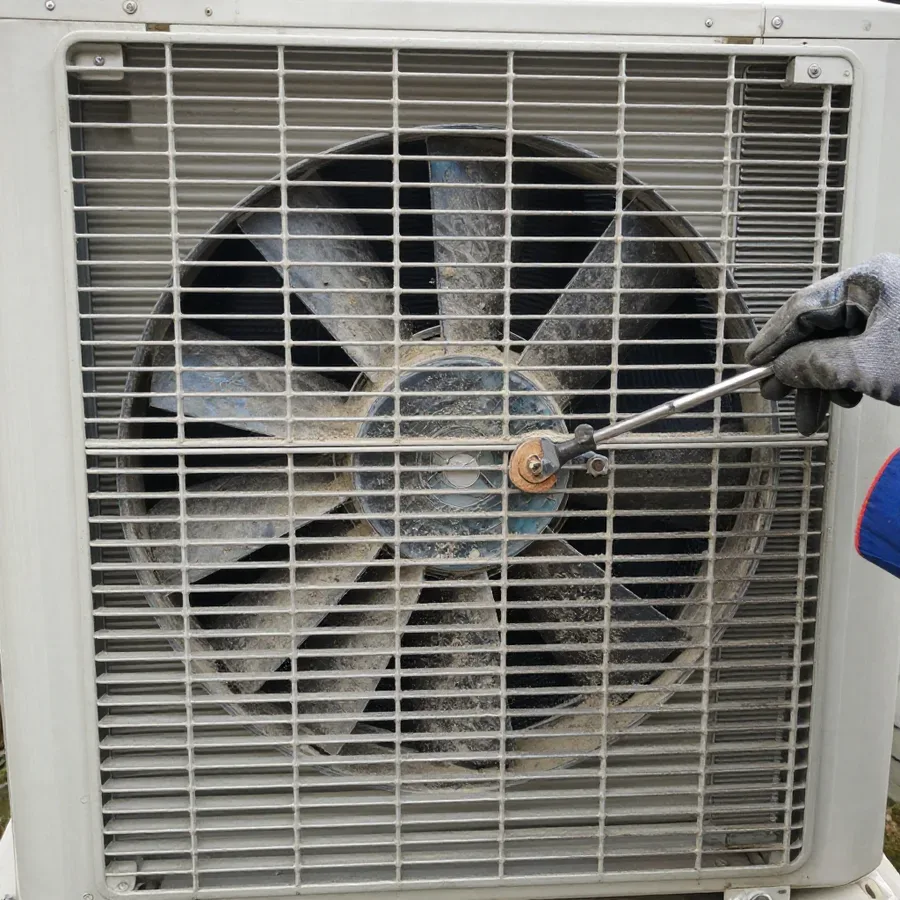
High-pressure (HP) and flow shutdown signals are protective reactions: the chiller turns off to prevent damage to the compressor and hydraulics. The condenser removes heat from the system, and if it's clogged with dust or lint, the discharge pressure rises to the sensor's trigger threshold. Another cause of the same error is the pressure sensor itself, which gives false readings and raises an alarm during normal operation. Flow shutdown is related to the hydraulic circuit: the coolant pump doesn't provide the required flow, the circuit has air, or the filter is clogged. Operating the unit with a recurring HP error is dangerous — you can't draw conclusions without checking pressure with gauges, and the cause can be either a clogged condenser or a faulty sensor.
| Symptom | Likely cause | What to check before the technician |
|---|---|---|
| Not cooling to temperature | refrigerant leak, TXV fault | don't touch the circuit, note the error code |
| Evaporator freezing | low refrigerant, clog | turn off, don't chip ice |
| Noise and vibration | compressor wear, mounts | note when the noise appears |
| Frequent shutdowns | HP or flow protection | don't reset the error repeatedly |
Diagnostics is a separate stage where the technician finds the cause of the failure rather than replacing parts at random. Here's what is checked step by step and why this stage is free with us.
With us this stage is free: the technician checks the refrigeration cycle, automation, and hydraulics to identify the cause and scope of work. For the refrigeration cycle, they check gauges and temperatures at the evaporator inlet and outlet, the operation of the compressor and thermostatic expansion valve; for automation, the control board, temperature and pressure sensors, error codes, and protection triggers. For hydraulics, the specialist checks the coolant pump, flow and pressure drop in the circuit, and the condition of the evaporator and filters. Separately, they look for refrigerant leaks in the circuit before recharging — by pressure drop and inspecting connections. Based on the results, they state the cause, work plan, and cost. Asking to "just recharge the refrigerant" before checking the cycle is pointless: if the leak isn't found, the refrigerant will escape again, so the source is located before recharging.
Leaks are found by checking for pressure drop in the circuit and inspecting connections, not by taking the unit apart completely, so the search starts with external points. The specialist compares gauge readings with the specifications for the current operating mode, then inspects brazed joints, connections at the thermostatic expansion valve, and accessible sections of the circuit — looking for oil traces, oxidation, and micro-seeps. If refrigerant is escaping slowly, a single recharge without finding the source brings the problem back next season — pinpointing the leak is more important than topping up the refrigerant. In our experience, slow pressure loss is most often hidden in connections and flare fittings, not in the evaporator body or compressor, so starting with disassembly is unnecessary work. Targeted inspection of external joints takes less time than a full teardown and immediately shows which part of the circuit needs repair.
The control board is more often repaired than replaced: the specialist checks the power supply, outputs to the compressor and sensors, and only discusses replacement if the defect cannot be fixed. The controller is inspected for signs of overheating and liquid damage, power circuits and relays are tested for continuity, and the automation's response to temperature and pressure sensor signals is verified. If an error appears after the coolant freezes, the first thing to check is not the board but the hydraulics and evaporator — the automation often just records the consequence, not the cause. In our experience, the hydraulic circuit and evaporator freezing account for more than half of calls with automation errors, so the board is replaced as a last resort. Repairing the controller costs less than replacing the unit, and the board's functionality after soldering is tested before reinstalling it on the machine.
A chiller in a private home and at a small facility is repaired differently. We explain when an on-site visit is enough and when it's more convenient to take the unit to the service center.
We come to your home: a technician arrives within 60 minutes anywhere in the city, so most residential and semi-industrial chillers are inspected on site. The visiting technician brings tools to check electrics, circuit pressure, and flow, so initial diagnostics and typical repairs are done right at the unit. This is convenient for the owner: no need to dismantle the chiller, drain the circuit, or arrange transportation — the system stays in its usual operating conditions. An on-site inspection shows whether the equipment can be repaired on site or needs a deeper teardown with disassembly of components. Diagnostics are free, so the check adds no cost to the service itself. Chiller repair price depends on the scope of work, and the technician quotes it after free diagnostics. Before the technician arrives, clear access to the unit and note the error code — this saves diagnostic time and allows the right component to be checked immediately.
Equipment is taken to the workshop when it can't be done on site: work on the compressor, circuit brazing, or component replacement requiring disassembly. Screw, piston, and scroll compressors are the most stressed parts of the circuit, and their repair requires disassembling the unit and testing under load, which can't be done at the customer's premises. Brazing the copper circuit after fixing a leak is also work better performed in a workshop where the circuit can be evacuated and charged. For a residential chiller in a private home, an on-site visit is usually enough, while a semi-industrial unit with a screw compressor is sometimes easier to service at the service center — the technician will advise after diagnostics, having seen the condition of components and the scope of work. A 1-year warranty on labor and parts applies in both cases, so the service location does not affect its terms.
| Chiller type | Where you find it | What we check first |
|---|---|---|
| Residential | private house, apartment | compressor, controls, flow |
| Semi-industrial | small facility, office | hydraulics, condenser, sensors |
| Air-cooled condenser | most facilities | airflow and heat exchanger cleanliness |
| Water-cooled | facilities with a water circuit | water circuit and heat exchange |
Owners care not only about fixing the breakdown but also about what happens after the repair. Here we cover the warranty, payment procedure, and what goes into the cost of work.
We provide a 1-year warranty on labor and parts, so if the same unit fails again within that period, we handle it under warranty. Replacement of worn parts falls under the same period: if a part fails early, we find the cause rather than just replacing it again. The warranty covers everything our technician touched during the repair — compressor, control board, sensors, heat exchanger. Our experience shows that repeat calls are more often due to fixing the symptom rather than the source the first time. The warranty only works when the cause is eliminated, not masked — that's why we find the source first and only then replace the part. This takes longer during diagnosis but saves you from having to return to the same unit a month later.
The cost depends on the unit and scope of work, and we give you the exact amount after a free diagnostic when the cause is known. The same symptom — say, the chiller not cooling — can be caused by a cheap sensor replacement, compressor repair, or refrigerant leak in the circuit. The final figure depends on whether the unit is replaced entirely or repaired, how many circuits are involved, which parts are needed, and how long disassembly takes. Quoting a price before diagnosis means guessing: the same symptom can be caused by a cheap sensor replacement or compressor repair, so a ballpark without inspection is misleading. We fix the scope of work after inspection so you know what you're paying for before work begins. If a hidden defect is found during the job, we agree on any additional scope with you separately.
We accept Kaspi QR, Kaspi Red, card, cash or bank transfer and work as a direct contractor with our own technicians, not as an aggregator or middleman. Our technician comes to your site himself — home or service center — and he is responsible for the result. Our technicians have 4 to 20 years of experience, and each handles a chiller from diagnosis to handover. A middleman adds an extra link between the request and the contractor, and responsibility for the result gets diluted — a direct contractor is accountable for the work himself, including the warranty. So when choosing a service, ask who will actually come and who provides the warranty: if the person responsible isn't the one doing the work, resolving a repeat breakdown will take longer. Our technician arrives within 60 minutes in the city and confirms on site that the work can be done without taking the equipment away.
Some breakdowns are easier to prevent than to fix. Here we cover what routine chiller maintenance includes and how seasonal preparation reduces the risk of failure during peak load.
Routine chiller maintenance includes checking the refrigeration cycle, cleaning heat exchangers, and inspecting controls and hydraulics to catch wear before a breakdown. Our technicians start by measuring pressure and temperatures under operating conditions—these readings show whether the compressor is losing capacity. Then they clean the condenser and evaporator: a layer of dust and scale on the heat exchanger raises the condensing temperature and forces the unit to run at its limit. The controls are checked against the sensors, board, and safety chain—a stuck high-pressure switch trips later than it should. In the hydraulic circuit, they inspect the pump, flow rate, and loop pressure, while mounts are checked for vibration and noise. Maintenance is more cost-effective than emergency repair because component wear is visible at an early stage: during service, the technician spots a pressure deviation before the unit goes down.
Service frequency depends on load and operating conditions: under intensive use, parameters need to be checked more often. A unit that cools a server room or production line all season accumulates condenser fouling faster than one under seasonal load. The interval is affected by airborne dust, water hardness in the loop, and room temperature—in a hot workshop, the heat exchanger clogs noticeably faster. There is no single calendar standard of "once a year" for all conditions: the interval is chosen based on the actual condition of components and measurement results. Seasonal operation changes the load on the condenser, so it makes sense to tie checks to the change of season rather than a formal date—before the heat peak, parameters are checked separately. For facilities with continuous operation, parameter checks are needed more often, while for seasonal ones, checks are tied to startup.
Mothballing and recommissioning prepare the chiller for downtime and restart so that the loop and hydraulics are not damaged during the pause. During mothballing, the coolant is drained or replaced in the hydraulic loop, connections are checked for tightness, and the evaporator is protected from freezing at subzero temperatures at the site. Recommissioning is the reverse: filling the loop, removing air, checking flow, and a test run with parameter monitoring. We perform seasonal maintenance and mothballing on site so that startup after a pause goes without surprises. Improper mothballing is more dangerous than none at all: coolant left in the loop can damage the evaporator when it freezes, so it's better to entrust preparation to a technician. Residual moisture in the tubes after draining is also harmful—before the pause, the loop is blown through and dried.
Search results for refrigeration equipment repair are full of aggregators and classified boards, and it's not clear in advance whose specialist will actually show up for the request. Here's what to look at to avoid overpaying a middleman.
The main difference is who does the work: a direct contractor has their own refrigeration technicians on staff, while a middleman passes the request to a third party and doesn't participate in the service themselves. In practice, this shows in the dispatcher's first question: an aggregator asks for the district and "finds a specialist," while a direct contractor immediately asks for the chiller model and the nature of the fault. Obligations diverge next: a middleman is only responsible for passing the request along, so if the problem recurs, the conversation starts over—with a new contractor and a new inspection. A direct contractor manages the site from diagnostics to handover, and a quality claim goes to the same technician who did the work. Ask directly whose specialist will come to the site and who is responsible for the warranty—if the answer is vague, responsibility for the result will be vague too.
The chiller stopped cooling, threw an error, or started leaking — and you want to know where to start. Here's the key things to keep in mind before you call a technician.
Tech Service technicians repair other appliances too — with the same 1-year warranty on labour and parts.
 Refrigerator Repair in Almatyfrom 3 000 ₸
 Washing Machine Repair in Almatyfrom 3 000 ₸
 Dishwasher Repair in Almatyfrom 3 500 ₸
 Oven Repair in Almatyfrom 3 000 ₸
 Cooktop Repair in Almatyfrom 3 500 ₸
 Air Conditioner Repair in Almatyfrom 3 500 ₸
 Boiler and Water Heater Repair in Almatyfrom 2 500 ₸
 Freezer Repair in Almatyfrom 6 000 ₸
 Tumble Dryer Repair in Almatyfrom 5 000 ₸
 Coffee Machine Repair in Almatyfrom 2 500 ₸
 Robot Vacuum Cleaner Repair in Almatyfrom 3 500 ₸
 Vacuum Cleaner Repair in Almatyfrom 1 500 ₸
 Microwave Oven Repair in Almatyfrom 2 000 ₸
 Hair Dryer Repair in Almatyfrom 1 500 ₸
 Iron Repair in Almatyfrom 3 000 ₸
 Electric Kettle Repair in Almatyfrom 2 500 ₸
 Mixer Repair in Almatyfrom 2 500 ₸
 Multicooker Repair in Almatyfrom 500 ₸
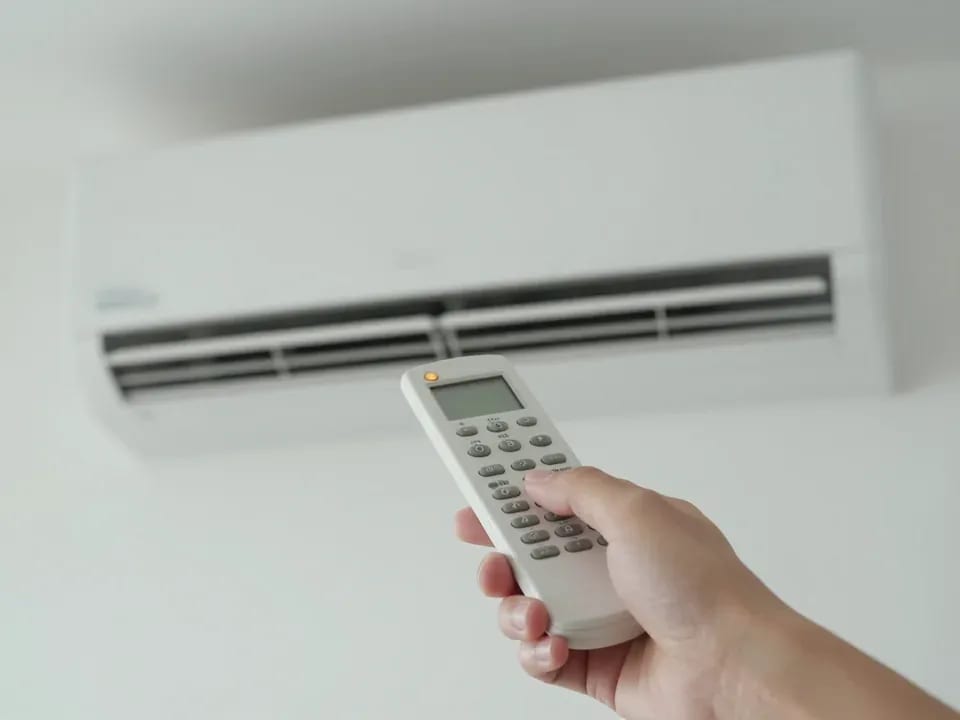
Air conditioner errors are codes on the display or flashing indicators that show which component has failed.
5 March 2026 · 12 minutes read
Gas boiler errors are codes on the display or a flashing indicator that point to a specific component: ignition, pressure, draft, sensor, or control board.
10 February 2026 · 11 minutes read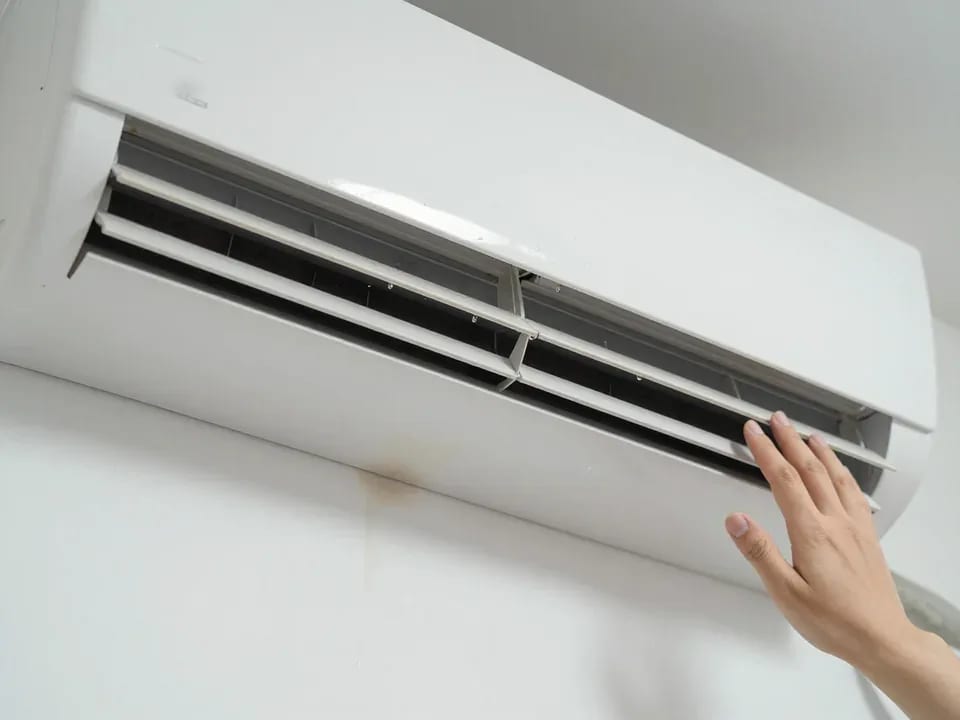
If your air conditioner is leaking, first turn it off and cut the power, place a container under the drip, and move any wiring away from the water.
19 October 2025 · 12 minutes read