 experience9 years
Ruslan Ts.
Washing machine and refrigerator repair technician
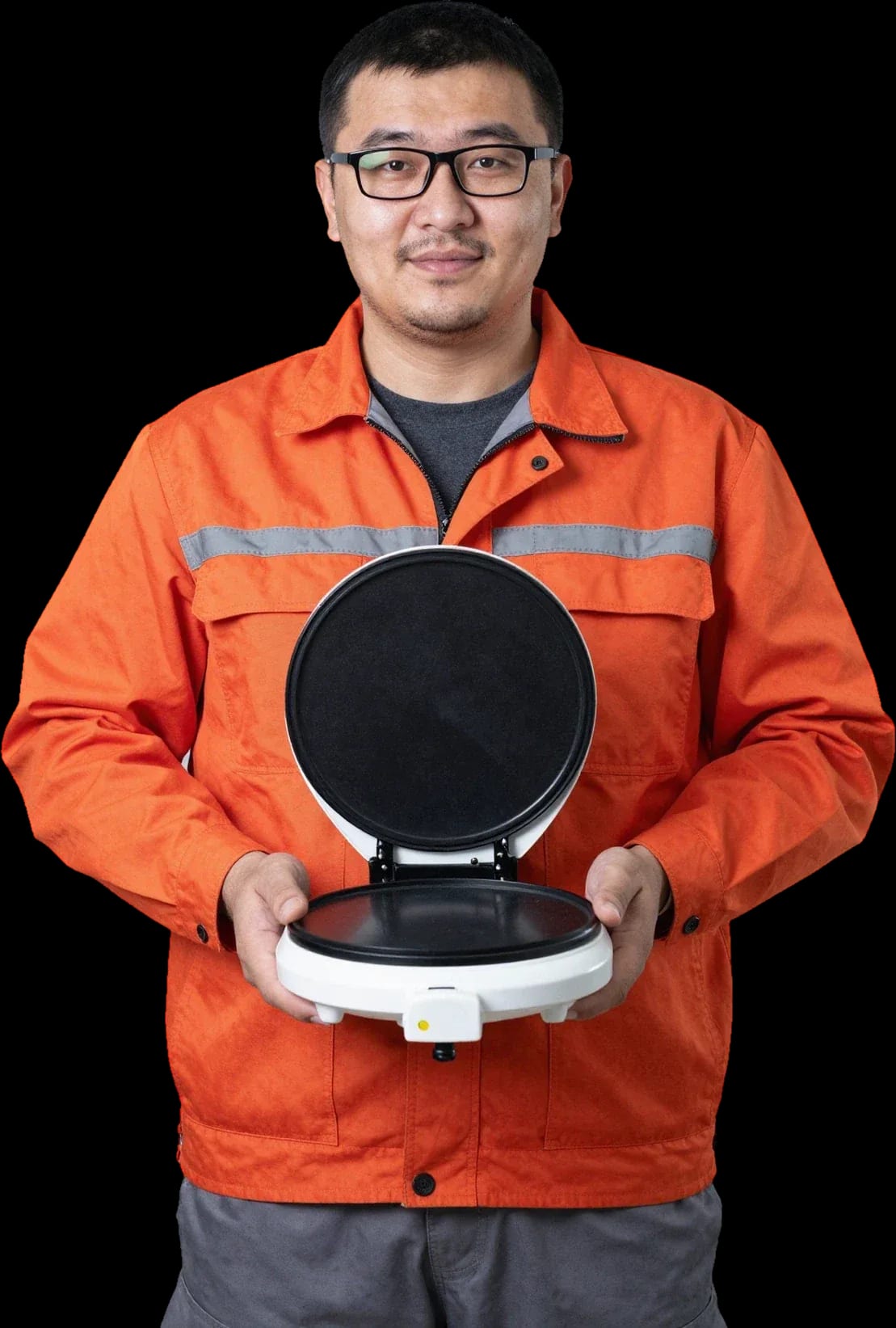
A technician arrives within 60 minutes anywhere in the city. Free diagnostics.
Our own technicians4 to 20 years of experience



Repair prices
These are the symptoms customers most often report. The technician will pinpoint the exact cause after diagnostics.
heating element, thermostat, or wiring
from6 500 ₸
plug, cord, or switch
from4 000 ₸
worn coating or residue buildup
from6 000 ₸
uneven surface heating
from6 000 ₸
coil burnout or short circuit
from6 500 ₸
chip, crack, or deformation
from4 000 ₸
deformation or loose fasteners
from6 500 ₸
overheating or faulty wiring
from5 500 ₸
1–2 hourstime
from 5,500 ₸cost
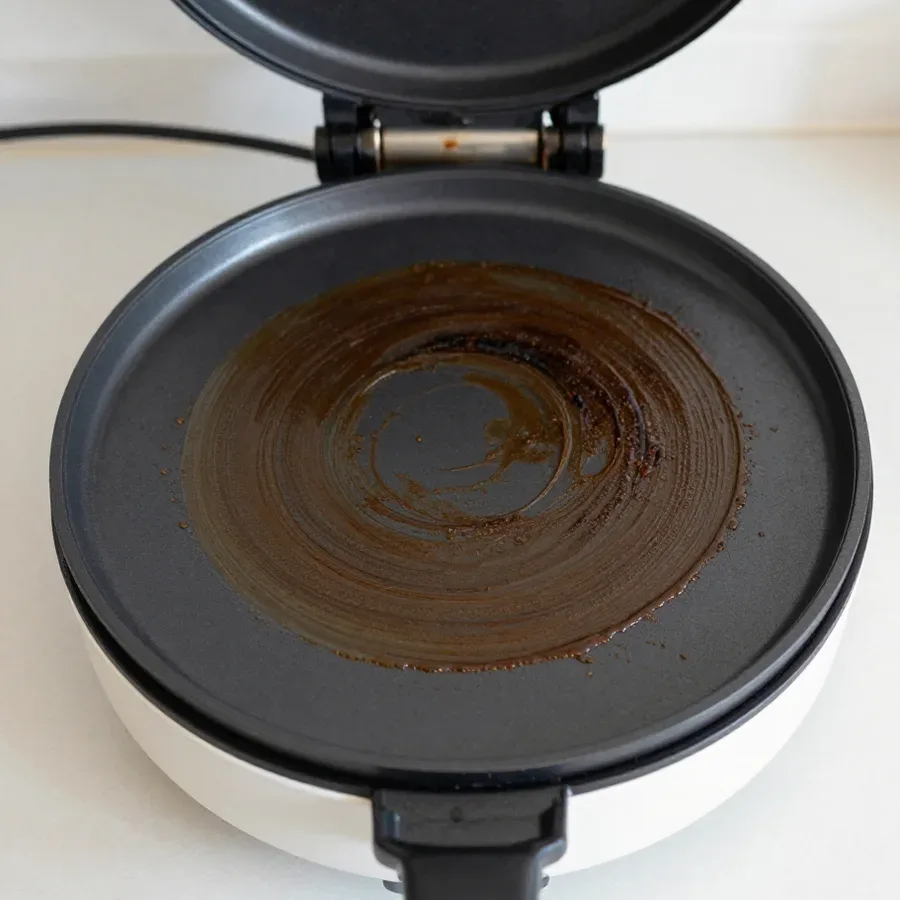
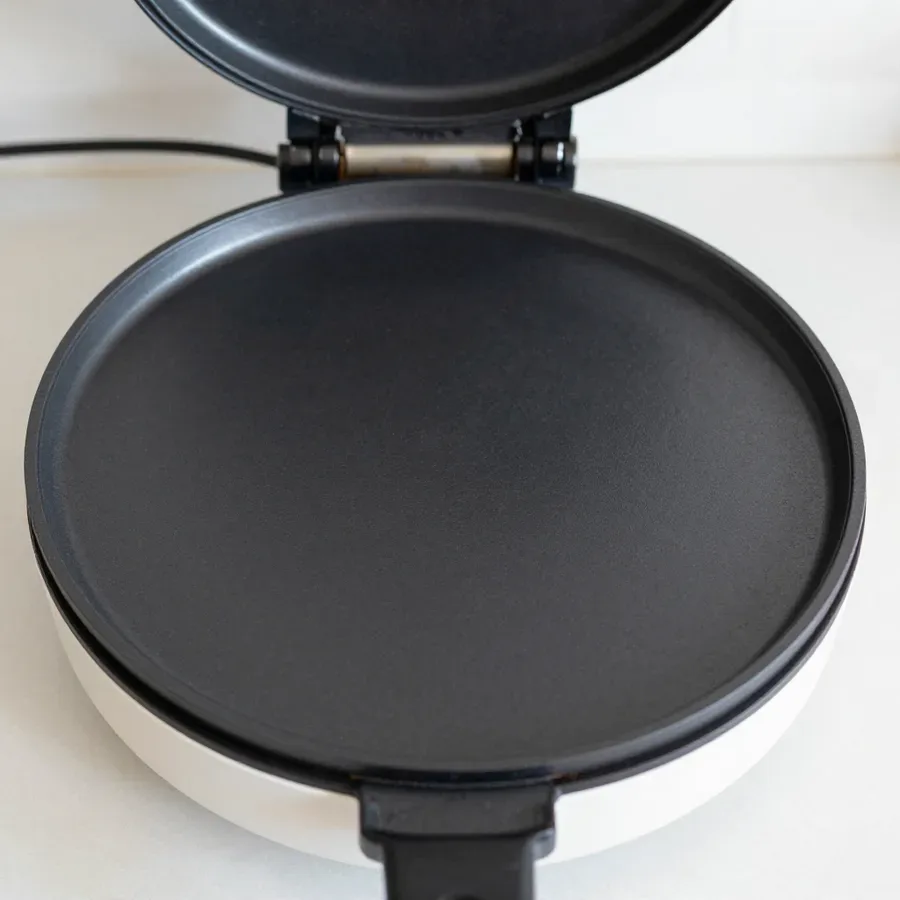 BeforeAfter

From request to performance check — five steps.
Describe the symptom and your blini maker model — the technician will confirm the details.
The technician confirms the model and symptom by phone before the visit.
The technician agrees on the scope of work and visit time with you.
Disassembly, heating element replacement, reassembly.
We check heating and even heat distribution together with you.
The home appliance repair department in Almaty has 8 technicians with 8 to 12 years of experience.
The department has 8 specializations — they are listed on the technicians' cards.
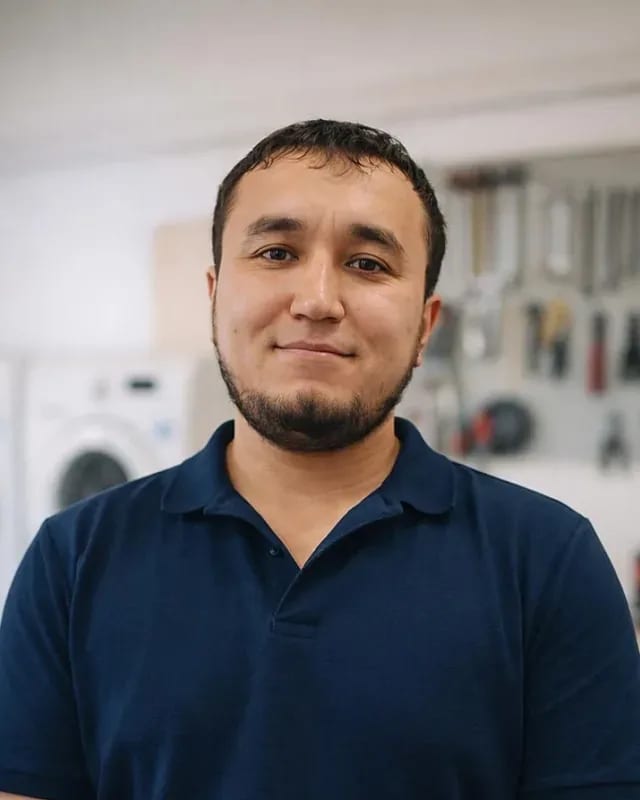
experience9 yearsWashing machine and refrigerator repair technician
 experience12 years
General household appliance repair technician
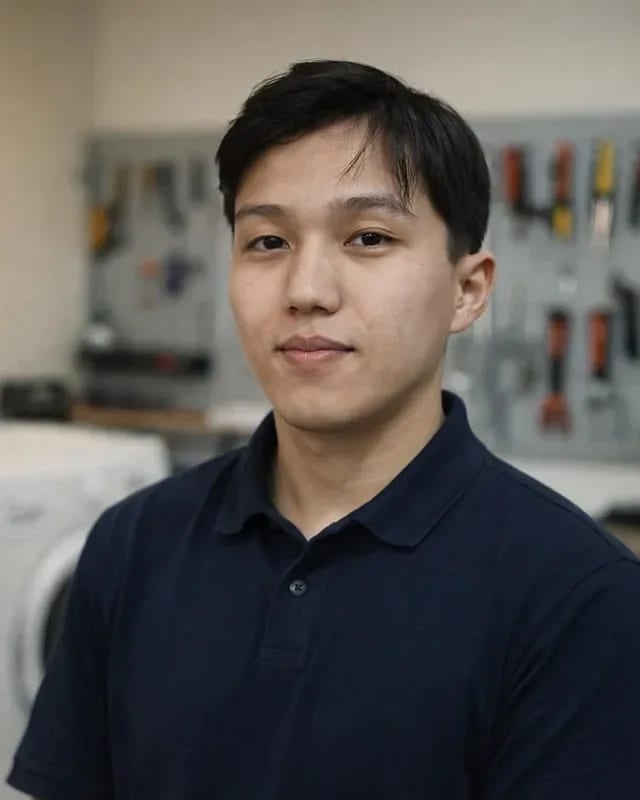
 experience10 years
Field technician for washing machine and refrigerator repair
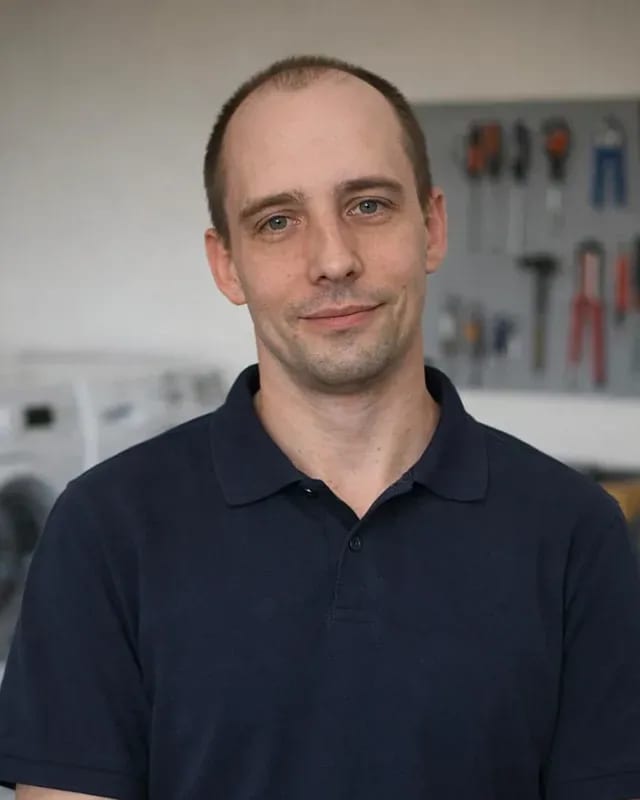
 experience8 years
Expert washing machine repair technician
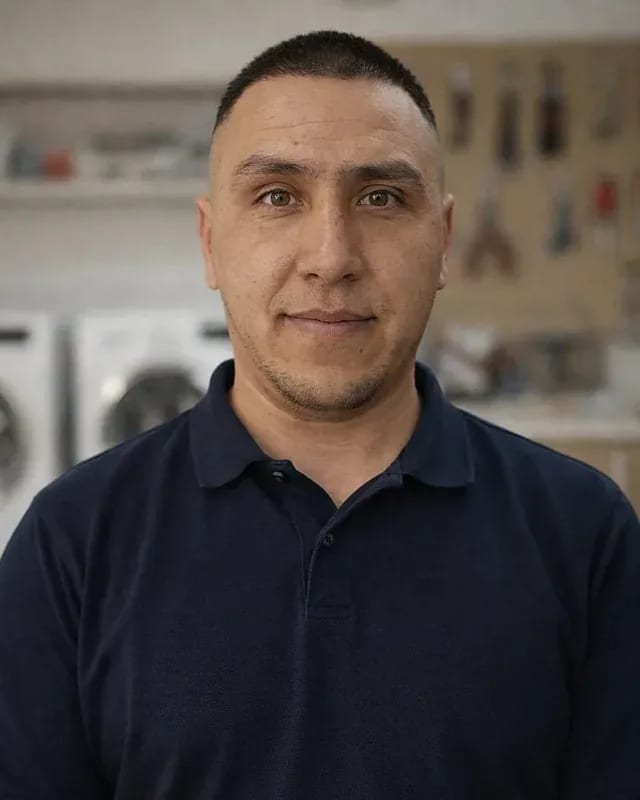
 experience8 years
Field refrigerator repair technician
 experience8 years
Senior washing machine repair technician
 experience11 years
Dishwasher repair technician
 experience9 years
Washing machine repair technician
We reply during working hours
Leave a request — a technician will arrive within 60 minutes anywhere in the city.

Warranty question? Call us
+7 (778) 021 13 16Tech Service repairs electric pancake makers in Almaty: our technician comes to your home or you can drop off the appliance at our service center. Diagnostics are free, we arrive within 60 minutes anywhere in the city, and you get a 1-year warranty on labor and parts. The technician gives you the price after the free diagnostics, once the cause of the breakdown is clear.
The symptom is the first clue to the cause. It helps the technician narrow down the parts during diagnostics, and it lets you understand what you're dealing with so you don't waste time hauling the appliance around.
Most often the problem is in the power circuit — the cord, plug, connector, or a thermal fuse that tripped from overheating and broke the circuit. The thermal fuse protects the pancake maker from overheating: it's a one-time part that burns out and cuts the power when the temperature inside the housing goes beyond the safe limit. First, check the power cord for a break near the base of the plug, then the connector on the board — frequent heating oxidizes the contact and it stops handling the load. If the appliance is still dead after replacing the fuse, look for the cause of overheating — a stuck thermostat or a bad contact — otherwise the new fuse will burn out just as fast. In our experience, these repeat failures happen precisely because someone replaces the part without figuring out why it failed.
Sparks and a burning smell mean a problem with the contacts, cord, or burnt insulation; using the appliance in this condition is dangerous. Worn insulation at the plug or inside the hinge loop can cause a leak to the housing, and a burnt connector sparks every time it heats up. Smoke on first use after repair is often just process lubricant burning off a new heating element, but a technician — not the user — should tell that apart from a short circuit. If you smell burning, unplug the appliance immediately and don't turn it on until it's been checked — turning it on under load again burns traces on the board and turns a simple repair into an electronics replacement. We restore contacts in the power circuit and check the insulation along the entire cord, because a hidden defect at the plug only shows up under current.
Diagnostics isn't a quick look with a guess — it's a step-by-step check of the pancake maker's components. The result determines what work is needed and whether restoration is worth it at all.
The thermostat is responsible for switching off when the set temperature is reached, while the heating element does the heating itself; if the appliance heats but doesn't switch off, the thermostat is at fault, and if it doesn't heat at all, it's the heater or its wiring. First, we measure the coil resistance: a intact element with a normal reading removes suspicion from the heating element and shifts the check to the controls. Next, we test the wiring from the plug to the terminals — a break in this section gives the same "no heat" picture as a burned-out heater. The regulator and thermostat are different components: the first sets the target temperature, the second opens the contact, and confusing them during diagnostics means replacing a working part. The sensor is checked separately: its inflated readings cause the controls to cut heating early, and the pancake maker seems faulty without a real breakdown.
After diagnostics, the technician lists the work and cost, and then the service follows clear steps with a result check. Let's break down which components we replace, how we test the appliance, and what affects the timeline.
After service, we turn on the appliance, check heating of both surfaces, thermostat operation, and shutdown when the temperature is reached — we hand over the equipment only after a successful test. This is how pancake maker repair in Almaty always includes checking each component on the technician's bench. First, the technician measures the heating of each working surface separately: the temperature difference between the upper and lower plates shows whether the heating element is fully working or only part of it heats. Then they check the heating indicator — it should go out when the mode is reached and come back on during cooling. A separate step is checking shutdown: the thermostat must open the circuit at the set point, not let the temperature keep rising. The shutdown test is more important than the heating test: a pancake maker that heats but doesn't switch off is more dangerous than one that doesn't turn on at all.
The timeline depends on which component failed and what work is needed; the technician gives the exact picture after free diagnostics, along with the cost. Replacing a power cord or thermal fuse is one thing, while a combination of a burned-out heating element and a stuck thermostat requires two replacements and rechecking the entire circuit. The timeline is also affected by how advanced the breakdown is: with early symptoms, we often replace one component, while with late requests — two or three. The sooner you call a technician, the more often service is limited to one part: an advanced breakdown pulls in neighboring components. Around the city, the technician arrives within 60 minutes, diagnostics is free, and we provide a 1-year warranty on labor and parts.
The crepe maker is compact and can be taken to the workshop, but a technician visit saves time. Let's look at when each option is more convenient and what affects the choice.
Our technician arrives at your home within 60 minutes anywhere in the city and performs diagnostics and repair on site — this format is convenient if you don't want to transport the appliance or wait at the service center. The visit covers any district, and diagnostics at home is free, just like at the workshop. Most common breakdowns are fixed on site: replacing the power cord, heating element, thermostat, power button. For a crepe maker with mechanical controls, this is the fastest way — the technician removes the top panel, tests the heating element, and replaces the faulty unit right in your kitchen. At home, it's easier to show the technician exactly how the breakdown manifests — they can see how the appliance behaves when turned on, which speeds up diagnostics.
It's more convenient to take it to the service center if the housing needs to be disassembled or work on the control board is required — they have everything for careful electronics repair. Models with a timer, display, and electronic thermostat are more complex than mechanical ones: the control board requires a soldering station, stable power, and a workspace where nothing interferes. The housing of such crepe makers is disassembled by clips and screws, and doing this in the kitchen is inconvenient — fasteners can easily be lost or the ribbon cable damaged. At the workshop, the technician can calmly remove the board, check the traces and contacts, and replace the triac or relay if necessary. For a crepe maker with electronics and a timer, the service center often wins: the control board requires a soldering station and undisturbed work, which isn't always convenient to do in the kitchen.
| Scenario | Where it takes place | What's more convenient | For which work |
|---|---|---|---|
| At home | At the client's place | No need to transport the appliance | Replacing cord, heating element, thermostat |
| At the service center | In the workshop | Undisturbed work with electronics | Control board, timer, housing disassembly |
| Diagnostics | On site | Free in both cases | Determining the cause of the breakdown |
For crepe makers with a timer and display, a breakdown often shows up as an error code instead of the usual overheating or lack of heating. Let's look at where such a code comes from, what it means, and how to deal with it.
The control board issues an error code when the signal from the temperature sensor goes beyond acceptable limits or the heating circuit doesn't respond. The board compares the temperature sensor readings with the set mode and, upon detecting a discrepancy, blocks heating and displays a conditional number. Models with a mechanical thermostat don't have such electronics — there, a breakdown only shows up in the appliance's behavior. The temperature sensor is located near the working surface and monitors the plate's heating; if its readings fluctuate, the board interprets this as a fault. On some models, the number is accompanied by a sound signal and a flashing indicator — this makes it easier to notice a failure without looking at the screen. The same code on different devices may mean different things: the decoding should be checked for the specific model, not from a generic table on the internet.
Resetting with a button or by cutting power clears the message but doesn't fix the cause — if the sensor or circuit is faulty, the code will return on the next heating cycle. Unplugging the appliance for a few minutes resets the board's memory, and after restarting it rechecks the temperature sensor and heating circuit. If the message doesn't appear after cooling down and turning it back on, the one-time overheat protection probably tripped. But if the code comes back immediately or after a few minutes of operation, the problem is a faulty sensor, broken wiring, or a stuck relay — resetting only masks the issue. A reset is useful as a test: it shows whether the situation is one-time or recurring. If the code keeps coming back, don't take the appliance apart yourself — the board inside is live, and improper handling will make the breakdown worse.
Not every breakdown is worth fixing — sometimes it's more honest to say so right away than to charge for work that won't help. Here are three situations where restoration makes no sense.
A cracked body or broken hinge is mechanical damage, and whether it can be repaired depends on whether the unit can be replaced without losing tightness and safety. The handle and hinge keep the plates in the correct position, and a skewed geometry leads to poor closure and overheating on one side. Leaking from the bottom is often not due to the gasket but to a cracked body or displaced parts after a fall — first check the geometry, then look for the leak. If the body has split at the seam near the heating element, restoration requires disassembly and metal straightening, and the result depends on how deep the damage goes. In my opinion, a chip near the handle is more worth fixing than a crack at the base — there the unit bears less load.
If the breakdown affects both the cooking surface and the body, restoration may not be worthwhile — the technician will tell you honestly after a free diagnosis. The decision should be based on several factors: the age of the appliance, the condition of the coating, and the scope of work — sometimes replacing one unit extends the life of the pancake maker for years, and sometimes it's money down the drain. The technician quotes the price after a free diagnosis, when it's clear what needs to be replaced and how many units are affected. What matters is not the amount itself but the ratio of work scope to remaining lifespan: if the coating is already worn across the entire surface, replacing the thermostat won't prevent sticking a month later. For city residents, it's easier to assess this on site than to guess from a description.
After a repair, the most important thing to understand is what happens if the problem comes back. Below we cover the warranty, how payment works, and why going directly to the service provider is more reliable than using an intermediary.
The specialist quotes the price after a free diagnostic, and you can pay via Kaspi QR, Kaspi Red, card, cash or bank transfer. This approach removes the main risk: you approve the work already knowing the cause of the breakdown, not a rough estimate over the phone. During the diagnostic, the technician checks the heating element, thermostat, and wiring, shows you exactly which component failed, and explains what repair options are possible. If repair isn't advisable, you learn about it before paying and don't pay for pointless work. The final cost after the diagnostic matches what was discussed on site, so there are no surprises at the end. You can pay in the way that suits you best, without being tied to cash — this matters when you need the appliance fixed urgently.
Tech Service is a direct service provider: our own specialist comes to you, not a contractor from an aggregator, and we are responsible for the work, not an intermediary. This changes the whole setup: the person who takes your request is the same one who will later hold the tools, so you don't have to relay symptoms through a third party. Our technicians have been with the service for 4 to 20 years — your request is handled by someone who has already seen similar breakdowns, not someone learning on your appliance. An intermediary, on the other hand, passes the order to whichever contractor is available, and quality depends on who happens to be free that day. Experience of 4 to 20 years means the on-site technician can immediately tell a worn thermostat from a blown heating element and doesn't replace parts at random.
Putting the signs and checks together gives you a clear picture: what's broken, what confirms it, and whether repairing the device is worth it at all.
Tech Service technicians repair other appliances too — with the same 1-year warranty on labour and parts.
 Refrigerator Repair in Almatyfrom 3 000 ₸
 Washing Machine Repair in Almatyfrom 3 000 ₸
 Dishwasher Repair in Almatyfrom 3 500 ₸
 Oven Repair in Almatyfrom 3 000 ₸
 Cooktop Repair in Almatyfrom 3 500 ₸
 Air Conditioner Repair in Almatyfrom 3 500 ₸
 Boiler and Water Heater Repair in Almatyfrom 2 500 ₸
 Freezer Repair in Almatyfrom 6 000 ₸
 Tumble Dryer Repair in Almatyfrom 5 000 ₸
 Coffee Machine Repair in Almatyfrom 2 500 ₸
 Robot Vacuum Cleaner Repair in Almatyfrom 3 500 ₸
 Vacuum Cleaner Repair in Almatyfrom 1 500 ₸
 Microwave Oven Repair in Almatyfrom 2 000 ₸
 Hair Dryer Repair in Almatyfrom 1 500 ₸
 Iron Repair in Almatyfrom 3 000 ₸
 Electric Kettle Repair in Almatyfrom 2 500 ₸
 Mixer Repair in Almatyfrom 2 500 ₸
 Multicooker Repair in Almatyfrom 500 ₸

If your dishwasher won't drain, the most common culprits are a clogged filter or drain hose; less often, it's the pump, impeller…
24 March 2026 · 12 minutes read
A washing machine can hum for many reasons, and the first thing to figure out is when the sound appears.
20 March 2026 · 12 minutes read
If your washing machine isn't filling with water, the most common culprits are a closed valve, a clogged inlet filter screen on the hose…
20 February 2026 · 13 minutes read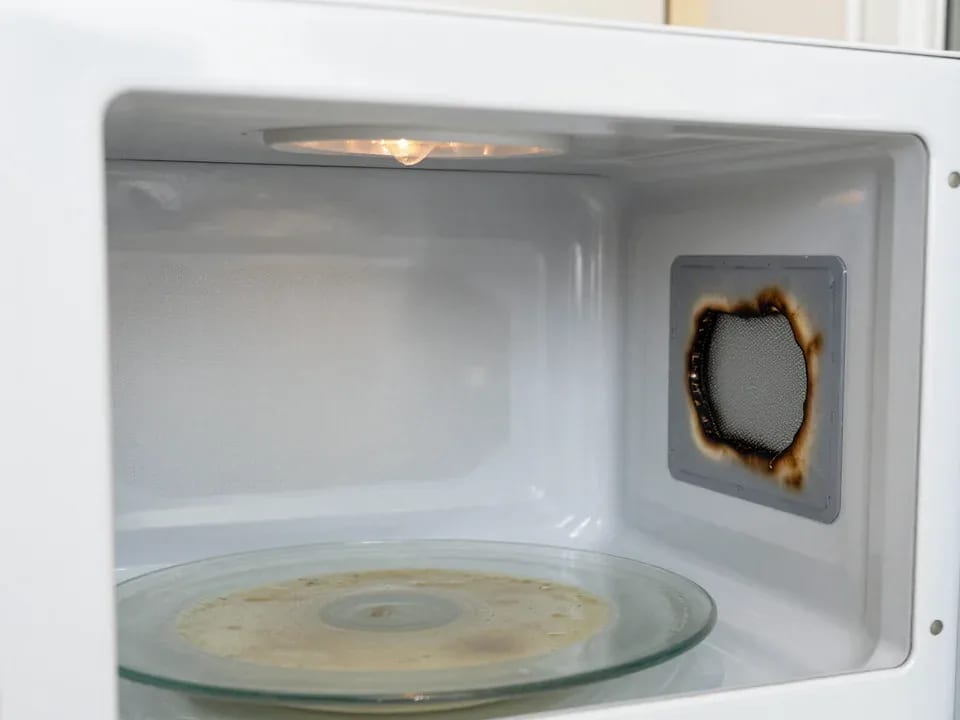
If your microwave isn't heating but the light and turntable still work, the problem is usually one of the high-voltage components — the magnetron, diode…
15 February 2026 · 12 minutes read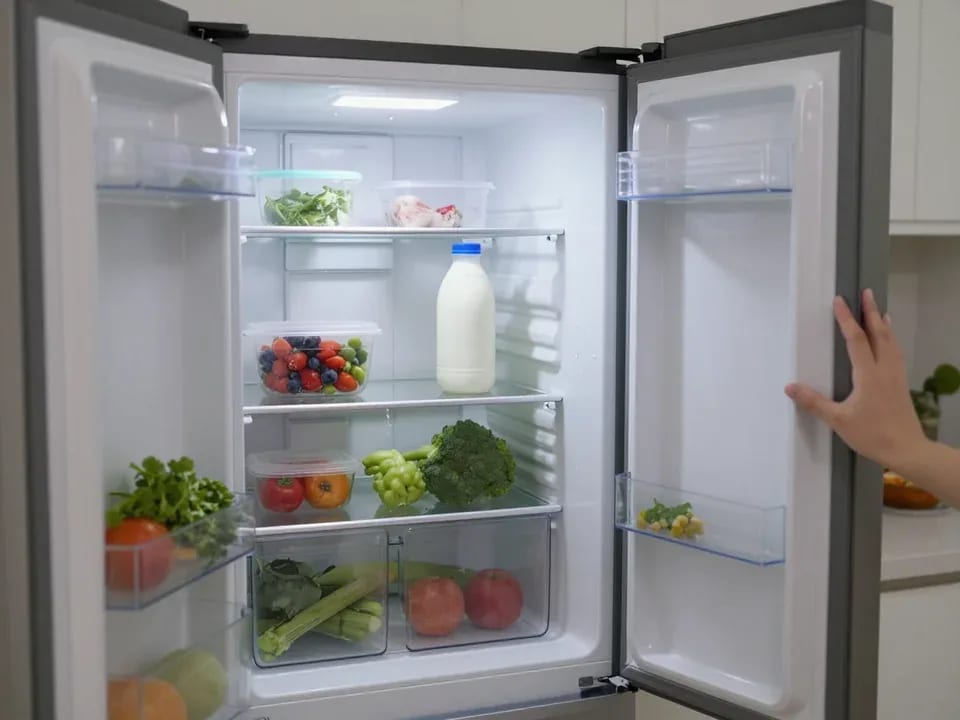
If your refrigerator stops working, first check the outlet, the power cord, and the thermostat setting, and after defrosting let it stand for a while.
4 February 2026 · 12 minutes read
Washing machine error codes are self-diagnostic codes that point to a specific component: drain, water fill, heating, motor, or door lock.
29 January 2026 · 13 minutes read