We repair Dell all-in-one PCs at your home: a technician arrives within 60 minutes anywhere in the city, diagnostics are free, and the work and parts come with a 1-year warranty on labor and parts. The technician names the cause of the fault before any work begins, our technicians have 4 to 20 years of experience, and you can pay via Kaspi QR, Kaspi Red, bank card, cash, or bank transfer for companies.
How Dell all-in-one lines differ and why a technician needs the service tag
The line and the service tag determine the set of parts, the mounts and the approach to disassembly, so a specialist starts by identifying the device. Below are the Dell lines and the role of the tag.
The OptiPlex, Inspiron and XPS lines and their weak points
| Line | Purpose | What the technician checks |
|---|
| OptiPlex | Office and business | Drive, power supply, dust |
| Inspiron | Home and study | Cooling, memory, connectors |
| XPS | Screen and demanding tasks | Panel, cable, heat |
| All lines | Thin case | Clips and panel cables |
What a service tag is and where to find it
A Dell service tag is a short alphanumeric code that identifies the exact model and configuration of an all-in-one PC. The sticker with the code sits on the back panel or on the stand, next to the serial number. The code shows which panel, which drive and which power supply are installed in your particular unit, and therefore which parts will fit it. Two devices of the same line can differ in cables, memory and board, so the general model name on the front panel does not replace the tag. Without it the configuration has to be checked by outward signs, and that takes longer. Photograph the sticker in advance while the device is standing on the desk: parts are selected faster from a photo, and the risk of an ordering mistake drops noticeably.
Why you should not open a Dell all-in-one case yourself
We open a Dell all-in-one PC carefully because the front frame is held by clips, and the panel cables are fragile and tear easily. To avoid damaging the case, our technicians with 4 to 20 years of experience first find the hidden fasteners, then release the clips around the edge, and only after that lift the screen away without stretching the cables. Tiny screws and thin wires are easy to lose, and wrong pressure leaves gaps that later let dust in. An attempt at home often turns a simple cleaning into a screen replacement, and the amount of work grows with it. The front panel fits tightly and its edge must not be pried with a sharp object, otherwise chips and scratches remain. If the case has been opened before, warn the specialist: he will check the connectors and find hidden damage.
How to tell from the symptoms which component of a Dell all-in-one PC has failed
The same symptom can appear with different faults, but it sets the direction of the search at once. Below are the most common signs and the components that are checked first.
Why a Dell all-in-one PC does not turn on or shuts off at once
If a Dell all-in-one PC does not turn on, we check the power: the socket, cable, power supply, button and motherboard. First the technician looks at whether the indicator blinks when the button is pressed and whether the fan can be heard, since this shows whether voltage reaches the board. A complete lack of reaction is more often tied to the power supply or the cable, while an instant shutdown after startup points to overheating or a board fault. The power supply is checked by its output voltage, and the board is inspected for traces of liquid. The power button is checked separately, because oxidized contacts give the same signs as a board failure. Before you call, plug the cable into a different socket: that rules out the simplest cause and saves time during the visit.
Where lines, flickering and a dark screen come from
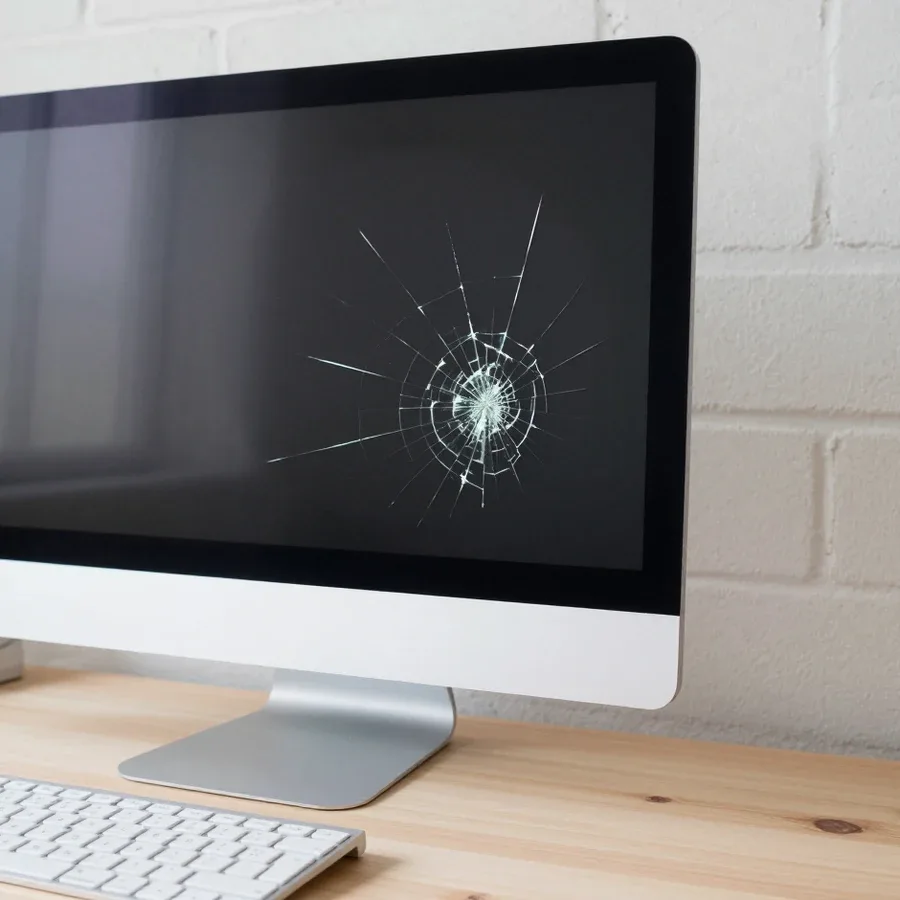
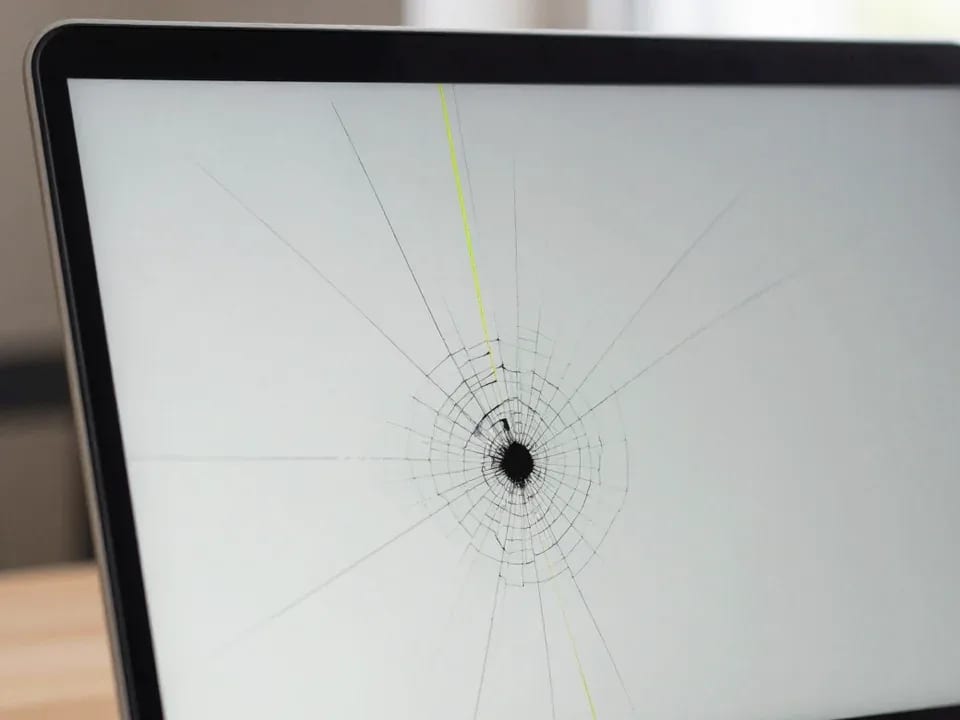
When the startup sound is there but the picture is not, we check the panel backlight, the cable and the panel itself. A dim, barely noticeable picture in the side light of a lamp points to the backlight rather than the board. Horizontal and vertical lines, flickering and colored spots are more often tied to the cable or the panel, especially after a knock. If the lines disappear when the tilt of the screen changes, the technician suspects the cable. If the picture vanishes a few seconds after startup, the cause may be overheating or a fault in the backlight circuit on the board, and this is checked separately. A crack in the glass means replacing the whole panel, and that option is assessed after diagnostics. While the all-in-one PC is plugged in, do not press on the screen and do not wipe it with a damp cloth.
Overheating, noise and spontaneous restarts
Fan noise and spontaneous restarts most often point to overheating caused by dust and dried-out thermal paste. Dust clogs the heatsink fins, heat stops leaving, and the processor lowers its frequency or the system shuts down to protect itself. A worn drive gives similar signs: the system freezes at startup and programs open with a delay. Faulty memory causes restarts and blue screens with no link to temperature. A step-by-step check helps to tell the causes apart: first the temperature under load, then the drive, then the memory. So a complaint about lags and restarts says little about the cause by itself, and only an inspection gives the exact answer. Do not block the ventilation openings on the back panel and do not push the all-in-one PC against a wall: free air lowers the heat.
Which work and parts bring a Dell all-in-one PC back to life
Some faults are fixed by servicing, and some need components replaced. Below is what is done about overheating, how startup is sped up and which jobs are done most often.
How the cooling system is cleaned
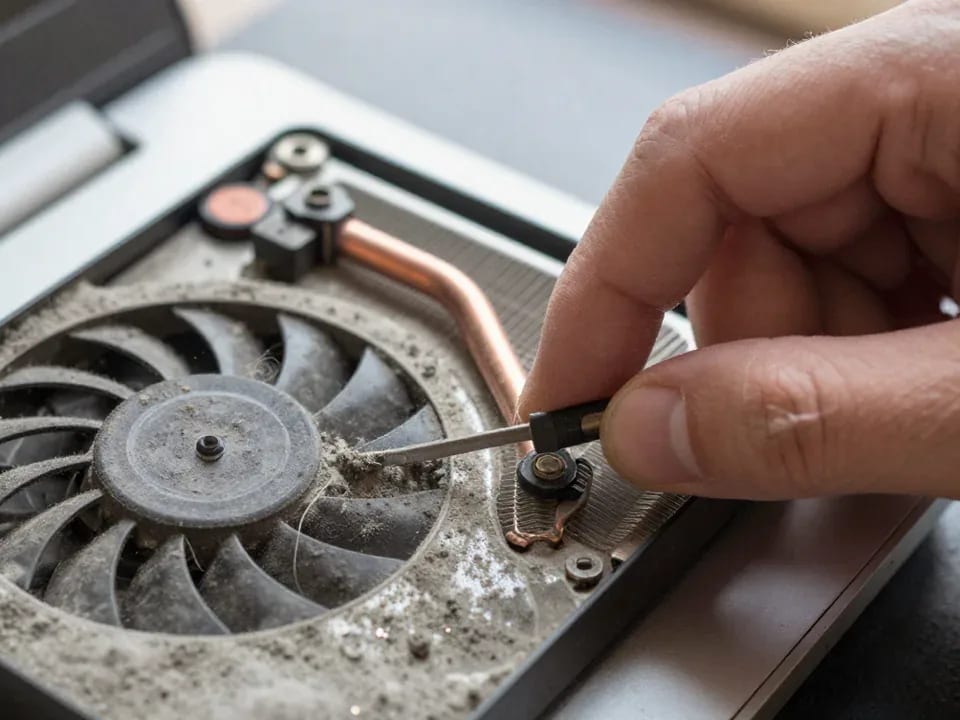
During cleaning we take the Dell all-in-one PC apart, blow the dust out of the heatsink, check the fan and replace the thermal paste between the processor and the heatsink. Dust builds up gradually, so the first signs are a slightly louder noise and a warm back panel. Old paste dries out and transfers heat worse even on a clean heatsink. If the fan is noisy because of a worn bearing, cleaning will not help and it is replaced with one that fits the model. Assembly takes care, since the clips and cables go back in place one by one. After assembly the specialist lets the device run and watches the temperature to make sure the heat has returned to normal. Start servicing when the noise has only just appeared: at an early stage the work is easier.
When to replace the drive and add memory
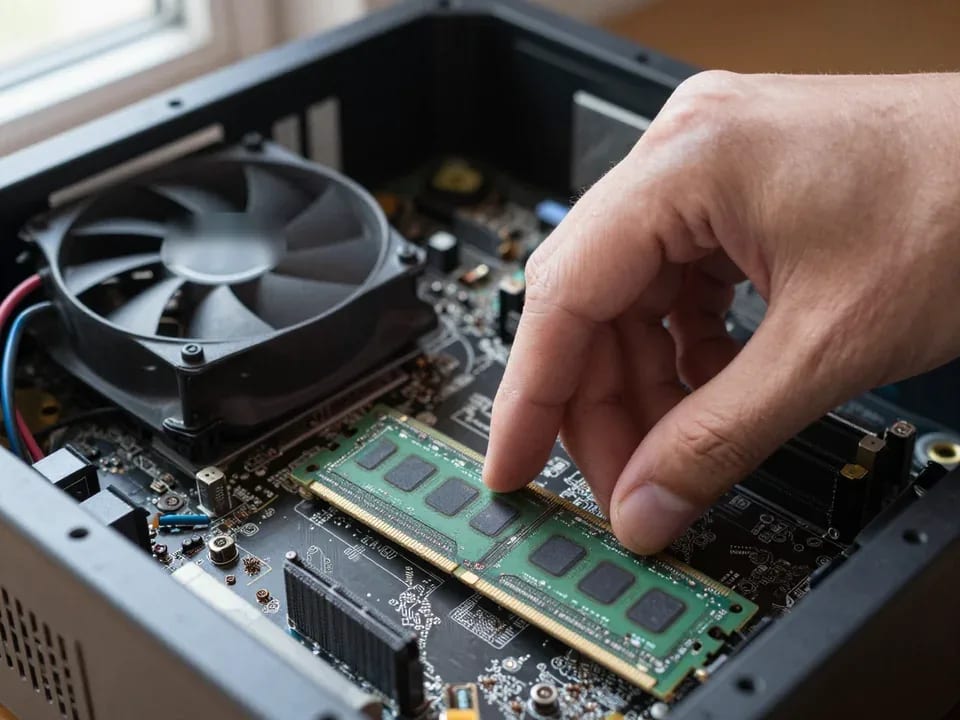
If a Dell all-in-one PC takes long to start, replacing the hard disk with an SSD speeds up the system more noticeably than any other measure. A mechanical disk reads many small files slowly, so Windows starts for a long time and programs open with a delay. An SSD removes this queue but requires moving the system or a clean installation. A lack of memory gives similar signs: windows switch with jerks and the browser closes by itself. The number of slots and the type of modules depend on the line, so the upgrade option is chosen by the service tag. If delays remain after the disk is replaced, the memory is tested separately and the temperature is checked. While the device still starts, manage to copy important files to another medium, because a disk with errors can fail at any moment and take the data with it.
Table of jobs and when they are needed
| Job | When it is needed | What the technician does |
|---|
| Cooling cleaning | Noise and overheating | Blows out the heatsink, changes the paste |
| Drive replacement | Slow startup | Installs an SSD, moves the system |
| Panel replacement | Cracks, spots | Selects the panel by the tag |
| Power supply replacement | No reaction to the button | Checks the voltage, swaps the unit |
| Memory check | Restarts, glitches | Tests the memory modules |
How a technician works at your home in Astana
A visit is built around diagnostics on the spot and a clear decision for you. Below is what happens after your request, how the specialist checks the device and how to prepare in advance.
What happens after your request
After your request a technician heads to you within 60 minutes anywhere in the city, so Dell All-in-One PC repair in Astana does not require taking the device to a service point. A large screen handles transport poorly: shaking and pressure in the packaging easily damage the panel and cables. On site the specialist immediately sees how the device is connected and whether there are heat sources nearby. The first inspection starts right after arrival, not after the device is delivered. The trip takes minimal time, and you do not need to stay without a computer while it is shipped. Your request is handled by our own technician without intermediaries, and you discuss every question with him in person. Clear the way to the socket and the desk in advance.
How the technician uses the tag and the self-test on site
Diagnostics are free: the technician reads the service tag, runs the self-test and checks the components by hand. The tag shows the configuration, the self-test reveals memory, drive and board faults even before the system loads, and the manual inspection confirms the conclusion on power, heat and the screen. The specialist explains the result in plain words and shows which component causes the problem. If an extra check is needed, he says which one and what it will show. The self-test is only a hint, so the conclusion about the cause is made only after all checks are compared. The decision about the repair stays with you, because the technician names the cost after diagnostics. Ask which components were checked, what remains in question and what happens if the work is postponed: that way the picture becomes complete and you choose a convenient order of action.
How to prepare the all-in-one PC for the technician's arrival
- Describe the symptom: write down what is happening, what it started after, which sounds you hear and how the indicators behave, since an exact description shortens the path to the cause.
- Find the tag: photograph the sticker on the back panel or the stand, because the model is identified and parts are selected by it.
- Save your files: if the all-in-one PC still starts, copy important data to an external drive or to the cloud before the specialist's visit.
- Clear access: prepare the socket and the space behind the device so that the PC can be turned and the back panel opened.
- Unplug it: if there is a smell of burning or liquid got in, pull the plug from the socket and do not switch the device on until the technician arrives.
What the warranty covers and how the price of work is formed
Before ordering it is useful to know what protection you get, what the final total consists of and how you can pay. These questions are covered below in order.
1-year warranty on labor and parts
A 1-year warranty on labor and parts applies to any Dell All-in-One PC repair in Astana, and it is the main condition worth clarifying before the work starts. A year is the period for which the technician is responsible for both the completed work and the installed part. For the owner this means that the replacement of a panel, power supply or drive is protected for the same period as the technician's labor. This way you pay for a result lasting the whole period, not for a one-off attempt to fix the device. It is convenient to ask about this during diagnostics, while the specialist is still explaining the order of work. Write down which components were part of the job so that you can quickly recall the scope of the repair when you apply under the warranty.
What the price depends on and when it is named
The price of Dell All-in-One PC repair depends on the component, the line and the type of part, and the technician names it after free diagnostics. Replacing a fan and replacing a panel are not comparable in the amount of work, and parts for OptiPlex, Inspiron and XPS differ. Original and compatible parts cost differently, and the specialist explains the difference in service life. Difficult disassembly of a thin case adds time. If diagnostics reveal several problems, the technician singles out the main one and explains which work can be done at once and which can wait. That is why an exact total is possible only after inspection, and this is more honest than naming a number at random. Ask for an explanation of what the total consists of, and compare the part options, not only the amount.
Technician experience, direct contractor and payment
We have technicians with 4 to 20 years of experience, and the repair is done by our own technician without intermediaries. Over the years our technicians have seen several generations of equipment, and they recognize typical faults of all-in-one PCs at the first inspection. You can freely ask about the cause of the fault and the part options: you get the answer from the person who holds your device in his hands. This helps to decide without haste, guesswork or extra clarifications through third parties. He will tell you how to extend the life of the device: clean the ventilation openings of dust and do not cover the case with cloth. The technician will explain in advance how to check the result after the work. You can pay in any convenient way, since we accept Kaspi QR, Kaspi Red, bank card, cash, or bank transfer for companies.
Key points on Dell all-in-one PC repair
Below are the main takeaways of the article: what the owner of a Dell all-in-one PC should know about lines, symptoms and the visit before making a decision.
- Identification: the service tag determines the model and configuration, so parts selection starts with it and not with the name on the front panel.
- Symptoms: failure to start, a dark screen, lines, noise and restarts point to different components, and only diagnostics determines the exact cause.
- Work: cleaning and new thermal paste solve overheating, an SSD speeds up startup, and the choice of part depends on the component and the line.
- Preparation: write down the symptom, photograph the tag, save your files and clear access to the socket and the back panel.
- Terms: diagnostics are free, a technician arrives within 60 minutes anywhere in the city, and the warranty is 1 year on labor and parts.