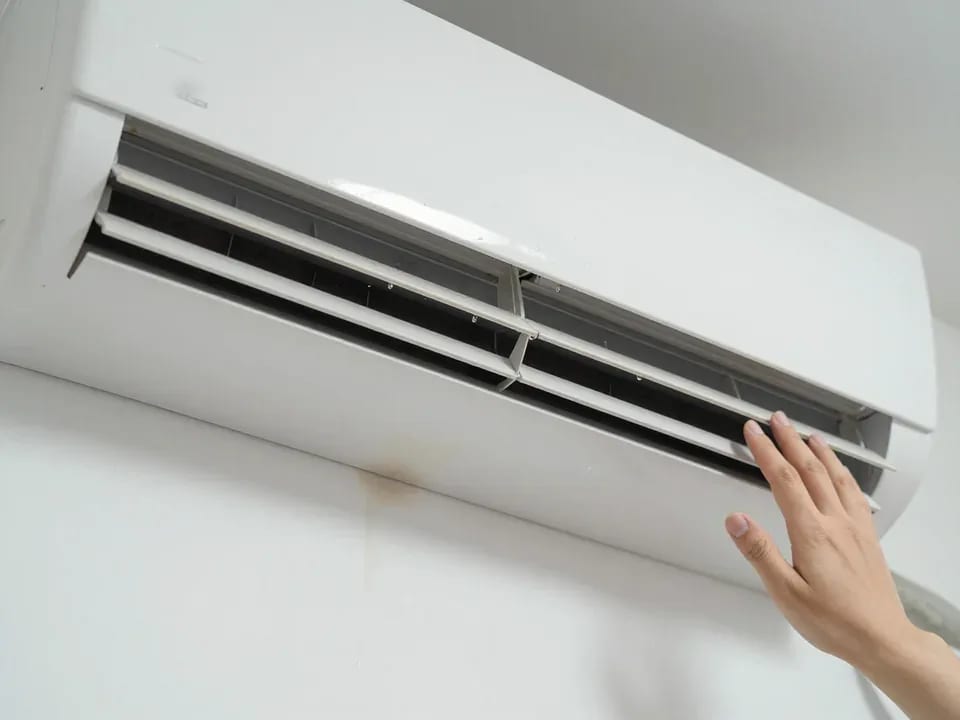
Tech Service repairs General and General Climate air conditioners in Astana: a technician comes to your home within 60 minutes or you can drop off the unit at our service center. Diagnostics are free, there's a 1-year warranty on labor and parts, and our technicians have 4 to 20 years of experience. The technician gives you the price after diagnostics.
Why a General Air Conditioner Stops Cooling and How to Spot It
A symptom alone doesn't tell you what's broken. So let's look at three common scenarios — warm airflow, short cycling, and noise — and what each usually means for the components of a General split system.
General Air Conditioner Not Cooling but Running
If your General is running but blowing warm air, the cause is most often a refrigerant leak, a dirty heat exchanger, or lost compressor performance. The General compressor is the main component of the refrigeration circuit: it compresses R410A or R32 and pushes it through the lines, and when pressure drops due to a leak, there's no cooling even if the electronics are fine. A dust-clogged indoor coil heat exchanger prevents cold from being released into the room, so the airflow stays warm even with the fan running. It's easy to check the direction: in cooling mode, the indoor unit should blow noticeably cold air, and the outdoor unit's fan should be running. If the airflow is warm while the fan is running, that's a reason for diagnostics, not for DIY recharging — without finding the leak, a new portion of refrigerant will escape into the atmosphere within weeks. In such cases, General Climate AC repair in Astana starts with finding the leak and checking the heat exchanger, not with recharging.
General Turns On and Immediately Off or Won't Start After Winter
Short on-off cycling or failure to start after winter is usually related to board protection, temperature sensors, and the compressor's starting mode. The General control board manages the compressor, fans, and dampers, and if a sensor reads incorrectly, it shuts down the cycle as a safety measure to avoid burning the windings. Astana's climate with its long cold winter adds another factor: during inactivity, condensation and oxidation settle on contacts, and the starting current of a compressor that has endured frost exceeds acceptable limits. After frosts, you should start the unit in warm weather and listen to the outdoor unit — if it tries to start and stalls, repeated attempts only strain the compressor, and it's better to call a technician right away. Inactivity after winter often also reveals dried-out lubricant in the fan bearings, so it's best to do the first start during the day when unusual sounds are audible.
General Is Noisy, Squeaking, or Humming
Noise and squeaking in a General unit are most often caused by the indoor fan, dampers, or vibration of the outdoor unit, not by the refrigeration circuit itself. Dampers and louvers are associated with noise and jamming: a misaligned axle or debris in the guides makes them rattle with every movement. The indoor fan hums when bearings are worn or dust has stuck to the impeller, and the outdoor unit transmits vibration to the brackets and wall. The type of sound helps narrow down the search — a steady hum points to the fan, clicking and rattling to the dampers, and metallic clanking should be taken as a signal to turn off the AC until the technician arrives: it could mean the compressor's piston group is breaking down, and every minute of operation increases the scope of work.
General Error Codes and What They Mean
A code on the display or remote is a hint, not a verdict. Here's how to read General signals and what they say about a specific component.
What Does Error Code E1 Mean on a General Air Conditioner?
Error code E1 on a General unit points to a fault in a circuit that the technician checks component by component — from power and board communication to sensors and the compressor. In practice, this signal can have various causes: an oxidized contact on the ribbon cable between the control board and the remote, a failed air or pipe temperature sensor, or, less commonly, a fault in the module itself. The board detects a deviation in the circuit and displays the code, but doesn't name the culprit directly, so the first step is to check connectors and wiring integrity, then sensor resistances, and only then the module's logic. Note the code and the conditions when it appeared — during cooling or heating, right at startup or after some time; this detail shortens diagnostics and helps the technician quickly pinpoint the specific component.
How to read General error codes and not confuse them with symptoms
- Code on the display: the board detects an abnormal situation in a specific circuit and assigns it a number.
- Unit behavior: warm airflow, a short cycle, or failure to start shows how the fault manifests.
- Conditions of appearance: startup after a long idle period, heating in winter, operation under load in hot weather — different scenarios.
- False signal: the temperature sensor reports an error even though the component is fine and the air conditioner is working.
- Compressor or board: the same code with different causes — an on-site check separates a module failure from motor wear.
- Technician's conclusion: the code and symptom are compared during diagnostics to avoid replacing parts blindly.
Table of common General signals and the components they affect
| Signal | What the owner notices | Component to check |
|---|
| Code E1 | error on the display | board and sensor circuit |
| Warm airflow | running but not cooling | refrigerant, heat exchanger |
| Short cycle | starts and stops | board, sensors, compressor |
| Leak from the unit | drops under the indoor unit | drainage system |
| Noise and squeaking | sound during operation | fan, louvers |
General components that fail most often
We break down the three components that account for most General service calls and explain what the technician does with each.
Why water leaks from a General indoor unit
A leak from a General indoor unit is most often caused by a clogged drain, a displaced drain hose, or a frozen heat exchanger. Condensate collects in the drain pan and flows out through the hose by gravity; when dust and slime build up inside, water overflows the pan and leaks out through the casing. The second cause is a frozen heat exchanger: due to low refrigerant or a dirty filter, the evaporator gets covered in frost and during defrost releases water outside the drain path. In models with a drain pump, there's a third scenario — pump failure, and then water sits in the pan even with a clean hose. Water is dangerous not only for maintenance — it flows near the board and wiring, so at the first drops it's better to turn off the air conditioner rather than wait for the leak to get worse.
General control board: repair or replace
We first diagnose the General control board and restore it when possible; a full replacement is offered when restoring the unit is not practical. The board receives signals from temperature sensors and controls the compressor, fans, and louvers, so its faults show up in different ways: the unit won't turn on, runs erratically, or displays an error. The technician checks power, traces, and power components — often a single local component is at fault, not the whole module. The decision depends on the type of damage — a local defect on the board can be restored, while burned areas with damaged traces more often lead to module replacement. We provide a 1-year warranty on a restored board and on a new module, as well as on the labor itself.
When the problem is the compressor, not the board
The behavior of the outdoor unit helps tell a compressor apart from a control board: if the board sends a signal but the compressor won't start or runs with overheating, the unit itself is checked. The technician measures current draw, winding resistance, and circuit pressure: a working board sends the command, but the motor won't start or hums and shuts off on protection. Confusion arises because the symptoms are similar—in both cases the AC doesn't cool, and sometimes won't turn on at all. The compressor is the most heavily loaded component of the circuit, and its wear accumulates over years, so with repeated start failures it's more important to assess the unit's remaining life than to keep replacing individual parts. We provide free diagnostics across the city, and a technician arrives within 60 minutes.
Refrigerant, leaks, and recharging General
Recharging a General isn't just topping up gas—it's finding the cause of the leak and preparing the system, so let's break down refrigerants and the workflow.
Which refrigerant is in a General: R410A or R32
General air conditioners use both refrigerants—R410A and R32—and the type depends on the specific model, so you can't top up with a different one. R410A is a blended gas that works in systems with higher pressure, while R32 is a single-component refrigerant with different heat capacity and operating pressure. The nameplate on the outdoor unit specifies the exact charge by weight, and that's how the technician determines what to fill. Different models in the same lineup may come with different charges, and similar-looking units say nothing about the gas inside. A mistake with the refrigerant type doesn't show up immediately—first performance drops, then the load on the compressor increases. Mixing R410A and R32 disrupts the refrigeration circuit and can damage the compressor, so before recharging the technician checks the model's nameplate rather than relying on similar-class air conditioners.
Why recharging without leak detection doesn't work
We start a General recharge with leak detection because without fixing the cause, the refrigerant will escape again. The technician checks connections, flare fittings, and the heat exchanger—that's where a microleak most often hides, invisible during a quick look. Refrigerant leak detection is done on a running system under load: pressure and temperature change, and the defect becomes noticeable where a visual inspection shows nothing. R410A or R32 escapes slowly, and the owner notices the problem only by weak cooling, not by oil stains on the casing. On the line between units, the defect is often masked as a normal refrigerant shortage after several seasons. Leak symptoms depend on load and outdoor temperature, so the check is done on a running system, not just by visual inspection.
Why evacuate the system before recharging
We evacuate the General circuit before recharging to remove air and moisture that interfere with proper operation of the refrigeration circuit. A vacuum pump draws out residual gas and atmospheric moisture through the service ports, and only then is the system ready to accept a new charge of refrigerant. If you skip this step, air raises condensing pressure, and moisture reacts with the oil. Over time, moisture turns into acid and destroys the compressor from the inside, so saving on evacuation leads to more expensive repairs later. R410A or R32 requires purity without impurities—otherwise even a correct charge won't restore proper cooling. A Tech Service technician holds vacuum until readings stabilize, not just pumps gas by eye.
How General repair works at your home
Here's what a service visit for General Climate air conditioners in Astana looks like—from dispatch to checking the result and warranty. Below is each step and its purpose.
How free General diagnostics works at your home
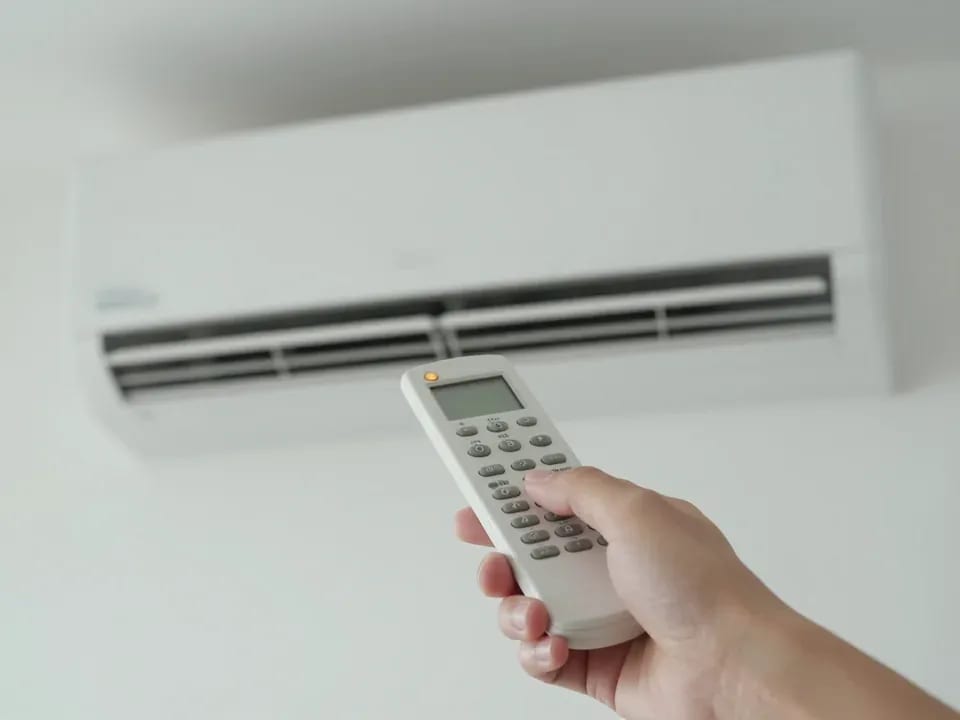
Our technician arrives at your door within 60 minutes anywhere in the city and starts with free diagnostics — checking the power supply, remote control, error code, and how the components are working. First, we read the signal from the control remote and compare it with the code table: on General, error E1 points to a communication failure between the units, and that signal narrows the search before we even open the casing. Next, we inspect the control board, check the drainage, and measure the circuit parameters to separate an electrical fault from a refrigerant loss. On-site diagnostics are valuable because the air conditioner is tested under real operating conditions, not in isolation from the circuit, so the cause is clearer. General air conditioner repair in Astana starts with exactly this kind of check, and the air conditioner service technician records the findings and only then quotes the scope of work — so you know what you're paying for before any work begins.
General repair steps and what the technician does
| Step | What the technician does | What we check |
|---|
| Diagnostics | inspection, codes, components | power, remote, board |
| Finding the cause | checking the circuit and components | leak, compressor, drainage |
| Fix | repair or replace the component | board, compressor, drainage |
| Refill | leak detection, vacuum, refrigerant | model's refrigerant type |
| Check | post-repair test | cooling, no leaks |
Warranty and General repair terms
We provide a 1-year warranty on labor and parts, and the technician quotes the price after free diagnostics, once the cause is clear. We accept Kaspi QR, Kaspi Red, card, cash or bank transfer with no minimum amount — you can pay however is convenient for you. Our service is handled by specialists with 4 to 20 years of experience, so for a General model they already know where contacts tend to fail most often and which series have control boards sensitive to voltage fluctuations. The warranty on labor and parts applies as a single condition, so if you come back about the same component, we investigate the cause rather than starting from scratch. This same condition keeps us from replacing parts at random — a replacement that didn't fix the problem remains our responsibility.
Getting the most from General air conditioner repair
We've covered what determines the outcome of restoring a General air conditioner: from diagnostic accuracy to maintenance in a climate with cold winters and hot summers.
- A symptom is not a diagnosis: warm airflow, a leak, or noise only point the direction for checking, while diagnostics of the components reveals the cause.
- The code helps narrow the search: note the error code and the conditions when it appears — this speeds up checking the power, remote, and board.
- Refrigerant needs a reason: refilling without leak detection and system evacuation doesn't solve the problem; the refrigerant will escape again.
- Components wear differently: the control board, compressor, and drainage each require a separate approach to service and inspection.
- Maintenance is cheaper: seasonal service reduces the risk of breakdowns in a climate with frosts and summer heat.